

Key takeaways
- Build fight-ready conditioning with the best battle ropes for boxing training, compared on length, diameter, material and anchor kits for home gyms.
- Top Pick: POWER GUIDANCE Battle Rope
- Runner-up: Amazon Basics Battle Rope
- Also consider: Garage Fit Battle Rope
Battle ropes earn their place in a fighter’s gym because they train the exact quality boxing demands: repeated, powerful output from the shoulders and arms while the legs stay braced and the lungs work at full tilt. Waves, slams and alternating patterns build round-shaped conditioning in thirty-to-sixty-second bursts, they are easy on the joints compared with more roadwork, and they need nothing more than a rope, an anchor point and a few meters of floor.
Choosing a rope comes down to three numbers and one material. Length decides how much space you need and how heavy the waves feel, diameter decides how hard your grip and shoulders work, and the anchor setup decides whether the rope stays put or creeps across the floor mid-round. Nearly every quality rope here is poly dacron, a synthetic blend that resists water, shrugs off concrete and outlasts natural fiber outdoors. This guide compares five battle ropes for boxing conditioning, from the category’s best seller to heavy two-inch grip builders, and explains how to size a rope for your space, your hands and your training goals.
As an Amazon Associate, we earn from qualifying purchases.
Quick Answer
The POWER GUIDANCE Battle Rope is the best starting point for most fighters, with poly dacron construction, several sizes and an anchor included in the box. The Amazon Basics Battle Rope is the budget-friendly thirty-foot alternative for smaller spaces. Fighters wanting maximum grip and shoulder demand should choose a two-inch rope such as the Brobantle, while the Garage Fit offers the widest choice of colors and sizes.
How to Choose
Length is the first decision, and your floor makes it for you. A rope is anchored at its midpoint, so a thirty-foot rope needs about fifteen feet of clear space plus room for you to stand, a forty-foot rope needs twenty, and a fifty-foot rope needs twenty-five. Longer ropes send heavier, slower waves that build strength endurance; shorter ropes wave faster and suit tight garages and conditioning circuits where speed matters more than load. Measure your space honestly before ordering, because an oversized rope bunched against a wall trains nothing well.
Diameter is the second decision. The standard one-and-a-half-inch rope is right for most fighters: it waves well, grips securely and allows high-rep round work. A two-inch rope is a different animal, much heavier in the hands, far more demanding on grip and forearms, and better used for shorter power intervals. Smaller hands and high-volume conditioning programs belong on the thinner rope; bigger athletes chasing grip strength can graduate to two inches once technique is clean.
Then check the anchor and the extras. A strap anchor that loops around a rack, post or kettlebell keeps the midpoint fixed without drilling, while wall anchors are a permanent solution for dedicated spaces. Protective sleeves extend rope life on rough concrete, and heat-shrink handles keep the ends from fraying while giving a consistent grip. Outdoor use is fine with poly dacron, but storing the rope out of constant sun and coiling it loosely will keep it waving smoothly for years.
POWER GUIDANCE Battle Rope

The POWER GUIDANCE rope is the category’s reference product, and it earns that status by getting every basic right. The poly dacron build handles indoor and outdoor training without absorbing water or fraying early, the handles are heat-shrunk for a firm, consistent grip, and the range covers one-and-a-half and two-inch diameters in thirty, forty and fifty-foot lengths, so the same product line can fit a spare-room setup or a full garage lane. An anchor strap is included, which means the rope is training-ready the day it arrives.
For boxing conditioning, the forty-foot one-and-a-half-inch version is the sweet spot most fighters should start with: long enough for heavy alternating waves and power slams, manageable enough for sixty-second rounds across a full circuit. The rope’s wave quality is smooth rather than springy, which keeps rhythm work honest and makes it easy to coach timing. It is not a premium sleeved rope, so daily use on sharp concrete will eventually show wear at the anchor point, but at this level of versatility and proven durability, it remains the easiest recommendation in the category for a home fight gym.
Specs
| Spec | Detail |
|---|---|
| Material | Poly dacron |
| Diameters | 1.5 in and 2 in |
| Lengths | 30, 40 and 50 ft |
| Anchor | Strap anchor included |
| Best for | All-round fight conditioning |
Amazon Basics Battle Rope
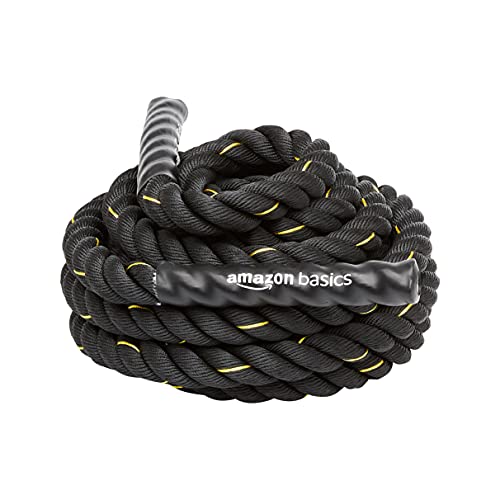
The Amazon Basics rope strips the concept to its essentials and does it well. The thirty-foot, one-and-a-half-inch version is built from three-strand poly dacron, wrapped in a waterproof 600D Oxford sleeve that protects the working section from floor abrasion, and finished with heat-shrink end caps. That sleeve is a genuinely useful touch for garage and driveway training, where bare ropes chew themselves up on concrete over a season of slams.
Its shorter length makes it the natural choice for smaller home gyms, basements and spare rooms, and the lighter waves suit higher-speed conditioning: fast alternating waves, in-and-out footwork patterns and round-based circuits where the rope is one station among several. Fighters with a full-size training lane who want maximum load will find it light, and the range of sizes is narrower than the specialist brands. As a first rope, a second rope for a tight space, or a travel-friendly option that can anchor to a rack or a tree, it covers the fundamentals at a sensible cost and asks for nothing in return but floor space.
Specs
| Spec | Detail |
|---|---|
| Material | Poly dacron, 3-strand |
| Size | 1.5 in diameter, 30 ft featured |
| Sleeve | 600D Oxford waterproof sleeve |
| Handles | Heat-shrink end caps |
| Best for | Small spaces and value |
Garage Fit Battle Rope
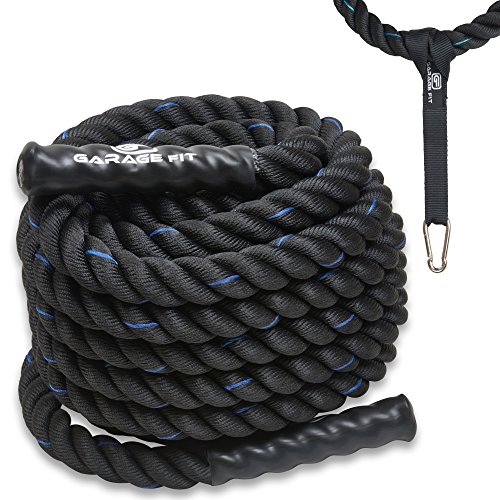
Garage Fit built its rope line around choice. Lengths run thirty, forty and fifty feet, diameters come in one-and-a-half and two inches, and the color range goes beyond basic black to blue, gray, red and yellow, which sounds cosmetic until a gym runs several ropes at once and color-coding stations saves real confusion. The black version adds a nylon protective sleeve for rough surfaces, and anchor straps are included so the rope can be working within minutes of opening the box.
The three-strand poly dacron construction waves with a slightly stiffer feel out of the box that loosens with use, a common trait fighters work through in the first weeks. Weights range from manageable to genuinely heavy at the top end, so the line scales from beginner conditioning to strong athletes running two-inch power intervals. Stock on the most popular sizes can be inconsistent, which is worth knowing if your camp starts on a fixed date. For a home gym that wants a specific size and color combination, or a small club outfitting multiple stations, Garage Fit offers the broadest menu in this guide from a brand focused on garage training.
Specs
| Spec | Detail |
|---|---|
| Material | Poly dacron, 3-strand |
| Diameters | 1.5 in and 2 in |
| Lengths | 30, 40 and 50 ft |
| Extras | Anchor strap included, colors available |
| Best for | Choice of size and color |
Fitvids Battle Rope

The Fitvids rope is a straightforward, gym-grade option built on the standard recipe: poly dacron strands, a one-and-a-half-inch diameter and a thirty-foot length that fits the typical garage lane. It waves cleanly for alternating patterns, slams and circles, and the construction is aimed at daily conditioning rather than occasional use, with handles finished to survive repeated high-friction work.
Where it fits best is the dedicated home gym that wants a dependable rope from a fitness-equipment brand with a wider catalog behind it, so anchors, racks and other stations can come from one place and match. The thirty-foot format keeps the waves quick, suiting boxing-specific conditioning built on speed and round-length intervals rather than maximum load. Fighters who know they want forty or fifty feet, or a two-inch grip challenge, should look at the more configurable lines in this guide instead. For everyone setting up a standard home station, the Fitvids covers the job with no weak points, sensible durability and a size that fits the way most people actually train at home.
Specs
| Spec | Detail |
|---|---|
| Material | Poly dacron |
| Size | 1.5 in diameter, 30 ft |
| Design | 3-strand training rope |
| Use | Indoor and outdoor conditioning |
| Best for | Standard home gym setup |
Brobantle Battle Rope

The Brobantle makes its case with diameter: a full two inches of rope in a thirty-foot length. That thickness transforms the training effect. Grip and forearms become the limiting factor, waves travel heavier and slower, and even thirty-second intervals feel like a fight for athletes used to thinner ropes. For boxers and MMA fighters specifically chasing grip endurance and shoulder power, this is the specialist tool, the rope equivalent of moving up a glove size for bag work.
The shorter length keeps the big rope manageable in normal garage space, since a fifty-foot two-inch rope would need a serious lane and a serious athlete. Poly construction handles outdoor sessions, and the rope can still run standard patterns: alternating waves for conditioning, double slams for power, and grappler-friendly throws and pulls when anchored well. Beginners should be honest about readiness, because two-inch ropes punish sloppy mechanics and tired grips quickly. For intermediate and advanced fighters who have mastered a standard rope and want the next level of demand without buying a longer lane, the Brobantle is the deliberate step up.
Specs
| Spec | Detail |
|---|---|
| Material | Poly construction |
| Size | 2 in diameter, 30 ft |
| Training effect | Heavy grip and shoulder demand |
| Use | Power intervals and conditioning |
| Best for | Advanced grip-focused work |
Who Should Skip It
Skip battle ropes if you do not have a secure anchor point and clear floor space, because an unanchored or cramped rope teaches bad patterns and damages both the rope and the room. Fighters with shoulder or elbow problems should clear loaded overhead and slamming work with a professional first. And if your conditioning already covers the shoulders heavily through swimming or high-volume pressing, add rope work gradually rather than as daily finishers, since the shoulders are the first place rope volume shows up as fatigue.
FAQ
What size battle rope should a boxer start with?
A thirty or forty-foot rope at one-and-a-half inches suits nearly every beginner. It waves at a speed that matches round-based conditioning, fits typical garage space when anchored at the midpoint, and builds technique before load. Move to a longer or thicker rope only when the current one feels easy across full intervals.
How much space does a battle rope need?
Plan for half the rope’s length plus about six feet for your stance and movement. A forty-foot rope therefore needs roughly twenty-six feet of clear lane. Width requirements are modest, about six feet, as long as the swing path is clear of bags, racks and anything breakable at slam height.
How should battle rope rounds be programmed for boxing?
Match the fight format: work intervals of thirty seconds to three minutes with equal or shorter rest, across six to twelve rounds. Alternate patterns every round, waves, slams, circles and in-outs, to spread the load across the shoulders. One or two rope sessions per week is enough alongside regular training.
Can battle ropes be used outdoors?
Yes, and poly dacron is the right material for it, since it does not absorb water or rot like natural fiber. Anchor to something immovable, expect faster wear on rough concrete without a sleeve, and store the rope coiled out of constant direct sun to keep the fibers and handles in good condition.
Final Verdict
The POWER GUIDANCE Battle Rope is the default choice for fight conditioning, with the sizes, material and included anchor most home gyms need. The Amazon Basics rope wins on value for smaller spaces, Garage Fit wins on choice, the Fitvids is the dependable standard setup, and the Brobantle is the heavy two-inch step up for grip-focused athletes.
More from Amazon
Programs that pair well with the guide above. Offers and eligibility are set by Amazon and may change.
Free shipping on eligible items, Prime Video and more. Eligible new members can start with a free trial.
Start a Prime free trialAudiobooks and podcasts to listen to on the go. Eligible new members can start with a free trial.
Try Audible freeAd-free music streaming. Eligible new subscribers can start with a free trial.
Try Music Unlimited freeA free business account with business pricing and bulk-buying tools for work, shop or home office.
Create a business accountAs an Amazon Associate we earn from qualifying purchases.




Write Your Review
No reviews yet. Be the first to share your experience!