

Key takeaways
- MMA conditioning asks an odd thing of a slam ball: explode through the hips, hurl a dead-weight sphere into the floor.
MMA conditioning asks an odd thing of a slam ball: explode through the hips, hurl a dead-weight sphere into the floor, then pick it up and repeat while your heart rate climbs. Fighters use slams for the same reason they use sprawls, because the movement trains full-body power and trunk stiffness under fatigue. The ball you pick decides whether those rounds feel productive or whether you spend them chasing a bouncing mess across the gym.
This guide is for strikers, grapplers and general fitness athletes building a conditioning corner at home or in a garage gym. Every product below is judged on the weight, texture and construction stated in the listing, so use the comparisons to narrow your choice, then match the weight to your own strength and floor surface in 2026.
Quick Picks
Our top picks


As an Amazon Associate we earn from qualifying purchases at no extra cost to you.
| Product | Best for | Key feature |
|---|---|---|
| ProsourceFit Tread Slam Ball 15 lb | Grip-heavy slams | Tread textured grip, dead-weight design |
| Basics Heavy-Duty Slam Ball 15 lb | Simple everyday conditioning | Heavy-duty weighted design |
| Basics Heavy-Duty Slam Ball 10 lb | Lighter, faster slam rounds | 10 lb heavy-duty build |
| ProsourceFit Tread Slam Ball 15 lb (Second Listing) | Pairing with a matching ball | Same tread texture, same 15 lb |
| Yes4All Sand-Filled Slam Ball | Choosing from a wide weight range | PVC shell, sand filling, 10-40 lb options |
| Basics Heavy-Duty Slam Balls 20 lb, 2-Pack | Partner or heavy-light training | Two 20 lb balls in one pack |
| ProsourceFit Classic Slam Ball 10 lb | Smooth-surface preference | Classic dead-weight shape |
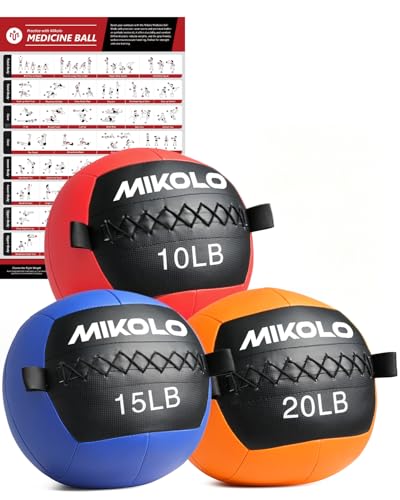
| Mikolo Soft Medicine Ball Set | Wall balls plus slams | Soft shell, 10, 15 and 20 lb set |
How to Choose
Pick a weight you can slam for a full round
Conditioning slams are about repeated speed, not a one-rep maximum. If a ball slows you to a crawl after ten reps, it is too heavy for conditioning. Many athletes keep a lighter ball for rounds and a heavier one for power sets. Women, teens and newer lifters usually start in the lower weight tiers listed here.
Look at the shell and the fill
Slam balls are filled with sand or similar material so they do not bounce back at your face. Rubber or PVC shells hold up to concrete better than thin fabric. The title should say dead weight or sand-filled. A bouncy ball is a medicine ball, not a slam ball, and it behaves differently when thrown down.
Think about grip and sweat
Textured treads help when your hands are slick, and they matter during long intervals. A smooth classic surface is easier to wipe down and can feel less abrasive on bare forearms. Check whether the listing mentions grip, since a ball that slips mid-slam is a safety issue for toes and shins.
Budget traps and what to ignore
Cheaper balls can split at the seam if you slam on rough concrete, so use a rubber mat or a plywood slam zone. Ignore fancy colors, as they tell you nothing about durability. Do not buy a single huge ball to save money on a set, because progression matters more than raw weight.
The 8 Best Options
ProsourceFit Tread Slam Ball 15 lb
The title highlights a tread textured grip, dead-weight construction and a 15 lb weight meant for strength and conditioning, cardio and core. It is a fit for athletes who want a mid-weight ball with some bite on the surface.
- Strength: textured grip suits sweaty rounds
- Strength: 15 lb is a workable weight for most adult lifters
- Trade-off: texture can feel rough on bare skin
Skip it if you want a very light ball for fast reps.
Basics Heavy-Duty Slam Ball 15 lb
A plain 15 lb weighted ball marketed as heavy-duty, in black. It is a straightforward choice for floor slams, core work and basic circuit training without extra features to think about.
- Strength: heavy-duty positioning for repeated slams
- Strength: clean, simple design suits small gyms
- Trade-off: the title mentions no grip texture
Skip it if you want a textured surface.
Basics Heavy-Duty Slam Ball 10 lb
The lighter option in the same line, at 10 lb. It works for beginners, teens, or experienced athletes who want fast tempo slams with little rest between reps.
- Strength: lighter weight allows quicker output
- Strength: easy entry point to learn technique
- Trade-off: strong lifters may outgrow it quickly
Skip it if you need serious power-building load.
ProsourceFit Tread Slam Ball 15 lb (Second Listing)
This is a second listing with the same tread grip and 15 lb weight as the first ProsourceFit entry. It may suit buyers who want to match a pair for partner drills, or who simply prefer this seller page.
- Strength: same grip texture and weight as its twin
- Strength: suited to cardio and core workouts per the title
- Trade-off: duplicates the first listing, so offers no new option
Skip it if you already chose the first ProsourceFit ball.
Yes4All Sand-Filled Slam Ball
The listing mentions a PVC shell with sand filling and a range of 10 to 40 lb in several colors. That spread makes it the most flexible option for building a progressive set over time.
- Strength: wide weight range supports progression
- Strength: sand-filled build is made for slams
- Trade-off: you must pick the weight carefully when ordering
Skip it if you prefer a fixed, pre-chosen weight.
Basics Heavy-Duty Slam Balls 20 lb, 2-Pack
Two 20 lb balls in one pack, designed for heavier work or for two athletes training together. That setup supports alternating slams or a gym where partners share a station.
- Strength: pack of two serves partner circuits
- Strength: 20 lb gives real load for power
- Trade-off: 20 lb is heavy for beginners and long rounds
Skip it if you train alone and want a lighter ball.
ProsourceFit Classic Slam Ball 10 lb
The classic version swaps the tread for a smoother dead-weight ball at 10 lb. It is a good light option for core rotation, wall tosses where allowed, and quick conditioning intervals.
- Strength: smooth surface is easy to wipe down
- Strength: 10 lb suits high-rep rounds
- Trade-off: less grip when hands are wet
Skip it if slippery hands are a worry.
Mikolo Soft Medicine Ball Set
This set bundles 10, 15 and 20 lb balls described as soft, usable as wall balls and slam balls. The soft shell is gentler on floors, but it behaves more like a medicine ball than a hard dead-weight slam ball.
- Strength: three weights in one purchase
- Strength: soft shell suits home floors and functional work
- Trade-off: may not feel like a true dead-weight slam ball
Skip it if you want one hard-shell slam ball only.
Which One Fits Your Situation
You are new to conditioning slams
The Basics Heavy-Duty Slam Ball 10 lb gives you a forgiving weight for learning the hip hinge and overhead reach.
You want to grow into heavier loads
The Yes4All Sand-Filled Slam Ball lets you buy light now and step up through the listed 10 to 40 lb range as you get stronger.
You train with a partner or coach
Pick the Basics Heavy-Duty Slam Balls 20 lb, 2-Pack, so two athletes can alternate rounds without waiting.
Common Mistakes
- Choosing a weight that kills your speed after a few reps
- Slamming a bouncy medicine ball and expecting dead-weight behavior
- Throwing onto bare concrete without a mat or slam pad
- Standing too close to walls, glass or low ceilings
- Rounding the lower back on the pickup instead of hinging
Related guides
- 16 Oz Boxing Gloves For Heavy Bag Training
- Combat Sports Terms Every Beginner Should Know
- Grappling Dummies For Mma Training
Frequently Asked Questions
What weight slam ball is best for MMA conditioning?
Most adults land between 10 and 20 lb for rounds, with heavier balls reserved for short power sets. Choose the weight that lets you keep clean form for the whole interval.
Can I use a slam ball on a garage floor?
Yes, but protect both the floor and the ball with a thick rubber mat or plywood. Concrete wears seams and can chip the surface.
Is a slam ball different from a medicine ball?
Yes. A slam ball is dead weight and made to be thrown down, while many medicine balls bounce and are meant for catching or passing.
How often should I slam for conditioning?
That depends on your total training load. Many fighters add slams for a few short rounds once or twice a week and let a coach guide the volume if they have joint or back concerns.
More from Amazon
Programs that pair well with the guide above. Offers and eligibility are set by Amazon and may change.
Free shipping on eligible items, Prime Video and more. Eligible new members can start with a free trial.
Start a Prime free trialAudiobooks and podcasts to listen to on the go. Eligible new members can start with a free trial.
Try Audible freeAd-free music streaming. Eligible new subscribers can start with a free trial.
Try Music Unlimited freeA free business account with business pricing and bulk-buying tools for work, shop or home office.
Create a business accountAs an Amazon Associate we earn from qualifying purchases.


Write Your Review
No reviews yet. Be the first to share your experience!