

Key takeaways
- The best MMA gloves are the ones whose padding, fit, wrist support, and thumb movement match the session. Choose Fairtex BGV1 for a proven versatile shape, Hayabusa T3 for a more structured wrist feel, Venum Challenger for budget-conscious occasional training, or a carefully selected RDX…
Best MMA Gloves
The best MMA gloves depend on whether you need compact competition gloves, better-protected sparring gloves, or one versatile pair for bag work and technical drills; for most regular training, an 8 oz sparring glove with layered foam, a secure hook-and-loop wrist strap, and enough thumb mobility is the safest starting point.
Quick picks by use
| Situation | Best glove type | Useful specification | Why it fits |
|---|---|---|---|
| Technical sparring | Open-palm sparring glove | 7–8 oz; multi-layer foam; wide wrist strap | Balances hand protection, grip access, and manageable impact |
| Hard bag and pad sessions | Training MMA glove | 7–10 oz; dense knuckle padding; reinforced palm | Provides more coverage than a competition glove |
| Amateur competition | Competition glove | 4–6 oz; regulation-shaped padding; secure closure | Closer to the feel and dimensions used under competition rules |
| Grappling-heavy sessions | Flexible open-palm glove | 4–6 oz; articulated thumb; narrow palm panel | Allows wrist control, underhooks, and hand fighting |
| One pair for occasional training | All-purpose training glove | 6–8 oz; leather or high-quality synthetic shell | A practical compromise when buying two pairs is unnecessary |
Best MMA gloves: the leading options
Fairtex BGV1: best established all-rounder
The Fairtex BGV1 is a familiar choice for mixed striking and grappling practice. Its compact boxing-style shape gives the knuckles a relatively direct striking surface, while the open palm preserves access for clinching and takedown work. The glove is commonly available in several weight options, including 4, 6, 8, and 10 oz, although exact availability varies by color and market.
Our top picks


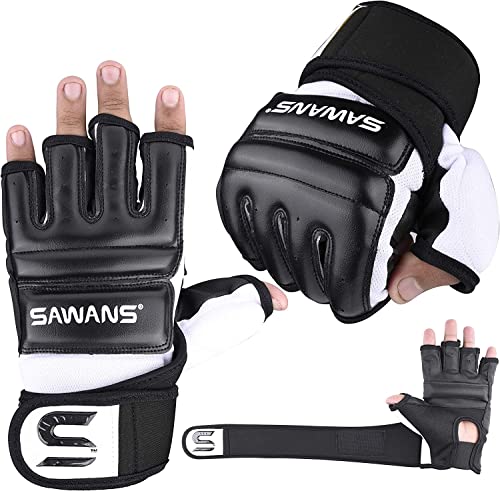
As an Amazon Associate we earn from qualifying purchases at no extra cost to you. Ratings are shown as listed on Amazon.
Its main advantage is versatility. The thumb is attached in a way that allows useful movement without leaving it completely unprotected, and the hook-and-loop wrist closure is quick to adjust between rounds. The trade-off is that the compact hand compartment may feel tight for people with broad palms or long fingers. Measure your hand rather than choosing only by body weight.
Hayabusa T3 MMA Gloves: best for wrist support
Hayabusa’s T3 MMA Gloves are aimed at athletes who prefer a more structured fit and substantial wrist stabilization. The design uses a multi-strap closure rather than relying on a single broad band, so the glove can feel more locked onto the hand during pad and bag work. This is useful for beginners who have not yet developed consistent wrist positioning.
That extra structure has consequences. The closure is bulkier, takes longer to put on, and can restrict wrist movement more than a minimalist competition glove. The T3 is better suited to training than to athletes seeking the closest possible competition feel. Check the manufacturer’s hand-measurement chart carefully: a snug fit is desirable, but excessive compression can make wrapping and finger movement uncomfortable.
Venum Challenger MMA Gloves: best budget-oriented training choice
Venum Challenger models are widely positioned as accessible training gloves, often using synthetic leather and a conventional hook-and-loop closure. They are suitable for beginners, occasional bag work, and light technical drilling when the budget is limited. Their lower price generally makes them easier to replace when sweat, abrasion, or repeated washing eventually compromises the shell.
Expect less refined shaping and potentially faster surface wear than from premium leather or heavily reinforced training gloves. They should not be treated as a substitute for dedicated sparring equipment if your training partners require larger impact-absorbing gloves. Confirm the exact model and weight before buying, because Venum sells several MMA glove constructions under similar names.
RDX MMA gloves: best for broad model choice
RDX offers multiple MMA glove constructions, from lightweight competition-style gloves to more padded training models. This makes the brand useful for comparing price, padding, and closure style within one product family. Some versions emphasize a thick striking area, while others leave more room around the palm for grappling.
The important buying decision is the model, not only the brand. Look for a clearly stated weight, a reinforced thumb attachment, dense but resilient knuckle foam, and a wrist strap wide enough to overlap the wrap. Avoid choosing solely from photographs: a glove that looks heavily padded may still have limited wrist support or a cramped thumb channel.
How the important features compare
Padding distribution
MMA gloves cannot place as much foam around the hand as boxing gloves without interfering with grappling. Competition gloves usually concentrate a relatively thin layer over the knuckles and provide limited coverage around the fingers. They are light and maneuverable, but they are not the best choice for repeated hard sparring.
Training and sparring gloves typically use thicker multi-layer foam across the knuckles and may add padding over the back of the hand or thumb. This reduces the consequences of imperfect contact, but it also makes the glove heavier and less dexterous. For regular partner work, prioritize a model labeled for sparring rather than simply selecting the largest available weight.
Wrist support and closure
A wide hook-and-loop strap is the most practical closure for everyday training because it can be tightened quickly over hand wraps. Single-strap designs are generally simpler and less bulky. Dual-strap or multi-strap systems can provide a more secure feel, but they may take longer to fasten and can create pressure points if positioned incorrectly.
Lace-up MMA gloves can offer a close fit, but they require assistance and are less convenient when changing drills. Whichever system you choose, the wrist should feel supported without numbness, tingling, or restricted circulation. Gloves cannot correct poor punching mechanics, so technical instruction remains more important than maximum strap stiffness.
Thumb mobility
The thumb should move enough to grip, post, and hand-fight, while remaining connected to the glove by durable material. A thumb that is completely loose may improve mobility but increases exposure to accidental bending and abrasion. Test the thumb with a wrap on: touch it toward the index finger, make a light fist, and simulate a grip. If the seam pulls sharply or the thumb is forced sideways, try another shape.
Sizing: a practical method
MMA gloves are commonly selected by weight, but weight is not the same as hand size. An 8 oz glove can fit very differently depending on the internal pattern, foam density, and thumb construction. Measure the circumference around your dominant hand at the knuckles, excluding the thumb, while wearing the wraps you intend to use.
| Approximate hand circumference | Starting size to investigate | Fit check |
|---|---|---|
| 17–19 cm | Small or medium | Fingers reach the end without curling tightly |
| 19–21 cm | Medium or large | Wraps fit without forcing the wrist strap |
| 21–23 cm | Large or extra-large | Thumb channel remains usable and palm is not compressed |
These are starting points rather than universal sizes; follow the particular manufacturer’s chart. Add room for hand wraps, but do not compensate for a badly shaped glove by sizing much larger. Excess internal movement allows the hand to slide during impact and can make gripping less controlled.
Durability and ownership costs
The first wear points are usually the palm seam, thumb attachment, wrist strap stitching, and the striking surface over the first two knuckles. Synthetic leather is often easier to clean and less expensive to replace, while genuine leather may develop a more comfortable feel but still fails if it remains damp after every session. Premium materials do not eliminate the need for maintenance.
After each workout, remove the gloves from your gym bag, wipe the exterior with a lightly damp cloth, and allow them to dry in an open, ventilated place. Do not place them directly on a radiator or use a high-heat dryer, as heat can harden foam and damage adhesives. Do not machine-wash or soak the gloves unless the manufacturer specifically permits it.
Use hand wraps for striking sessions, even with heavily padded gloves. Wraps reduce movement inside the glove and absorb sweat, which helps protect the lining. If you train three times weekly and a pair lasts nine months, that is approximately 117 uses. A $60 pair therefore costs about $0.51 per session before replacement; a $120 pair lasting 18 months at the same frequency costs about $0.51 as well. The cheaper purchase is not automatically the lower-cost option if its wrist strap or seams fail sooner.
What to buy for sparring versus competition
For sparring, choose the most protective glove your gym permits: normally a 7–10 oz training model with resilient knuckle foam and a secure wrist closure. Ask your coach about required weights, because many gyms prohibit small competition gloves during partner striking. For competition, buy an approved 4–6 oz model only after confirming the event’s rules, glove supplier, color requirements, and inspection standards.
If you train frequently, two pairs are more practical than one: a padded pair for sparring and a lighter pair for competition-style drills or grappling. If you can buy only one, an 8 oz all-purpose glove is usually the more useful compromise, provided its thumb is mobile and its padding is clearly intended for partner work.
Final verdict
The best MMA gloves are the ones whose padding, fit, wrist support, and thumb movement match the session. Choose Fairtex BGV1 for a proven versatile shape, Hayabusa T3 for a more structured wrist feel, Venum Challenger for budget-conscious occasional training, or a carefully selected RDX model when you want several construction and price options. Regardless of brand, prioritize correct sizing, hand wraps, ventilation, and a glove approved by your gym or competition organization.


Write Your Review
No reviews yet. Be the first to share your experience!