
Key takeaways
- Compare winter mountain bike gloves with real insulation and weather protection, including the PEARL iZUMi AmFIB Lobster Gel and MOREOK 200g Thinsulate gloves.
Winter mountain biking is the hardest hand-warmth problem in cycling: speeds are lower than on the road, but rides are longer, the weather is wetter, and you still need one finger working a brake lever and a shifter on every descent. This roundup is deliberately short, because the filter was strict: a glove only qualifies if its listing states real insulation and weather protection for winter riding, and its Amazon US listing could be verified as live. Two gloves passed.


The two take opposite approaches. The PEARL iZUMi is a cycling-specific lobster glove that trades individual fingers for shared warmth, with gel palm padding for the bars. The MOREOK is a five-finger insulated glove with a heavy 3M Thinsulate fill and a waterproof membrane, sold for cycling among other winter sports. Choose by how cold your rides actually get.
That short list is also a fair picture of the market. Plenty of gloves call themselves winter gloves on the strength of a brushed lining and a windproof panel, and plenty more are road gloves that assume higher speeds and shorter stops. A mountain bike glove for real winter has to insulate at low effort, survive wet trail spray, and still let you brake with one finger while the other hand is half numb. Few listings state enough to prove all three, which is why this roundup holds two gloves instead of five.
Quick Picks
As an Amazon Associate we earn from qualifying purchases.
| Product | Best for | Key spec from title |
|---|---|---|
| PEARL iZUMi AmFIB Lobster Gel Glove | Deep cold and long winter rides | 170g PrimaLoft Gold insulation |
| MOREOK Waterproof Winter Gloves | Colder days on a tighter budget | 200g 3M Thinsulate, TPU membrane |
How to Choose
Insulation weight is the warmth dial
Winter gloves are filled with insulation measured in grams, and the figure in the listing is the most honest warmth guide you get. Higher gram weights, like the 170 and 200 gram fills here, are built for below-freezing riding, while light fills in the 40 to 100 gram range suit cool autumn days and will leave you cold in January. Match the fill to the coldest ride you actually do, because an over-insulated glove is almost as miserable on a climb as a cold one is on a descent.
Lobster split versus five fingers
A lobster glove groups the fingers into two compartments so they share warmth, keeping only the index finger and thumb separate for braking and shifting. It is measurably warmer than a five-finger glove of similar fill, which is why it exists. The cost is dexterity: zips, buckles and phone screens are clumsier. Five-finger gloves keep full control feel and work better for technical riding and mid-ride adjustments. Decide which problem you have, cold or clumsiness, before you decide the shape.
Waterproofing for winter trails
Winter trails mean slush, wet snow and puddle spray, so a glove that is merely windproof will soak through and then chill your hands faster than no glove at all. Look for a stated waterproof membrane in the listing, as the MOREOK has, or a softshell rated to protect from wind and water, as the PEARL iZUMi AmFIB fabric claims. A membrane glove is the safer choice for wet climates; a windproof softshell breathes better on dry, cold days. Also check the cuff: a long gauntlet that overlaps your jacket sleeve keeps spray and snow out of the gap that opens every time you reach for the bars.
Palm padding and bar feel
Mountain bike gloves earn their keep at the palm. Gel padding, which the PEARL iZUMi listing states, damps the vibration that numbs your hands during long frozen descents, and a grippy synthetic palm keeps hold of wet grips. Too much padding, though, dulls the feel of the bar on technical sections. Riders on rigid forks and hardtails benefit most from gel; riders who value precision on slow technical climbs often prefer a thinner palm and accept the buzz.
The 2 Best Options
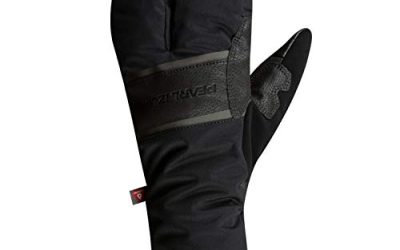
1. PEARL iZUMi AmFIB Lobster Gel Glove
The AmFIB Lobster is the deep-winter specialist in cycling gloves. Its split-finger lobster design groups fingers to share warmth around a 170 gram PrimaLoft Gold insulation fill with Cross Core technology, which the maker uses to claim serious warmth with minimal bulk. The AmFIB softshell back protects against wind and water, the 3D-shaped gel palm pad is there for long, rough descents, and the index finger and thumb are touchscreen compatible for a mid-ride map check. On a flat bar, some riders find the paired fingers take adjustment for braking, but for genuinely cold rides this is the warmest verified option in this roundup.
Specs (from the listing):
– Brand: PEARL iZUMi
– Model: 14342006021M (AmFIB Lobster, Black, Medium on this listing)
– Insulation: 170g PrimaLoft Gold with Cross Core technology
– Shell: AmFIB softshell, wind and water protection
– Palm: 3D gel palm padding
– Design: Lobster split-finger
– Features: Touchscreen-compatible index finger and thumb
Best for: Riders who keep riding through below-freezing weather and want the warmest cycling-specific glove.
Watch out for: The lobster split reduces dexterity for zips, buckles and small controls compared with a five-finger glove.
ASIN: B089NZ2397
2. MOREOK Waterproof & Windproof Winter Gloves
The MOREOK takes the conventional route and loads it: 200 grams of 3M Thinsulate insulation, a TPU waterproof membrane laminated into a windproof outer, and a warm lining, in a five-finger glove that keeps full dexterity for shifters, brakes and trailside adjustments. The listing rates the glove to minus 30 degrees Fahrenheit and lists cycling among its intended uses alongside skiing, running and motorcycle riding, with touchscreen fingertips across the hand. That minus-30 figure is the maker’s claim without a cited test standard, so treat it as an upper bound rather than a comfort promise, but the insulation weight itself is real and heavy for the price class.
Specs (from the listing):
– Brand: MOREOK
– Model: MK020F-B-L (Black, Large on this listing)
– Insulation: 200g 3M Thinsulate
– Waterproofing: TPU waterproof membrane, windproof outer fabric
– Temperature claim: -30 degrees F per listing
– Features: Touchscreen fingertips, adjustable wrist strap
– Sizes: XS to XXL per listing
Best for: Riders who want a five-finger winter glove with heavy insulation and a waterproof membrane at an entry-level cost.
Watch out for: It is a general winter sports glove rather than a cycling-specific design, so there is no gel palm padding for long descents.
ASIN: B07JDLJBNN
Which One Fits Your Situation
Below-freezing rides and cold hands
Take the PEARL iZUMi AmFIB Lobster. If your fingers go numb on ordinary winter gloves, the lobster design is the structural answer, not just more of the same fill. The gel palm also pays off on frozen, rutted trails where every descent rattles your hands. Accept the clumsier zips as the price of finishing the ride with working fingers. Riders who know they run cold should treat this as the default choice rather than the upgrade.
Mixed winter riding on a budget
Take the MOREOK. Most winter rides are cold and wet rather than arctic, and this glove’s membrane and heavy Thinsulate fill cover that ground with full five-finger control for technical sections and trailside repairs. It also doubles for skiing and winter work, which spreads the cost across more of your winter than a cycling-only glove would.
Wet climate, slush and spray
Take the MOREOK for its stated waterproof membrane if your winter trails are mostly wet, or the PEARL iZUMi if your wet days are also your coldest. A membrane keeps slush out hour after hour; the AmFIB softshell sheds spray and light precipitation while breathing better. Be honest about which your winters actually deliver, because the wrong choice fails in opposite directions.
Short rides and mixed winter use
Take the MOREOK as well if most of your winter riding is an hour or two close to home and the same gloves will also serve for dog walks, snow clearing and spectating. A general winter glove earns its place across all of that, and its heavy fill is more than a short ride demands. Save the cycling-specific lobster for the long, cold rides where its compromises are buying you something real.
Common Mistakes
- Buying a cool-weather glove with a light fill for mid-winter riding because it felt less bulky in the shop.
- Sizing winter gloves skin-tight like summer gloves, which compresses the insulation and restricts the blood flow your fingers need.
- Trusting a minus-30 listing claim as a comfort rating when the listing cites no test standard behind the number.
- Choosing a waterproof glove for dry, cold riding and then overheating, because membranes always trade away some breathability.
- Forgetting that a lobster glove changes braking feel, and heading straight for the most technical trail to learn that.
Frequently Asked Questions
Are lobster gloves really warmer than five-finger gloves?
Yes, for a physical reason: fingers grouped together share heat and present less surface area to the cold than fingers separated by four layers of glove wall. The PEARL iZUMi pairs that design with a heavy 170 gram fill, which is why lobster gloves are the standard answer for riders whose hands go cold in ordinary winter gloves. The trade is dexterity, not comfort.
What temperature are these gloves actually good for?
Treat listing numbers cautiously. The MOREOK claims minus 30 degrees Fahrenheit without citing a test standard, so read it as a ceiling. In practice, insulation weight is the better guide: fills around 170 to 200 grams are deep-winter territory for active riding, where your own effort generates heat. Riders who run cold, ride slowly or stop often should choose the heavier end and consider a liner glove as well.
Can I use ski gloves for winter mountain biking?
You can, and the MOREOK in this roundup is sold for both. The differences are in the details: cycling-specific gloves like the PEARL iZUMi add gel palm padding shaped for handlebars and keep bulk low around the fingers for brake levers. A bulky ski glove can crowd the controls and fatigue your grip. If you already own warm ski gloves, try them on the bike before buying anything.
How do I stop my hands sweating on climbs, then freezing on descents?
That cycle is the core winter-glove problem. A breathable softshell helps on the climb, a membrane glove helps in wet descents, and many riders carry the pair they are not wearing in a pack for the descent. At minimum, choose the glove for the descent, because that is when wind chill peaks and cold hands become a braking-safety problem rather than a comfort problem. Starting a ride with slightly cool hands also helps, because hands that begin warm and sweating in a sealed glove are the ones that freeze first.
More from Amazon
Programs that pair well with the guide above. Offers and eligibility are set by Amazon and may change.
Free shipping on eligible items, Prime Video and more. Eligible new members can start with a free trial.
Start a Prime free trialAudiobooks and podcasts to listen to on the go. Eligible new members can start with a free trial.
Try Audible freeAd-free music streaming. Eligible new subscribers can start with a free trial.
Try Music Unlimited freeA free business account with business pricing and bulk-buying tools for work, shop or home office.
Create a business accountAs an Amazon Associate we earn from qualifying purchases.
Write Your Review
No reviews yet. Be the first to share your experience!