

Key takeaways
- Lower coil zones: often provide broad support across the mattress.
- Zoned coils: use firmer sections beneath the midsection and softer sections near the shoulders or legs.
- Thicker-gauge perimeter coils: improve stability when sitting or sleeping near the edge.
- Microcoils: smaller springs above the main support unit can add cushioning and bounce, but may increase cost.
The best hybrid mattresses balance a supportive pocketed-coil core with enough pressure-relieving foam for your sleep position, and the right choice depends more on firmness, motion control, and edge construction than on the word “hybrid” itself.
Our top picks
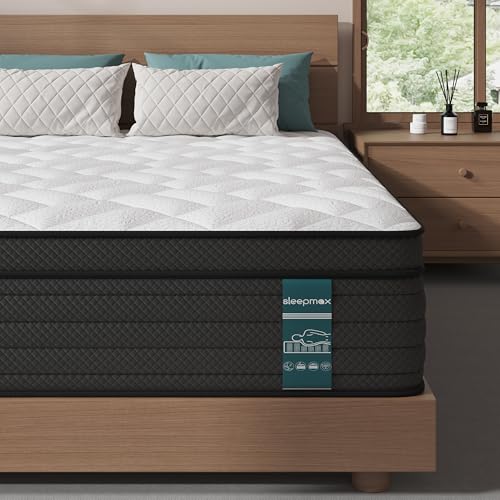
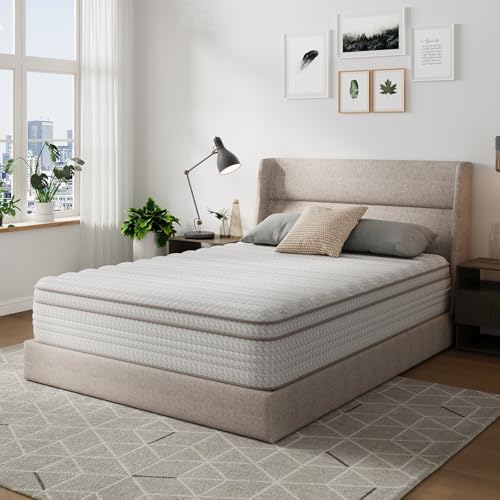
As an Amazon Associate we earn from qualifying purchases at no extra cost to you. Ratings are shown as listed on Amazon.
What makes a hybrid mattress different?
A hybrid mattress combines individually wrapped coils with one or more comfort layers, usually memory foam, latex, polyfoam, or a combination of these materials. The coils provide airflow, bounce, and reinforced support, while the upper layers soften the surface and reduce pressure points.
For active sleepers, hybrids can be appealing because they are generally easier to move on than all-foam mattresses. However, “hybrid” is not a performance grade. Two mattresses can both be hybrids yet feel completely different because of their coil count, foam density, comfort-layer thickness, and firmness.
Coil systems: the part doing most of the structural work
Pocketed coils
Pocketed coils are individually wrapped springs that compress with less effect on neighboring coils. They are the most common coil type in current hybrid mattresses and usually offer a useful combination of support, motion isolation, and responsiveness.
- Lower coil zones: often provide broad support across the mattress.
- Zoned coils: use firmer sections beneath the midsection and softer sections near the shoulders or legs.
- Thicker-gauge perimeter coils: improve stability when sitting or sleeping near the edge.
- Microcoils: smaller springs above the main support unit can add cushioning and bounce, but may increase cost.
Coil count alone is not a reliable quality score. A mattress with more coils is not automatically more supportive. Coil diameter, steel gauge, arrangement, foam density, and the quality of the foundation matter as well.
How to read coil specifications
Manufacturers may describe coils by gauge, with lower numbers generally indicating thicker steel. A support core might use coils around 12 to 15 gauge, while thinner comfort microcoils may use a higher gauge. Treat these figures as one part of the specification rather than a guarantee of durability.
Foam layers and surface feel
Memory foam contours closely and absorbs movement well, but thick layers can make changing position feel slower and may retain more heat. Latex tends to feel springier, cooler, and easier to move across, although it may transmit slightly more movement. Polyfoam varies widely: low-density versions are inexpensive and responsive, while higher-density versions usually feel more substantial.
Look for the thickness of the comfort system, not just the foam name. A hybrid with 2 inches of soft foam may feel markedly firmer than one with 4 inches of cushioning over the same coils. Edge-to-edge foam encasement can also make the perimeter feel more stable, but it may reduce the amount of usable spring surface.
| Feature | Typical useful range | What it changes | Who should pay attention |
|---|---|---|---|
| Comfort foam | 2–4 inches | Pressure relief and surface firmness | Side sleepers and people who dislike a hard surface |
| Support-coil height | 7–9 inches | Core stability, airflow, and bounce | Heavier sleepers and people who prefer a responsive feel |
| Mattress height | 11–15 inches | Ease of getting in and out and fitted-sheet depth | Short bed frames, older sleepers, and deep-pocket-sheet owners |
| Firmness scale | Medium-soft to firm, roughly 4–8/10 | Sinkage, alignment, and ease of movement | Anyone choosing between side, back, or stomach sleeping |
| Mattress weight | Approximately 70–160 lb for queen models | Delivery, rotation, and installation difficulty | Anyone moving frequently or setting up a mattress alone |
| Trial period | Usually about 90–365 nights | Time to adjust and identify persistent comfort problems | People uncertain about firmness or buying online |
Best hybrid mattresses by sleeping situation
Best for side sleepers: a medium or medium-soft hybrid
Side sleepers generally need enough surface cushioning for the shoulders and hips without losing support through the waist. A hybrid around medium-soft to medium firmness, with roughly 3–4 inches of responsive comfort material, is a sensible starting point.
Memory foam can reduce the feeling of pressure at the shoulder, while latex or springier polyfoam makes it easier to change sides. If the mattress feels comfortable for five minutes but your shoulder or hip becomes sore after a full night, the comfort layer may be too thin or too firm.
Best for back sleepers: a medium-firm, zoned hybrid
Back sleepers often benefit from a surface that cushions the lower back without allowing the pelvis to sink too far. Medium-firm hybrids with targeted lumbar reinforcement are worth considering. Avoid choosing a model solely because it has “lumbar support”; the actual firmness and your body shape determine whether the zoning feels useful.
Best for stomach sleepers: a firmer hybrid
Stomach sleepers typically need stronger resistance under the hips and abdomen. A firm hybrid, often around 7–8/10, can limit excessive sinkage. Very thick pillow tops may feel luxurious initially but can permit the midsection to dip more than you prefer.
Best for combination sleepers: a responsive latex or thinner-foam hybrid
If you switch between positions, prioritize ease of movement. Latex hybrids and models with a thinner, springier comfort layer tend to make repositioning easier than deeply contouring memory-foam designs. A medium to medium-firm feel is the most versatile starting point.
Best for couples: individually wrapped coils plus effective perimeter support
Motion isolation depends on the entire construction. Pocketed coils help, but thick memory foam usually absorbs more movement than latex or a very bouncy coil unit. Couples should also check the usable sleep surface: a weak edge can make both people retreat toward the center.
Firmness, motion isolation, and edge support: the trade-offs
- More cushioning usually improves pressure relief, but can make the mattress warmer and harder to move on.
- More bounce improves mobility, but can transfer more movement between partners.
- Firmer foam around the perimeter improves sitting stability, but may create a noticeable hard border.
- Thicker mattresses can feel more luxurious, but require deeper sheets and are harder to rotate.
For a couple with different preferences, a medium hybrid with moderate motion isolation is often a better compromise than an extremely soft or extremely firm model. If one sleeper needs a substantially different firmness, consider a split setup or two separate mattresses where the bed frame allows it.
Decision matrix for choosing a hybrid
| Your priority | Look for | Be cautious with |
|---|---|---|
| Lower budget | 7–9-inch pocketed coils, simpler polyfoam, 10–12-inch total height | Very thick pillow tops with unclear foam specifications |
| Frequent position changes | Latex, responsive polyfoam, moderate contouring | Deep memory-foam comfort layers |
| Sharing the bed | Individually wrapped coils, dense comfort foam, reinforced edges | Open coil systems or highly bouncy latex-only designs if movement is a concern |
| Limited bedroom space | Standard room dimensions with clearance for delivery and rotation | Extra-tall models that make the bed difficult to move or fit with existing furniture |
| Heavier body weight | Firm perimeter, robust coil unit, higher-density comfort materials | Soft, thin comfort layers that bottom out during normal use |
| Hot sleeping environment | Breathable coil core, latex or ventilated foam, washable cover | Very thick, slow-response memory foam and dense quilted tops |
Ownership realities: what wears first
The upper comfort layers usually show wear before the coils. Body impressions, softening, and a loss of surface resilience are more common early warning signs than a broken spring. Rotating the mattress 180 degrees every three to six months, if the manufacturer permits it, can distribute wear. Do not flip a one-sided hybrid unless it is specifically designed for two-sided use.
Use a compatible foundation with adequate center support. A queen or larger bed generally needs a properly supported center rail, and slatted bases must keep gaps within the mattress maker’s stated limit. Excessive spacing can allow sagging and may affect warranty coverage.
Protect the mattress with a breathable, washable protector. Vacuum the surface occasionally, spot-clean spills rather than soaking the layers, and allow the mattress to dry fully. Never use a heated blanket, steam cleaner, or cleaning chemical unless the care instructions allow it.
How to test a hybrid mattress at home
- Check the foundation first. Confirm that the frame dimensions and slat spacing match the manufacturer’s requirements.
- Give it time. New foam can feel different after unpacking, and your body may need several weeks to adjust.
- Test your normal positions. Spend time on your side, back, and stomach rather than judging only from sitting on the edge.
- Assess movement together. Have one person change position while the other remains still.
- Check the edge. Lie near the perimeter and sit on it to distinguish stable support from a collapsing border.
- Read the return terms. Confirm the trial minimum, pickup process, fees, and warranty exclusions before opening the package.
The best hybrid mattresses are not necessarily the tallest, softest, or most heavily advertised. Choose the coil construction and firmness that match your sleep position, then use foam type, motion isolation, edge support, and maintenance requirements to break ties. If persistent pain, numbness, or other symptoms affect sleep, seek advice from a qualified healthcare professional rather than relying on a mattress change alone.

Write Your Review
No reviews yet. Be the first to share your experience!