

Key takeaways
- Protect your hands: Use wraps and bag gloves every session. Beginners often underestimate the impact on wrists and knuckles.
- Mounting: Use a rated bracket into a joist, or a stand. Hire an installer if you are unsure.
- Start gently: Build up force over weeks. Sore wrists or shoulders are a signal to rest.
- Technique: Beginner classes or a coach help establish stance and punch mechanics.
- Medical: Anyone with joint, heart or back conditions should speak with a doctor before intense bag work.
- Children: Youth training should be supervised, and bag weight should be matched to the child.
A beginner is usually best served by one all-round heavy bag, either a pre-filled hanging model such as an Everlast Elite or Ringside Powerhide if it can be mounted, or a freestanding Century Wavemaster if it cannot, with speed and double-end bags added later for timing. The wrong first purchase is usually a specialty bag, because it teaches one skill while leaving basic power and footwork untouched.
Our top picks


As an Amazon Associate we earn from qualifying purchases at no extra cost to you.
At a Glance: Bag Types for New Boxers
| Bag type | Best for | What it teaches | Limits |
|---|---|---|---|
| Hanging heavy bag (about 70 to 100 lb) | First bag for most adults | Power, combinations, conditioning, distance | Needs a secure mount; vibration through ceilings |
| Freestanding bag (for example Century Wavemaster) | Renters and small rooms | Cardio, combos, basic kicks | Moves under hard strikes; smaller, lighter target |
| Body Opponent Bag (Century BOB) | Target-placement practice | Head and body shot selection | Not for heavy power work |
| Speed bag | Rhythm and shoulder endurance | Timing, hand speed | Needs a platform and a learning curve |
| Double-end bag | Accuracy and head movement | Reflexes, defense | Frustrating before basic form is set |
| Uppercut or banana bag | Hooks, uppercuts and kicks | Inside work | Secondary bag, not a first purchase |
Specifics here are drawn from maker listings and roundup outlets such as TotalShape, Legends Only League and Sabertooth Games, which describe the Everlast Elite and 70 lb kit as beginner-oriented, the Ringside 100 lb Powerhide as a heavier pick, and the Century Wavemaster as compact. Several of those pages are affiliate-style lists, so the picks below should be read as a pattern in reviewer opinion rather than a verdict.
Choosing Between the Main Types
Heavy bags
The heavy bag is the standard training tool in boxing gyms. It resists hard punches, allows kicks or knees if you add those later, and trains footwork around a swinging target. For a beginner, weight is the main choice. A frequently quoted coach guideline is that the bag should weigh roughly half your body weight, so an adult in the middle of the weight range often lands at 70 to 80 lb. A 100 lb bag such as the Ringside Powerhide is described as better for heavier or stronger users.
Freestanding bags
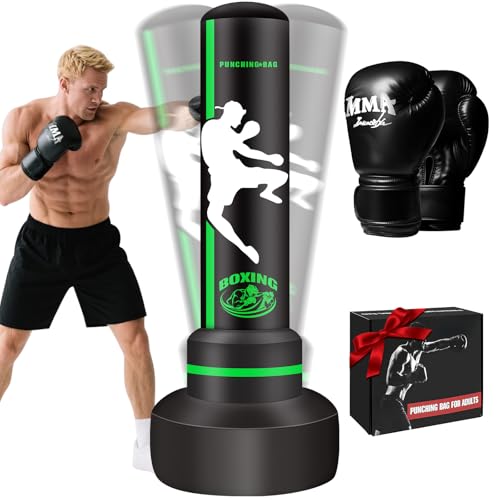
A freestanding bag stands on a filled base, so it avoids drilling. Reviewers report the Century Wavemaster as compact and good for lighter cardio punching and kicking, while larger models such as the Wavemaster XXL are praised for stability when sand-filled. Water-filled bases, as on some Everlast models, rock more. The convenience is real; the trade-off is that a hard cross can send the bag tilting.
Speed and double-end bags
These are skill tools. A speed bag builds rhythm and shoulder stamina, while a double-end bag trains accuracy and reflexes. Most coaches introduce them after a student has basic stance, jab and cross, so buying them first is rarely the best use of money.
What to Look For When Buying
Filling and shape
Pre-filled bags save work. Empty bags need packing and may settle unevenly. Straight cylindrical bags suit general boxing; tapered or banana shapes target specific strikes.
Cover and stitching
Synthetic leather, vinyl and similar covers suit beginners. Look at the stitching around the straps, because that is where wear first appears. Makers use names like Powerhide and Nevatear for their covers; these are brand descriptions, so judge them against reviewer comments about durability.
Hardware
Chains, swivel and ceiling bracket should be included or purchased separately and rated for the load. A hanging bag creates dynamic forces greater than its static weight. If you cannot find a joist, use a stand or a freestanding bag rather than improvising.
Space
Allow free swing in every direction. A bag brushing a wall teaches poor distance and wears the cover.
Budget Tiers and Trade-offs
Budget
Kits with a bag, gloves and wraps lower the barrier to starting. The Everlast 70 lb kit is described by TotalShape as suited to beginners and includes gloves, hand wraps and a bungee. Covers are thinner, and you may upgrade the gloves later.
Mid-range
The Everlast Elite series and Ringside Powerhide sit here per roundups. They offer denser fill, sturdier stitching and included hardware, suitable for training several times a week.
Premium
Leather bags and gym-grade models last for years but are rarely essential to a newcomer. Consider them if you intend to train long term or share a bag with others.
Safety and Fit Notes
- Protect your hands: Use wraps and bag gloves every session. Beginners often underestimate the impact on wrists and knuckles.
- Mounting: Use a rated bracket into a joist, or a stand. Hire an installer if you are unsure.
- Start gently: Build up force over weeks. Sore wrists or shoulders are a signal to rest.
- Technique: Beginner classes or a coach help establish stance and punch mechanics.
- Medical: Anyone with joint, heart or back conditions should speak with a doctor before intense bag work.
- Children: Youth training should be supervised, and bag weight should be matched to the child.
Pick X If… Decision Table
| Pick this | If you | Because |
|---|---|---|
| Everlast Elite 70 to 80 lb | Can hang a bag and want a simple start | Pre-filled and widely recommended to beginners |
| Everlast 70 lb kit | Need gloves and wraps too | All-in-one |
| Ringside 100 lb Powerhide | Are heavier or already strong | Dense fill |
| Century Wavemaster | Rent or lack a mount | Freestanding |
| Century BOB | Want to practice shot placement | Torso target |
| Speed or double-end bag | Already have a base in technique | Skill refinement |
Alternatives to Consider
Focus mitts with a coach
Mitt work gives live feedback and is often the quickest way to correct form. Many gyms include it in beginner classes.
Shadow boxing and skipping rope
These cost little and develop footwork and rhythm before you buy a bag at all.
Gym membership
Trying bags at a boxing gym lets you feel different weights before committing to one. That can be the best way to avoid buying the wrong model.
How Reviewer Opinion Is Split
Roundups do not agree on a single winner, and the differences are instructive. Some outlets favor a heavier Ringside bag because it holds shape and takes hard punches. Others favor Everlast because it arrives ready to hang and costs less. Freestanding recommendations lean on Century because the brand dominates that category, yet reviewers also note that lighter water-filled alternatives rock more. A reader should treat the variation as a sign that bag choice depends on your space, strength and plans rather than on one universal best.
It also helps to separate what makers state from what reviewers report. Makers state the weight, dimensions, cover name and what is in the box. Reviewers add opinions on durability, swing and feel. Opinions about how long a cover lasts come from owner experience and can vary with how often and how hard the bag is hit.
Questions to ask before you buy
- Can I mount a bag safely where I plan to train, or do I need a stand or freestanding model?
- How tall am I, and does the bag give a target at head and body height?
- Does the listing say the bag is pre-filled, and with what?
- Are chains, swivel and a mount included, and are they rated for the weight?
- What warranty does the maker state, and what does it cover?
- Will gloves and wraps be needed separately?
A Simple Starter Plan
Begin with a heavy or freestanding bag and learn the jab, cross, hook and basic defense. After a month or two of consistent practice, consider a double-end bag for accuracy and a speed bag for rhythm. Keep the first bag for as long as it works; most beginners progress for months before they outgrow a mid-range model. Replace worn hardware promptly and keep the area around the bag clear.
Rounds of two to three minutes with a minute of rest mimic a gym routine. Start with three to four rounds and build gradually. Wipe the cover after use, keep it out of sunlight and inspect chains regularly.
Frequently Asked Questions
What is the best first boxing bag?
For most adults, a pre-filled 70 to 80 lb hanging heavy bag is a common starting point in reviewer coverage. If you cannot hang one, a freestanding bag such as the Century Wavemaster is the usual alternative.
Do I need a speed bag as a beginner?
Not at first. Speed bags develop timing and shoulder endurance, but basic punches, stance and footwork benefit more from a heavy bag.
Is a freestanding bag worse than a hanging one?
It moves more under hard strikes and usually feels lighter, but it avoids drilling and works well for cardio and technique. Heavier sand-filled bases improve stability.
What gear do I need besides the bag?
Hand wraps and bag gloves are the minimum. Mouthguards and shin guards matter only for sparring or kicking work. A floor mat helps freestanding bags.
How heavy should my bag be?
A common coaching guideline is roughly half your body weight, though preferences differ. Beginners often prefer to err lighter while technique develops.
Can children use these bags?
Youth sizes and lighter bags exist, and training should be supervised by a qualified coach or parent. Follow the maker’s age and weight guidance.







Write Your Review
No reviews yet. Be the first to share your experience!