

Key takeaways
- Fingertip seams: repeated contact with controls and touchscreen use can loosen stitching.
- Palm panels: throttle and clutch friction may polish or thin the material before the rest of the glove looks worn.
- Hook-and-loop strips: dirt and lint reduce grip, while pulling the strap at an angle can damage the edges.
- Waterproof membranes: abrasion inside the glove and repeated wet drying cycles can eventually reduce performance.
- Battery connectors: on heated gloves, strained wires and poorly stored connectors are common failure points.
The best motorcycle gloves for most riders are CE-certified leather gloves with hard knuckle armor, reinforced palms, a secure wrist closure, and touchscreen-compatible fingertips; choose textile or heated construction when weather protection matters more than maximum abrasion resistance.
Gloves should be selected for the riding situation rather than appearance alone. A short leather street glove can be excellent in warm, dry conditions but a poor choice for winter commuting, while a waterproof touring glove may protect against rain yet feel bulky on a sport bike. The key comparison is how leather or textile construction, armor, palm reinforcement, closures, and weather features work together.
Our top picks


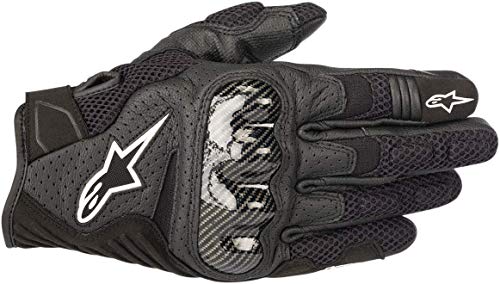
As an Amazon Associate we earn from qualifying purchases at no extra cost to you. Ratings are shown as listed on Amazon.
Leather vs. textile: which construction is better?
Leather remains the usual choice for riders prioritizing abrasion resistance, control feel, and a close fit. Goat, cow, and kangaroo leather all appear in motorcycle gloves, but they differ in softness and durability. Goat leather is supple and comfortable, cowhide is generally more substantial, and kangaroo leather can provide a thin, flexible feel at a higher price. Leather usually breaks in over several rides and can lose shape if repeatedly soaked and dried incorrectly.
Textile gloves use materials such as polyester, nylon, synthetic leather, or proprietary abrasion-resistant fabrics. Their main advantages are lower weight, quicker drying, and easier integration of waterproof membranes and insulation. Textile construction is particularly practical for touring and commuting, where rain, changing temperatures, and frequent removal matter. Its drawback is that palm and finger feel can be less precise, especially when thick insulation or a waterproof liner is added.
| Glove type | Typical weight per pair | Comfort range | Best use | Common compromise |
|---|---|---|---|---|
| Light leather street glove | 180–300 g | 15–30°C | Daily road riding and warm-weather use | Limited rain and insulation |
| Armored leather sport glove | 250–400 g | 10–28°C | Fast road riding and maximum feel | Can be stiff until broken in |
| Textile touring glove | 300–500 g | 5–25°C | Commuting and long-distance touring | Less tactile control |
| Winter or heated glove | 450–800 g | -5–15°C | Cold-weather commuting | Bulk, battery or wiring management |
These figures are useful comparison ranges rather than guarantees. Shell thickness, insulation, membrane construction, battery packs, and size can move a glove outside the stated range.
Protection features that deserve priority
Knuckle armor
Hard molded armor offers more structured impact coverage than a simple foam pad. Carbon-fiber, thermoplastic, and composite protectors are common, while some gloves use a flexible viscoelastic insert. A good knuckle protector should remain centered when you make a fist and should not press painfully against the back of the hand when gripping the handlebar.
Look for motorcycle gloves certified to EN 13594:2015. The label is not a substitute for fit, but it indicates that the glove has been assessed against relevant protective requirements. If the glove is marketed for higher-risk riding, check whether the manufacturer specifies a higher protection level rather than assuming every armored glove offers the same coverage.
Palm and finger protection
Palm abrasion is a major reason to avoid thin fashion gloves for motorcycle use. Prioritize a double-layer palm, leather reinforcement at the heel of the hand, and an additional panel along the outside edge. A padded or hard palm slider can help the hand move across a surface, but it should not create pressure points when you hold the throttle.
Finger protection is often overlooked. Reinforced fingertips, covered seams, and a bridge joining the ring and little fingers can improve durability and reduce the chance of the fingers separating during a slide. The bridge should not restrict your ability to operate the clutch or front brake.
Best motorcycle gloves by riding situation
| Rider situation | Recommended construction | Essential features | Typical market range |
|---|---|---|---|
| Occasional fair-weather rider | Short leather | CE certification, knuckle armor, reinforced palm, hook-and-loop wrist | $60–$140 |
| Frequent urban commuter | Leather-textile hybrid | Low-profile armor, touchscreen fingertips, reflective details, easy cuff | $80–$180 |
| Sport-oriented road rider | Long-cuff leather | Hard knuckles, palm slider, finger bridge, double wrist closure | $140–$300 |
| All-weather tourer | Waterproof textile or leather-textile | Membrane, gauntlet cuff, visor wiper, thermal liner, secure closure | $120–$280 |
| Cold-weather commuter | Insulated or heated textile | Battery system, waterproof shell, long cuff, battery indicator | $180–$450 |
For recognizable examples, the Dainese Carbon 4 and Alpinestars SP-8 HD represent the close-fitting leather street category. REV’IT! Sand 4 gloves illustrate the touring-oriented approach, combining weather-focused construction with a longer cuff. Held Air N Dry gloves are known for a two-chamber concept intended to give riders separate options for dry and warmer conditions. Exact materials, armor specifications, and sizing can vary by model year, so confirm the current product label before buying.
Weather resistance: waterproof is not the same as warm
A waterproof membrane helps stop rain, but it does not automatically provide insulation. A thin waterproof glove can be suitable for summer showers and still feel cold in winter. Insulation adds warmth but reduces dexterity, increases drying time, and can make it harder to feel switches or adjust a lever.
For regular rain, choose a gauntlet cuff that overlaps the jacket sleeve. A cuff that ends inside the sleeve can funnel water toward the wrist. A visor-wiping panel on the thumb is useful in heavy rain, but it works best when the thumb material is soft and free of abrasive stitching.
Heated gloves are worth considering when cold is the main reason rides become uncomfortable. Compare battery voltage, claimed runtime, replacement battery cost, and whether the control is on the cuff or connected to the motorcycle. Treat advertised runtime as a maximum: higher heat settings, aging batteries, and low temperatures can reduce it.
Closures, touchscreen access, and fit
A hook-and-loop wrist strap should close without covering the controls or catching on the throttle. Long sport and touring gloves often use a second strap at the cuff, which helps keep the glove in place and seals out rain. A zipper can make entry easier but should not be the only mechanism holding the glove securely.
Touchscreen-compatible fingertips are convenient for navigation and fuel-payment terminals, but they are not equally accurate. Conductive patches can be less responsive when wet, and thick winter gloves may require firmer pressure. Consider touchscreen material a convenience feature, not a reason to accept poor armor or an insecure fit.
To check sizing, measure the circumference of your dominant hand around the knuckles without including the thumb, then compare that measurement with the manufacturer’s chart. As a practical fit check, the fingertips should reach near the end of each finger without pressing into the seam. When gripping the handlebar, there should be no pulling across the knuckles and no loose fold under the palm.
What wears out first?
- Fingertip seams: repeated contact with controls and touchscreen use can loosen stitching.
- Palm panels: throttle and clutch friction may polish or thin the material before the rest of the glove looks worn.
- Hook-and-loop strips: dirt and lint reduce grip, while pulling the strap at an angle can damage the edges.
- Waterproof membranes: abrasion inside the glove and repeated wet drying cycles can eventually reduce performance.
- Battery connectors: on heated gloves, strained wires and poorly stored connectors are common failure points.
Clean gloves according to the care label. Remove surface dirt with a damp cloth, air-dry them away from direct heat, and do not put leather gloves on a radiator. Do not use household solvents or aggressive detergents. If leather becomes dry, use only a conditioner approved for the glove’s finish; excessive treatment can soften structural panels or interfere with grip.
Bottom line
Choose a short leather glove if you ride mainly in warm, dry weather and want the clearest control feel. Choose a long-cuff leather sport glove when palm protection, knuckle armor, and retention take priority. Choose textile or leather-textile touring gloves for frequent rain and changing temperatures, and heated textile gloves when cold is the factor that limits your riding. In every category, proper fit, CE certification, reinforced palms, and a closure that stays secure matter more than touchscreen branding or decorative styling.


Write Your Review
No reviews yet. Be the first to share your experience!