

Key takeaways
- Soft, shock-absorbing foam: usually more partner-friendly for sparring, but can compress sooner under heavy bag use.
- Medium-density layered foam: the most versatile option for mixed training.
- Firm, compact foam: useful for bag feedback and durability, but better with controlled technique and appropriate hand protection.
- Multi-layer construction: generally gives a more progressive feel than a single slab of foam, though construction quality still varies.
Best Boxing Gloves for Training and Sparring
The best boxing gloves for most people are 14-ounce leather gloves with a secure hook-and-loop closure, medium-firm multi-layer foam, and enough room for hand wraps; choose 16 ounces for frequent sparring, heavier hands, or a coach’s requirement, and synthetic gloves when keeping the budget low or training only occasionally.
Quick picks by training situation
| Situation | Recommended glove | Why it fits | Typical market range |
|---|---|---|---|
| One pair for general gym training | 14 oz leather, hook-and-loop, medium-density foam | Balances bag work, mitts, conditioning, and occasional controlled sparring | $90–$220 |
| Regular sparring | 16 oz leather, broad padded striking surface | More impact absorption and usually preferred by boxing coaches | $120–$300+ |
| Small hands or lighter bodyweight | 12–14 oz compact-fit glove with a narrow hand compartment | Reduces excess movement without automatically choosing a smaller protective glove | $60–$180 |
| Heavy bag and pad work only | 12–14 oz firm-foam training glove | Less tiring than a 16 oz glove and gives clearer feedback on the bag | $50–$180 |
| Low budget or infrequent training | Synthetic 12–14 oz hook-and-loop glove | Lower initial cost and simpler replacement if training stops or changes | $25–$80 |
| Serious frequent training | Leather 14–16 oz glove plus a separate bag glove | Spreads wear across two pairs and avoids using sparring gloves on hard equipment | $180–$450 for both |
Leather versus synthetic boxing gloves
Leather: the better long-term choice for frequent training
Leather usually offers a more natural break-in, stronger resistance to surface abrasion, and better long-term value when the gloves are used several times per week. The palm, thumb attachment, and wrist edge are the areas most likely to show wear first. Good leather can soften around the hand while retaining its shape, but only if it is dried properly after use.
Our top picks

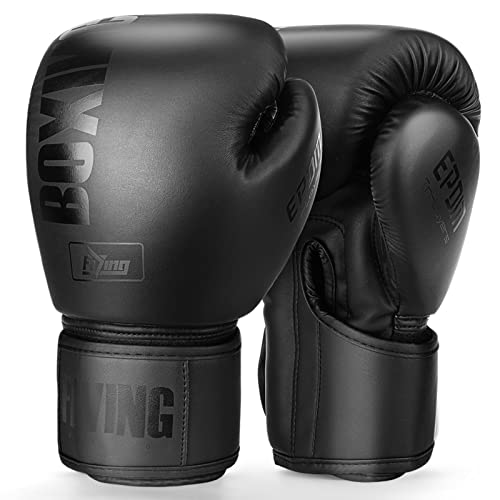

As an Amazon Associate we earn from qualifying purchases at no extra cost to you. Ratings are shown as listed on Amazon.
Leather is not automatically safer or better padded. A poorly shaped leather glove can still have a hard knuckle feel, weak thumb protection, or uneven foam. Prioritize the internal construction, fit, and closure before the material.
Synthetic: practical for beginners and occasional users
Modern synthetic leather can be a sensible choice for two or three sessions per week, beginner classes, travel, or shared equipment situations. It costs less and is easy to wipe clean, but the outer coating may crack or peel at the palm and wrist crease. Synthetic gloves also vary widely: a thick polyurethane shell with layered foam can outperform a cheap leather glove with minimal padding.
Choose synthetic when the lower purchase price matters more than maximum lifespan, or when you are still learning what glove shape and weight suit you. If you train five or more times weekly, leather generally makes more financial sense.
Glove weight: choose by goal, not just bodyweight
Ounce labels describe the glove’s total weight, not a precise amount of padding over the knuckles. Two 16-ounce gloves can feel different because one uses dense compact foam and another uses a softer, bulkier construction. Weight is therefore a useful starting point, not a complete safety specification.
| Glove weight | Best use | Hand-size guidance | Main trade-off |
|---|---|---|---|
| 8–10 oz | Competition-style work, speed drills, some pad training | Usually better for smaller hands or experienced users | Less padding and less forgiving for hard impact |
| 12 oz | Bag work, mitts, fitness boxing | Small to medium hands if wraps fit comfortably | Often too light for regular adult sparring |
| 14 oz | General training and light, coach-approved sparring | Medium hands; compact models suit smaller hands | May not meet a gym’s 16 oz sparring rule |
| 16 oz | Regular sparring and all-purpose training | Medium to large hands, provided the hand compartment is correct | Heavier and slower for beginners or small athletes |
| 18 oz | Extra-heavy sparring or specific coach programming | Large hands and athletes comfortable with the added bulk | Can encourage poor technique through fatigue |
For a smaller person, do not automatically drop to 10 or 12 ounces for sparring. A compact 14- or 16-ounce glove can provide a better fit while preserving the padding expected by training partners. Ask the gym about its minimum sparring weight before buying.
Closure type: hook-and-loop or lace-up?
Hook-and-loop
Hook-and-loop closures are the best choice for most solo trainees. They can be put on quickly, adjusted between rounds, and removed without assistance. A wide strap gives better wrist coverage than a narrow single strap, while double straps can improve stability but add bulk.
Check that the hook section does not expose rough edges. It can damage wraps, clothing, or a partner’s skin. The strap should close securely over a wrapped hand without forcing the wrist into excessive extension.
Lace-up
Lace-up gloves can provide a more uniform, close-fitting wrist and palm feel. They are popular with competitors and experienced athletes, but they require another person to tie them and are inconvenient when changing gloves during a session. They also need a separate method of securing loose lace ends.
If you train alone, choose hook-and-loop unless you have a specific reason for laces. If you prefer lace-ups, budget for a reliable training partner or use lace covers designed for boxing gloves.
Padding density matters more than a soft first impression
Soft foam feels comfortable when touching the glove, but a glove that is excessively soft or collapses under pressure may offer poor consistency during hard bag work. Very firm foam can transmit more impact to your hands and may be unsuitable for sparring, even when the glove looks well padded.
- Soft, shock-absorbing foam: usually more partner-friendly for sparring, but can compress sooner under heavy bag use.
- Medium-density layered foam: the most versatile option for mixed training.
- Firm, compact foam: useful for bag feedback and durability, but better with controlled technique and appropriate hand protection.
- Multi-layer construction: generally gives a more progressive feel than a single slab of foam, though construction quality still varies.
Do not use a sparring partner to judge padding by punching harder. Sparring gloves should be chosen with the coach and partner group in mind, and hard bag work should be kept separate when possible.
Fit checklist for hands and wraps
Glove sizing is not determined by palm circumference alone. Hand length, finger thickness, thumb position, and the thickness of your wraps all affect fit. Measure your dominant hand around the knuckles, excluding the thumb, then compare that measurement with the manufacturer’s chart. If you fall between sizes, try the glove with the wraps you actually train in.
- Your fingertips should reach the end of the finger compartment without being crushed.
- The thumb should sit naturally in its channel and should not be forced sideways.
- You should be able to make a relaxed fist without the palm feeling stretched.
- The wrist should remain supported when the strap is tightened normally.
- There should be no large empty pocket that allows your hand to slide forward on impact.
As a useful fit calculation, a thin 2.5-metre wrap can add considerably less bulk than a 4.5-metre wrap with extra knuckle padding. If a glove fits perfectly without wraps but becomes cramped with your normal wrap, it is too small for your actual training setup. Never solve a tight glove by skipping wraps.
Ownership: what wears out and how to extend its life
Gloves usually fail first at the thumb seam, palm, wrist crease, strap, or foam beneath the knuckles. Sweat accelerates odor, lining breakdown, and foam compression. After every session, open the gloves fully, wipe the exterior, and let them dry in a ventilated room. Do not leave them sealed in a gym bag, place them directly on a radiator, or dry them with high heat.
Use hand wraps, rotate between two pairs when training frequently, and avoid using sparring gloves for repeated hard bag rounds. A simple ownership calculation explains the value of rotation: two $140 pairs used for 300 sessions each cost about $0.93 per session, while one $140 pair that fails after 180 sessions costs about $0.78 per session initially but may force an earlier replacement and leave you without a suitable sparring pair. The exact result depends on care, but separating duties reduces premature wear.
Replace gloves when the foam remains visibly compressed, the knuckles can be felt through the padding, the thumb or wrist loses its intended position, or the closure no longer holds securely. Surface scuffs alone are cosmetic; exposed foam, structural separation, and persistent odor are stronger reasons to retire them.
Bottom line
For one dependable pair, choose 14-ounce leather gloves with medium-density layered padding and a wide hook-and-loop wrist. Choose 16 ounces if sparring is a regular part of training or your gym requires it. Smaller hands should look for a compact internal fit rather than simply buying a lighter glove. Synthetic gloves are a reasonable budget solution, while leather earns its higher price through better durability when used and maintained several times each week.



Write Your Review
No reviews yet. Be the first to share your experience!