

Key takeaways
- 15–25 mm: usually a light, low-profile feel with less coverage.
- 25–35 mm: a practical range for everyday sparring headgear.
- 35–50 mm: more facial coverage, usually with additional heat and bulk.
The best boxing headgear for most sparring is a cheek-protector model with 25–35 mm of multi-layer padding, clear peripheral vision, a secure chin strap, and enough room to fit without pressing against the nose or ears; for maximum facial coverage, choose a full-face or nose-bar design instead.
There is no single best shape for every boxer. A competition-style open-face headguard feels light and keeps vision unobstructed, while cheek, full-face, and nose-bar designs provide more coverage at the cost of heat, bulk, and sometimes visibility. The right choice depends on how hard and often you spar, whether you wear glasses or head wraps, and which areas you most want covered.
Our top picks
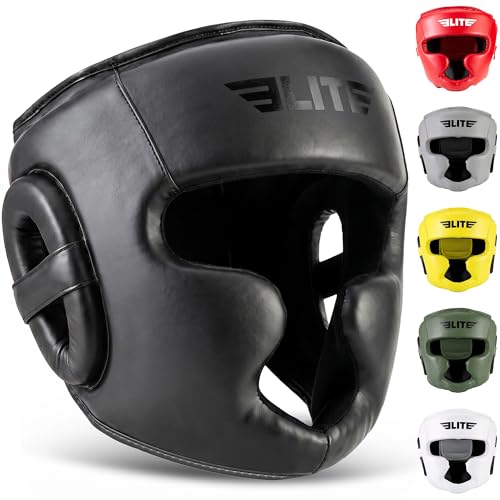


As an Amazon Associate we earn from qualifying purchases at no extra cost to you. Ratings are shown as listed on Amazon.
Best boxing headgear by situation
| Situation | Best design | Useful target specifications | Why it fits the situation |
|---|---|---|---|
| New boxer sparring once or twice weekly | Cheek-protector headgear | 25–35 mm cheek padding; adjustable rear and chin closures; 300–450 g | Good balance of facial coverage, vision, comfort, and price |
| Frequent or hard sparring | Premium multi-layer cheek or full-face model | 30–45 mm impact padding; leather or reinforced synthetic outer; replaceable or washable liner preferred | More durable construction and better coverage for repeated use |
| Maximum nose and cheek protection | Nose-bar or full-face headgear | 35–50 mm frontal padding; rigid padded bar; secure rear adjustment | Covers more of the face, although it is warmer and can restrict sightlines |
| Boxer who relies on movement and counters | Open-face or competition-style headgear | 15–25 mm padding; low-profile cheek area; wide eye opening | Light, cool, and less intrusive when peripheral vision is the priority |
| Budget-conscious occasional user | Basic synthetic-leather cheek model | 20–30 mm padding; hook-and-loop closures; removable liner if possible | Usually costs about $35–$80 and is easier to replace when worn |
What to look for in the best boxing headgear
1. Coverage: protect the areas that actually need it
Open-face headgear leaves the nose, mouth, and much of the cheeks exposed. It is often the least distracting option, but it does not provide much frontal coverage. Cheek-protector headgear adds padded wings around the cheekbones and sides of the mouth without placing a bar in front of the nose. For general sparring, this is the most versatile format.
Full-face and nose-bar designs cover more of the nose, brow, and cheeks. They are useful when facial coverage is the main concern, but the bar can reduce downward vision and may make it harder to see body shots or your own footwork. Larger cheek pads can also create a wider target for incoming punches. Coverage is helpful, but it should not be confused with immunity from injury.
Check the back of the head as well as the front. Some low-profile models leave the occipital area and sides relatively open. A deeper rear panel offers more coverage, but it can trap heat and interfere with long hair or a ponytail.
2. Padding thickness and construction
Padding thickness alone does not determine protection. A 40 mm pad made from soft, low-density foam may perform differently from a thinner, denser multi-layer pad. Look for layered foam, smooth transitions around the cheek and brow, and padding that does not bottom out when pressed firmly with a thumb.
- 15–25 mm: usually a light, low-profile feel with less coverage.
- 25–35 mm: a practical range for everyday sparring headgear.
- 35–50 mm: more facial coverage, usually with additional heat and bulk.
Common outer materials include genuine leather, microfiber leather, and synthetic leather. Leather can age well when dried and conditioned correctly, while quality synthetic materials are often easier to clean and less expensive. The stitching, foam recovery, and attachment points matter as much as the outer shell. Look closely at seams around the ears, chin, and rear closure, where repeated flexing causes wear first.
3. Visibility is a safety and performance issue
Put visibility ahead of appearance. You should be able to see a partner’s gloves entering from both sides without turning your head. A useful check is to hold your hands at shoulder height and gradually move them backward. If they disappear before reaching a roughly 90-degree side angle, the cheek pads or eye opening may be too restrictive for your style.
Nose bars protect the center of the face but can create a horizontal obstruction. Large brow pads may block upward vision, while oversized cheek pads can hide low hooks. Try the headgear with your normal stance and guard rather than judging it while standing relaxed in front of a mirror.
4. Chin strap and rear adjustment
A chin strap should hold the headgear in place without forcing the jaw closed. Hook-and-loop straps are quick to adjust between rounds; buckle systems can offer a more precise fit but take longer to change. The rear closure is equally important because it controls front-to-back movement.
With the headgear fitted, you should be able to open and close your mouth normally, but the guard should not lift when you speak or move your head sharply. A strap that sits directly on the throat is poorly positioned. If the headgear shifts sideways during shadowboxing, tighten the rear adjustment before tightening the chin strap.
Head-to-head: the main headgear styles
Open-face versus cheek-protector
Open-face headgear wins for ventilation, low weight, and peripheral vision. It suits experienced boxers who accept less facial coverage and want a natural view. Cheek-protector headgear is the safer general recommendation for most recreational sparring because it adds protection around the cheekbones and mouth while preserving more vision than a full-face model.
Cheek-protector versus nose-bar
Cheek protection is less intrusive and usually easier to move in. Nose-bar designs provide greater frontal coverage, but the bar can become uncomfortable if it sits too close to the nose or forehead. Choose the nose-bar format when coverage is your first priority, not simply because it looks more protective.
Premium leather versus budget synthetic
Premium leather options such as Winning and Cleto Reyes are commonly chosen for refined construction and long-term durability, while Rival, Hayabusa, and Everlast offer multiple synthetic and leather-style designs across different price levels. A budget model can be perfectly usable if it stays secure and has adequate padding. An expensive headguard that shifts or blocks vision is still a poor fit.
Fit and sizing: a two-minute process
- Measure your head circumference. Wrap a soft tape around the widest part of the head, just above the eyebrows and ears. If your measurement falls between sizes, consider hair volume and whether you wear a thin head wrap.
- Position the brow pad. It should sit above the eyebrows without covering your eyes. The ear openings should align with the ears rather than pressing on them.
- Adjust the rear closure first. Remove front-to-back movement before tightening the chin strap.
- Set the chin strap. Leave enough room to breathe and speak, but not enough for the guard to ride upward.
- Test movement. Nod, turn, look up, and open your mouth. If the guard shifts, pinches, or blocks vision, change the size or design rather than simply tightening it.
As a practical fit check, the headgear should remain stable during 30 seconds of footwork and head movement. If it needs adjustment after every exchange, the shape is wrong for you or the closures are insufficient.
Ownership, cleaning, and durability
Sweat and moisture usually damage headgear before the foam visibly collapses. Wipe the interior and exterior after every session with a damp cloth and mild soap solution, then leave it open to dry in a ventilated room. Do not seal damp headgear in a gym bag, place it on a radiator, or soak leather.
- Inspect stitching and strap anchors every few weeks.
- Check whether the foam has developed permanent flat spots or hard edges.
- Use a separate breathable bag instead of storing it with wet gloves.
- Do not share headgear without cleaning it between users.
- Replace it when the shell splits, the padding stays compressed, or the closures no longer hold securely.
For occasional training, a $40–$80 model used twice weekly over a year works out to roughly $0.38–$0.77 per session before replacement costs. A $150–$300 premium model used four times weekly for two years costs about $0.36–$0.72 per session. The calculation is only useful if the headgear remains hygienic, structurally sound, and properly fitted.
Bottom line
For most people, the best boxing headgear is a well-fitted cheek-protector model with 25–35 mm of multi-layer padding, a wide eye opening, adjustable rear and chin closures, and a washable or easily cleanable interior. Choose open-face headgear when vision and ventilation dominate, and choose a nose-bar or full-face design when maximum facial coverage outweighs bulk. Whichever style you select, use it as part of controlled sparring and appropriate coaching—not as a guarantee against injury.



Write Your Review
No reviews yet. Be the first to share your experience!