

Key takeaways
- Can automatic fall detection be disabled temporarily during contact sports, grappling, sparring, or floor drills?
- Can the wearer cancel a false alarm by pressing a button or responding verbally?
- How long does the device wait for confirmation before escalating?
- Does the response center receive the wearer’s location, or only the device’s registered address?
- Can a caregiver receive alerts without being the primary emergency contact?
Best Fall Detection Devices for Safer Living
The best fall detection device for most people is a cellular medical alert pendant with automatic fall detection, while a smartwatch is the better choice for someone who already wears one, wants health and fitness features, and can keep it charged.
Fall detection is not a guarantee that every fall will be recognized. Hard impacts, unusual body positions, slow collapses, soft surfaces, and falls followed by movement can all affect detection. Treat automatic detection as a backup to a manually pressed help button, not as a replacement for a phone, caregiver plan, or professional advice.
Our top picks

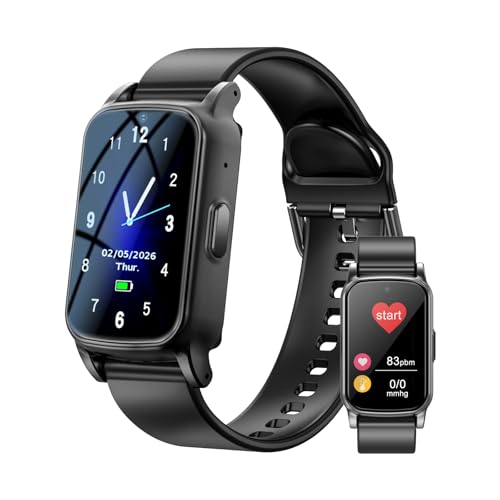

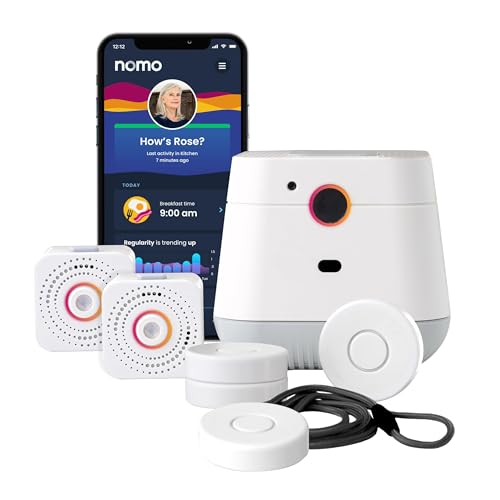
As an Amazon Associate we earn from qualifying purchases at no extra cost to you. Ratings are shown as listed on Amazon.
Quick comparison of the main options
| Device type | Typical weight | Typical battery life | Connection required | Best suited to | Typical monthly cost |
|---|---|---|---|---|---|
| Cellular fall-detection pendant | About 1.0–2.0 oz (28–57 g) | Approximately 2–5 days | Built-in cellular service | Home and outdoor independence | $30–$60 |
| Cellular medical-alert smartwatch | About 1.5–2.5 oz (43–71 g) | About 1–3 days | Cellular service, sometimes Wi-Fi assistance | Active users who want a watch | $35–$70 |
| Apple Watch with Fall Detection | Approximately 1.0–1.7 oz (28–48 g), watch body only | Roughly 18–36 hours, depending on model and use | iPhone nearby, Wi-Fi, or cellular model with an active plan | People already using Apple devices | $0–$15 for service, excluding watch cost |
| Home base station with help button | Button often under 1 oz (28 g) | Button commonly 1–5 years; base has mains power | Landline or cellular base station | Mostly indoor use and lower budgets | $25–$50 |
These are market ranges rather than specifications for every model. Battery runtime falls with frequent calls, weak signal, GPS use, temperature extremes, and an aging battery.
Best picks by situation
Best for reliable coverage away from home: a cellular medical-alert pendant
A dedicated pendant from providers such as Medical Guardian, Bay Alarm Medical, LifeFone, or Life Alert is usually the simplest option for a person who wants one large help button and a staffed response center. The pendant communicates over a cellular network, so it does not depend on a home Wi-Fi router or a smartphone.
Choose this format when the wearer may be in the garden, driveway, gym, or visiting family. Check the provider’s coverage map and ask which cellular network the unit uses. A device that works well in one neighborhood may be less dependable in a rural area or inside a building with thick walls.
Best for an active wearer: a cellular medical-alert smartwatch
Medical alert watches combine a help button, two-way voice communication, activity features, and fall detection in a less conspicuous form. Medical Guardian’s MGMove is an example of the category, although available features and fall-detection options depend on the selected plan and model.
This is a practical middle ground for someone who dislikes a pendant but does not want to manage a general-purpose smartwatch. The compromises are shorter battery life, a smaller speaker and microphone than some pendants, and the need to remove the watch for charging. Confirm whether automatic fall detection is included rather than assuming every watch in a provider’s range has it.
Best for an existing Apple household: Apple Watch with Fall Detection
Apple Watch can detect a hard fall, display an alert, and call emergency services if the wearer does not respond. Cellular Apple Watch models can communicate without the iPhone nearby when supported by a carrier plan; GPS-only models generally need the paired iPhone, a known Wi-Fi network, or another suitable connection for calls.
It is a strong choice for someone comfortable with Apple devices and daily charging. It is less suitable for a person who will forget to charge a watch, cannot navigate a touchscreen, or needs a response center to contact family and caregivers before emergency services. Set up emergency contacts, Medical ID, fall detection, and location sharing rather than relying on factory defaults.
Best for a mostly home-based, budget-conscious user: a base station and help button
A home system uses a speakerphone base station and a wearable button. It can be cost-effective when the wearer spends nearly all their time inside and wants a long-lasting button battery. Cellular base stations avoid the need for a landline, but the base must remain plugged in and within useful range of the wearable.
Ask for the measured in-home range, not just “whole-home coverage.” Concrete walls, metal appliances, multiple floors, and detached garages can reduce it. Test the button from the bathroom, bedroom, basement, and favorite outdoor area.
Detection accuracy: what matters more than the marketing label
Automatic fall detection uses motion sensors and algorithms to look for a pattern such as rapid downward movement followed by impact and stillness. No system identifies every fall. A device may miss a gradual slip, a fall while holding onto furniture, or an impact cushioned by a mattress. It may also generate a false alert during vigorous exercise, dropping the device, or abrupt movements.
For an active person, ask these questions before buying:
- Can automatic fall detection be disabled temporarily during contact sports, grappling, sparring, or floor drills?
- Can the wearer cancel a false alarm by pressing a button or responding verbally?
- How long does the device wait for confirmation before escalating?
- Does the response center receive the wearer’s location, or only the device’s registered address?
- Can a caregiver receive alerts without being the primary emergency contact?
Do not deliberately stage a hard fall to test a device. Use the provider’s test procedure, usually a scheduled test call or button press, and ask whether automatic fall detection can be evaluated safely.
Cellular, Wi-Fi, and emergency response plans
Wi-Fi-only equipment is inexpensive and suitable for a stable home network, but it becomes less useful when the wearer leaves home or the router loses power. Cellular devices are more portable, yet they still depend on network availability and may struggle in a basement or remote area.
There are three common response arrangements:
- Professional monitoring: a staffed center receives the alarm, speaks through the device, and follows the account’s instructions. This normally carries a recurring fee.
- Family or caregiver calling: alerts go to selected contacts. This can cost less but depends on someone noticing and responding quickly.
- Direct emergency calling: the device calls local emergency services. This may be appropriate for urgent situations but gives less opportunity to verify a false alarm or contact a preferred caregiver first.
Read the response plan carefully. Some subscriptions charge equipment, activation, shipping, cancellation, replacement, or spouse coverage fees. A low monthly price can be less attractive if the device has a large upfront cost or requires a long commitment.
Battery life, sizing, and ownership costs
Suppose a cellular pendant costs $40 per month and lasts three years. Before taxes and optional fees, service costs about $1,440: $40 × 36 months. A $300 smartwatch with a $10 monthly cellular plan costs about $660 over the same period, but it demands charging roughly every day rather than every few days. The cheaper calculation is not automatically the safer choice if charging is likely to be missed.
Use this maintenance routine:
- Charge the device on a fixed schedule, such as after breakfast, and keep the charger in a visible location.
- Run the provider’s test procedure monthly, especially after moving furniture or changing the home router.
- Inspect the lanyard, wristband, clasp, and charging contacts every month. These parts usually wear before the electronics.
- Wipe the device with a slightly damp cloth according to the manufacturer’s instructions. Do not immerse it unless its water-resistance rating specifically permits that use.
- Update the emergency contacts, medications, address, access instructions, and preferred hospital information after any change.
For sizing, a pendant should sit where it can be reached after a fall without being tight around the neck. A wrist device should remain secure during ordinary movement without restricting circulation. People with arthritis, tremor, or limited hand strength may find a large physical button easier than a touchscreen.
Privacy controls to check before subscribing
Fall devices may collect location, movement, voice-call, health, and contact information. Before activation, review the privacy policy and account settings. Look for the ability to disable continuous location sharing, limit caregiver access, delete call recordings where applicable, and control marketing communications. Ask how long incident data is retained and whether it is shared with contractors or analytics providers.
Location tracking can be valuable during an emergency, but it should be configured deliberately. Tell the wearer and household members what is monitored, who receives alerts, and how to cancel a false alarm. If privacy concerns are substantial, a manual help button with professional monitoring may collect less movement data than a smartwatch with extensive health features.
Final buying checklist
- Choose cellular coverage if the wearer regularly leaves home; choose Wi-Fi-only equipment only for dependable indoor use.
- Prefer a large physical help button when dexterity, vision, or stress may make a touchscreen difficult.
- Confirm automatic fall detection, water resistance, response-center availability, and cancellation terms in writing.
- Match the battery routine to the wearer’s habits, not the advertised maximum runtime.
- Program emergency contacts and test every important room and outdoor area.
- Discuss the choice with a healthcare professional or occupational therapist if falls, balance problems, fainting, or medication effects are concerns.
For the broadest protection, a cellular pendant with professional monitoring is the most forgiving choice. For an experienced smartwatch user who accepts daily charging, Apple Watch or a dedicated cellular alert watch can provide useful portability and additional features. The right device is the one the wearer will keep on, keep charged, and know how to use.






Write Your Review
No reviews yet. Be the first to share your experience!