

Key takeaways
- Set the height first: comfort is difficult to fix after purchase.
- Measure the largest job: include seed trays, hanging baskets or the largest pot you regularly handle.
- Choose storage based on actual supplies: a lower shelf is useful only if it accepts your compost bags and containers.
- Pay for protection before decoration: sealed timber, drainage and outdoor fixings are better investments than elaborate trim.
- Check the load rating: a bench carrying 30 kg of wet compost and pots needs more than a lightweight display table.
- Consider assembly: loose joints often cause wobble and premature wear, so inspect every connection after the first few uses.
Best Potting Benches
The best potting bench for most gardeners is a weather-resistant bench about 90–100 cm high, at least 90 cm wide, with a work surface around 45–60 cm deep and useful storage below; smaller balconies need a fold-down or narrow model, while larger gardens benefit from a deeper, heavier bench with a soil tray and shelving.
Choosing by appearance alone is a common mistake. A bench can look attractive but be uncomfortable to work at, too shallow for a seed tray, or poorly protected against rain. The right choice depends on your height, available floor space, how often you pot plants, and whether the bench will sit under cover.
Our top picks


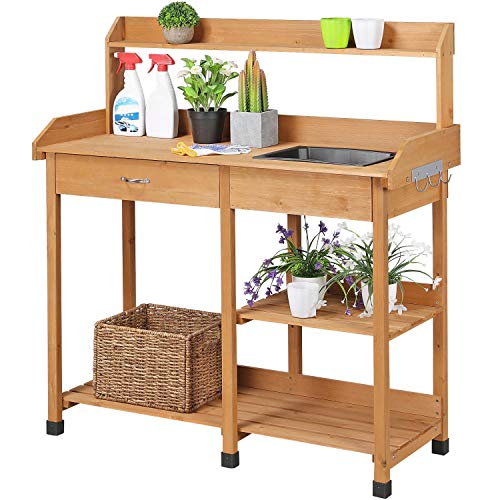

As an Amazon Associate we earn from qualifying purchases at no extra cost to you. Ratings are shown as listed on Amazon.
Best potting benches by gardening situation
| Situation | Best bench type | Useful target specification | Why it fits |
|---|---|---|---|
| Small balcony or patio | Narrow, foldable or wall-mounted bench | 60–90 cm wide, 35–45 cm deep, 85–95 cm high | Leaves more circulation space and can be stored when not needed |
| Occasional repotting on a budget | Basic treated softwood bench | 90–110 cm wide, 45–55 cm deep, 15–25 kg | Good working area without paying for specialist extras |
| Frequent seed starting | Bench with removable soil tray and lower shelf | 100–130 cm wide, 50–65 cm deep, 90–100 cm high | Separates potting materials from clean trays and provides space for compost bags |
| Large garden or greenhouse | Heavy hardwood, metal or hybrid bench | 120–160 cm wide, 60–75 cm deep, 25–45 kg | More stable for large pots, bulk compost and repeated use |
| Wet, exposed position | Powder-coated metal or rot-resistant timber | Raised feet, drainage holes and corrosion-resistant fixings | Reduces standing water, swelling and rust-related failures |
What makes a potting bench comfortable to use?
Bench height
Height affects your back, shoulders and wrists more than most decorative features. A surface around 90 cm suits many standing users, but it is not a universal measurement. If you are short, 80–88 cm may feel more natural; taller gardeners may prefer 95–105 cm.
To estimate your ideal height, stand upright with your elbows relaxed and bent roughly 90 degrees. Measure from the floor to your hands, then choose a work surface several centimetres below that point. This leaves room to handle pots without lifting your shoulders. If several people will use the bench, a middle height or adjustable feet is more practical than choosing for only one person.
Work-surface size
A 90 cm by 45 cm surface is adequate for one small pot, hand tools and a tray of seedlings. For regular work, 120 cm by 60 cm is more useful: one side can hold clean pots while the other is used for compost and repotting. Going deeper than about 70 cm can make the back of the bench difficult to reach, especially when it has a high rear shelf.
Look for a lip or raised edge if you handle loose compost. It prevents pots and tools from sliding off, but it should not be so high that it interferes with sweeping soil into a container. Slatted tops improve drainage, while solid tops are easier to clean and better for small seeds and fine compost.
Material comparison: timber, metal and plastic
| Material | Typical service reality | Strengths | Weak points | Maintenance |
|---|---|---|---|---|
| Treated softwood | Often 3–7 years outdoors, depending on treatment and shelter | Affordable, easy to drill or repair, relatively light | Can split, warp or develop rot at joints and feet | Seal cut ends and refresh exterior protection periodically |
| Hardwood | Often 5–12 years with suitable care | Stable, attractive and capable of carrying heavy pots | Heavier and usually more expensive; still needs protection | Clean regularly and re-oil or reseal when the surface dries |
| Powder-coated steel | Often 5–10 years if the coating remains intact | Rigid, slim and resistant to insect damage | Scratches can expose steel to rust; may become hot in full sun | Touch up chips and keep joints free of trapped water |
| Aluminium | Often 8–15 years in ordinary garden use | Light, rust-resistant and easy to move | Can flex or dent more readily than steel | Wash off soil and fertiliser residue |
| Recycled plastic or resin | Often 5–10 years, depending on ultraviolet exposure | Low maintenance and unaffected by rot | May sag under heavy loads and can become brittle in poor-quality designs | Clean with mild detergent; avoid harsh solvents |
For a permanently exposed garden, material alone does not determine durability. Water trapped where legs meet the top, unsealed screw holes and unprotected end grain are frequent failure points. A cheaper timber bench under a roof can outlast a more expensive bench left on wet paving all year.
Storage and weather protection matter as much as the top
Useful storage is more than an attractive lower shelf. Check whether the shelf can hold a 20–25 litre bag of compost without flexing, and whether its height allows a watering can or stack of pots to be removed easily. A narrow upper shelf is useful for labels and hand tools, but it should not obstruct tall plants or force you to lean forward.
A removable tray is valuable when mixing compost. You can lift it out, empty it and rinse it rather than allowing wet soil to sit against the worktop. Galvanised metal trays resist moisture better than untreated steel, while timber trays should have drainage gaps and sealed edges.
Weather protection should include sloped or draining surfaces, feet that keep timber above the ground, and fasteners intended for outdoor use. Stainless-steel fixings are particularly useful near fertiliser and persistently damp compost. A cover helps, but wrapping a damp wooden bench tightly can trap moisture and accelerate rot. Ventilated shelter is preferable.
Balcony versus larger-garden requirements
On a balcony, measure the usable footprint rather than the apparent empty area. Leave a clear passage of at least 60 cm where possible, and check door swings, railing height and the location of drainage outlets. A 75 cm-wide bench may sound compact, but a 45 cm-deep unit plus a person standing in front can consume more than 1 metre of total depth.
Weight also matters. A 20 kg bench can become substantially heavier when loaded with wet compost, ceramic pots and water. Confirm the balcony’s permitted load with the building manager or a qualified professional before installing a heavy permanent unit. A folding bench that stores vertically can be the better choice even if it offers less workspace.
In a larger garden, stability becomes more important than compactness. Wider legs, cross-bracing and adjustable feet prevent rocking on uneven paving. A 120–150 cm bench can support two work zones, but position it where you can reach a hose, dispose of old compost and move plants without carrying them across the garden.
How to choose without overspending
- Set the height first: comfort is difficult to fix after purchase.
- Measure the largest job: include seed trays, hanging baskets or the largest pot you regularly handle.
- Choose storage based on actual supplies: a lower shelf is useful only if it accepts your compost bags and containers.
- Pay for protection before decoration: sealed timber, drainage and outdoor fixings are better investments than elaborate trim.
- Check the load rating: a bench carrying 30 kg of wet compost and pots needs more than a lightweight display table.
- Consider assembly: loose joints often cause wobble and premature wear, so inspect every connection after the first few uses.
As a general market guide in 2026, basic timber or resin benches commonly fall around £50–£120, sturdier treated timber and metal models around £120–£250, and large hardwood or specialist greenhouse benches around £250–£500 or more. Prices vary by region, dimensions and whether a tray or shelving is included.
Maintenance that extends the bench’s life
- Remove soil weekly: Brush compost from joints and shelves before it holds moisture against the material.
- Wash fertiliser residue: Salts can mark timber and promote corrosion on damaged metal coatings.
- Inspect the feet: Replace cracked pads and keep wooden legs off standing water.
- Retighten fasteners: Seasonal swelling and vibration can loosen bolts, especially on timber benches.
- Repair damage promptly: Seal exposed timber and touch up chipped powder coating before water reaches the underlying material.
- Store vulnerable items separately: Do not leave wet compost bags, terracotta pots or tools permanently on the bench.
The parts most likely to wear first are the feet, lower shelf edges, screw holes and any untreated cut ends. A bench that remains firm but looks weathered may only need cleaning and resealing; a bench with soft timber, spreading joints or rust around structural connections is usually ready for replacement.
Final verdict
For most gardeners, the best potting bench is a 90–100 cm-high unit roughly 100–120 cm wide, 50–60 cm deep, with a washable or removable tray, a sturdy lower shelf and protected feet. Choose a narrow folding model for a balcony, a treated softwood bench for occasional low-cost work, and a heavier hardwood, aluminium or powder-coated steel design for frequent use and large pots. Prioritise fit, drainage and structural stability over appearance: those details determine whether the bench remains useful after its first wet winter.

Write Your Review
No reviews yet. Be the first to share your experience!