

Key takeaways
- Use a separate pair of clean indoor shoes and put them on after arriving at the gym.
- Brush off dust with a dry, soft brush after training.
- Wipe the upper with a damp cloth; avoid soaking the boot or using a washing machine unless the manufacturer specifically permits it.
- Remove the insoles and loosen the laces while the shoes air-dry at room temperature.
- Do not dry them on a radiator or with high heat, which can weaken adhesives and deform synthetic materials.
The best boxing shoes for most boxers are lightweight mid-cut shoes with a flat, flexible rubber sole: choose the Nike HyperKO 2 for fast pivots, the adidas Box Hog 4 for value and all-around footwork, or the Everlast Elite 2 for a budget-friendly first pair.
Our top picks


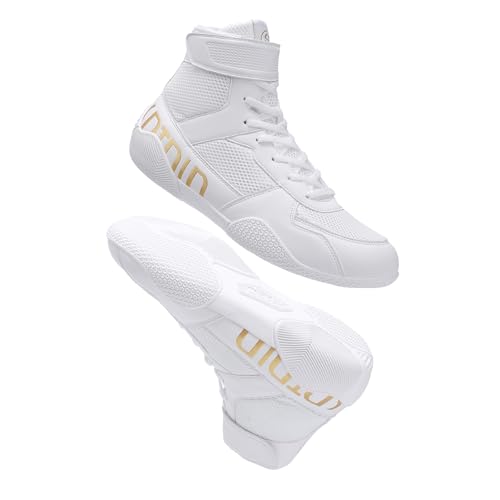
As an Amazon Associate we earn from qualifying purchases at no extra cost to you. Ratings are shown as listed on Amazon.
Quick picks by footwork style
| Best for | Recommended shoe | Why it fits the use case | Typical market range |
|---|---|---|---|
| Fast pivots and lateral movement | Nike HyperKO 2 | Very light construction, supportive mid-cut collar and a flexible rubber outsole | $150–$180 |
| Best all-around value | adidas Box Hog 4 | Low weight, grippy outsole and a relatively roomy, traditional boxing-shoe shape | $90–$120 |
| First pair on a limited budget | Everlast Elite 2 | Lightweight mesh upper, mid-height ankle support and usually broad availability | $60–$90 |
| High-top support and structured feel | Hayabusa Pro Boxing Shoes | Higher ankle coverage and a more substantial upper for boxers who prefer locked-in support | $120–$160 |
| Training and occasional sparring | Venum Elite Boxing Shoes | Breathable synthetic-and-mesh construction with a stable rubber sole | $90–$130 |
Prices vary by size, color and seasonal discounts. Weight figures also vary with size, so the useful comparison is the design: a flexible low shoe favors quick transitions, while a taller and more structured boot favors ankle containment.
What matters most in a boxing shoe
Sole grip without sticking
Boxing shoes need traction for pushing, stopping and changing direction, but excessive grip can interrupt a pivot. Look for a thin rubber outsole with a fine herringbone, radial or multi-directional pattern. It should let the ball of your foot rotate while still resisting unwanted slips.
On a clean boxing ring canvas, a moderately tacky outsole is usually better than an aggressively sticky sole. Very soft rubber may feel secure initially but can collect dust and wear more quickly. Wrestling shoes can work for some drills, but their traction patterns and sole shapes are not always optimized for boxing pivots.
Ankle height and support
Low-cut shoes give the ankle the greatest freedom and generally feel quickest. Mid-cut shoes are the most versatile choice: they add some lateral structure without making the boot feel restrictive. High-top designs can feel reassuring during hard lateral movement, but they also add material, warmth and sometimes stiffness.
Ankle height does not prevent every ankle injury. If you have persistent pain, repeated sprains or a known foot problem, ask a qualified medical professional or sports podiatrist about suitable footwear rather than relying on a taller collar alone.
Weight and flexibility
A pair around 450–600 grams total in a typical adult size is a sensible target for boxing. Lighter shoes can make shuffles and pivots feel less tiring, but minimal weight should not come from a flimsy heel counter or collapsing upper. Bend the shoe at the forefoot: it should flex where your toes bend, not fold through the middle of the arch.
Breathability
Mesh panels reduce heat and help the shoe dry between sessions. Synthetic overlays improve structure but can trap more warmth. If you train four or more times per week, ventilation becomes more important than a small difference in weight. A breathable upper will not compensate for wearing the same damp pair every day, so rotation and drying matter too.
Head-to-head: the leading choices
Nike HyperKO 2 versus adidas Box Hog 4
The HyperKO 2 is the speed-focused option. Its low-weight construction and close-fitting upper suit boxers who spend rounds circling, pivoting and changing range. It is usually the better choice for a narrow-to-average foot that prefers a snug fit, although sizing can feel less forgiving if your toes need extra room.
The Box Hog 4 is the more economical all-rounder. It offers a light, flexible platform and enough ankle coverage for most training. Its value is especially strong for beginners, gym members who need a dedicated indoor shoe and experienced boxers who do not want to spend premium money on a second pair.
Everlast Elite 2 versus Hayabusa Pro Boxing Shoes
The Elite 2 is easier to recommend when the budget is the main constraint. Its mesh-heavy construction keeps weight and cost down, but the upper and cushioning are less substantial than on more expensive models. It is a practical choice for one to three sessions per week.
Hayabusa’s Pro Boxing Shoes are aimed at boxers who prefer a more structured, high-top feel. They can suit heavier athletes or anyone who dislikes a loose heel, but the extra upper material may feel warm during long sessions. Check the return policy carefully if you are between sizes.
Decision matrix: choose by your actual training
| Your situation | Priority | Best match | Trade-off |
|---|---|---|---|
| Beginner training 1–2 times weekly | Value, versatility and easy fit | adidas Box Hog 4 or Everlast Elite 2 | Less premium structure than top-tier models |
| Frequent training, 4+ sessions weekly | Breathability and outsole durability | Nike HyperKO 2 or adidas Box Hog 4 | Premium pairs cost more to replace |
| Lots of pivots and lateral movement | Low weight and smooth rotation | Nike HyperKO 2 | Snugger fit and less forgiving for broad feet |
| Broad feet or thick boxing socks | Toe-room and adjustable lacing | Try the Box Hog 4 or a roomier mid-cut design | May feel less precise than a close-fitting boot |
| Hard, dusty gym floor used for drills | Durable rubber and reliable traction | Box Hog 4 or Hayabusa Pro Boxing Shoes | Do not use the shoes outdoors; grit accelerates wear |
How to get the fit right
-
Measure both feet at the end of the day while wearing the socks used for boxing. Feet can be slightly larger after standing and training.
-
Use the manufacturer’s centimeter or millimeter chart rather than assuming your normal casual-shoe size.
-
Allow roughly 5–10 mm of space beyond the longest toe. Your toes should not press the front when you bend your knees or move downhill-like into a stance.
-
Tighten the laces from the forefoot upward, then secure the ankle separately. The heel should not lift noticeably during a pivot.
-
Shadowbox, shuffle and make several controlled pivots indoors before removing tags. A shoe that feels comfortable standing still may slip at the heel in motion.
Do not solve a loose heel by buying a dramatically smaller shoe. If your toes touch the end, the shoe is too short; try a different last or use a thinner sock instead.
Ring surface, indoor use and maintenance
Most boxing shoes are designed for indoor canvas, vinyl or padded gym floors. Their soles are thin and are not intended for pavement. Outdoor walking embeds grit into the rubber, which can reduce smooth pivoting and speed up outsole wear.
- Use a separate pair of clean indoor shoes and put them on after arriving at the gym.
- Brush off dust with a dry, soft brush after training.
- Wipe the upper with a damp cloth; avoid soaking the boot or using a washing machine unless the manufacturer specifically permits it.
- Remove the insoles and loosen the laces while the shoes air-dry at room temperature.
- Do not dry them on a radiator or with high heat, which can weaken adhesives and deform synthetic materials.
The outsole tread and forefoot flex area normally wear first, followed by heel lining and lace eyelets. If the sole becomes smooth, the heel begins sliding, or the upper separates from the outsole, replacing the shoe is safer than adding extra lacing. Rotating two pairs can extend usable life, especially when one pair has a full day to dry between sessions.
Final verdict
Choose the Nike HyperKO 2 if speed, low weight and rapid pivots justify the higher price. Choose the adidas Box Hog 4 if you want the strongest balance of grip, flexibility, breathability and cost. Choose the Everlast Elite 2 for occasional training and a lower entry price, or the Hayabusa Pro Boxing Shoes when a taller, more structured ankle feel matters most.
The best boxing shoes are not necessarily the lightest or tallest. They are the pair whose sole rotates predictably on your ring surface, whose heel stays planted, and whose upper remains comfortable for the full session.


Write Your Review
No reviews yet. Be the first to share your experience!