

Key takeaways
- Frequent air travel: Peak Design Travel Tripod, especially in carbon fiber, for its unusually compact folded shape.
- Best value for travel and vlogging: Manfrotto Befree Advanced Aluminum, which balances moderate load capacity with a familiar camera-system design.
- Small mirrorless or phone setup: A compact aluminum travel tripod with a 5–8 kg rated capacity and a reversible center column.
- Combat sports training videos: A tripod with a 10 kg or higher capacity, wide leg spread, and a fluid video head if you frequently pan across a mat or ring.
- Studio portraits and product shots: A full-size aluminum tripod with a 25–40 mm center column and a working height of at least 160 cm.
- Heavy DSLR, telephoto lens, or cinema camera: A professional aluminum or carbon-fiber tripod with a separate fluid head and a capacity comfortably above the complete camera rig.
Best Camera Tripods for Stable Travel and Studio Shots
The best camera tripods depend on your camera weight, transport limits, and shooting style: choose a compact carbon-fiber travel tripod for frequent movement, a sturdier aluminum model for value, and a heavier studio tripod when stability matters more than portability.
Quick picks by shooting situation
- Frequent air travel: Peak Design Travel Tripod, especially in carbon fiber, for its unusually compact folded shape.
- Best value for travel and vlogging: Manfrotto Befree Advanced Aluminum, which balances moderate load capacity with a familiar camera-system design.
- Small mirrorless or phone setup: A compact aluminum travel tripod with a 5–8 kg rated capacity and a reversible center column.
- Combat sports training videos: A tripod with a 10 kg or higher capacity, wide leg spread, and a fluid video head if you frequently pan across a mat or ring.
- Studio portraits and product shots: A full-size aluminum tripod with a 25–40 mm center column and a working height of at least 160 cm.
- Heavy DSLR, telephoto lens, or cinema camera: A professional aluminum or carbon-fiber tripod with a separate fluid head and a capacity comfortably above the complete camera rig.
What matters before you compare models
Load capacity is not a target weight
Tripod manufacturers state a maximum supported load, but that number is not a guarantee of vibration-free footage. Add the camera body, lens, microphone, monitor, recorder, cage, and quick-release plate. Then leave a safety margin of at least 30–50 percent.
Our top picks

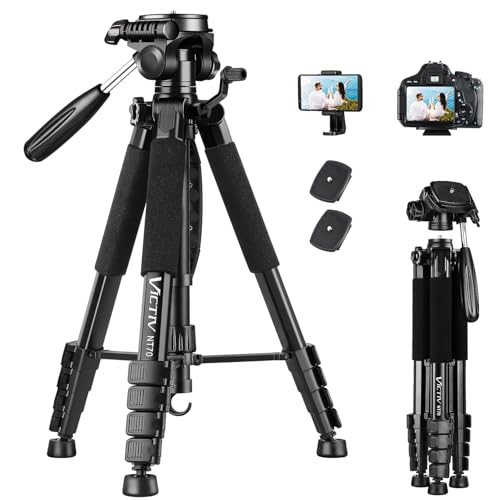


As an Amazon Associate we earn from qualifying purchases at no extra cost to you. Ratings are shown as listed on Amazon.
For example, a mirrorless body weighing 0.8 kg, a 70–200 mm lens weighing 1.5 kg, and accessories totaling 0.7 kg create a 3 kg rig. A tripod rated for 4 kg may hold it, but a model rated for 6–8 kg will usually provide better resistance to movement and accidental bumps. This matters particularly for long exposures, high-resolution video, and telephoto shots.
Folded height affects real portability
Folded length is more useful than a tripod’s maximum height when you travel. A tripod that folds to 40 cm can fit inside many carry-on bags, while a 60 cm model may need to be strapped externally or checked. Count the head as part of the folded length; some specifications list the legs alone.
Travel tripods commonly fold between 35 and 45 cm and reach approximately 130–155 cm. Full-size studio tripods often fold to 60–75 cm but can reach 170–190 cm. For a seated presenter or low-angle training shot, the shorter travel height may be perfectly adequate. For standing interviews, a tripod that reaches eye level reduces the need to extend the center column, which improves stability.
Aluminum versus carbon fiber
Aluminum tripods usually cost less and offer excellent stiffness for the price. Their disadvantages are extra weight and the tendency to become uncomfortable to touch in very cold conditions. Aluminum is often the sensible choice for a studio, a vehicle-based shoot, or occasional travel.
Carbon fiber reduces weight and can make a tripod easier to carry over long distances. It also feels less cold outdoors and can damp some high-frequency vibration. The trade-off is a higher price, and lightweight carbon travel models can still flex if their legs are narrow or fully extended. Carbon fiber does not automatically mean stronger; compare tube diameter, leg-section count, and the head’s stability as well as the material.
| Tripod type | Typical folded length | Typical weight | Useful load range | Best use |
|---|---|---|---|---|
| Mini tabletop tripod | 15–30 cm | 0.2–0.8 kg | 1–5 kg | Desk videos, product details, phones |
| Compact aluminum travel tripod | 35–45 cm | 1.2–1.8 kg | 4–8 kg | Budget travel, vlogging, mirrorless cameras |
| Compact carbon-fiber travel tripod | 35–45 cm | 1.0–1.5 kg | 4–10 kg | Frequent travel and hiking |
| Full-size aluminum tripod | 60–75 cm | 2.0–3.5 kg | 8–15 kg | Studio, interviews, heavier lenses |
| Professional video tripod system | 70–90 cm | 3.5–7 kg including head | 10–25 kg | Fluid pans, cinema rigs, long sessions |
Head-to-head: travel tripod versus studio tripod
Travel tripod
A travel tripod prioritizes folded size and weight. Models such as the Peak Design Travel Tripod and Manfrotto Befree Advanced are designed around mirrorless cameras and moderate lenses. They are convenient for city travel, remote filming, and occasional static shots in a gym or training venue.
The compromise is leverage. Five-section legs pack small but take longer to deploy and can be less rigid than three-section legs. A compact center column may also be narrow. Avoid extending the thinnest leg sections or center column unless you need the extra height.
Studio or full-size tripod
A studio tripod takes more space but provides wider leg tubes, fewer sections, and greater resistance to vibration. It is the better choice for a permanent camera position, repeated filming of sparring drills, or a product-review desk where the camera must remain locked off for hours.
For moving video, the head is as important as the legs. A ball head is fast for stills but can produce jerky pans. A fluid video head provides adjustable drag and smoother horizontal movement. If your camera rig is close to the tripod’s maximum capacity, choose a head rated for the entire rig rather than relying on the leg rating alone.
Decision matrix for different buyers
| Your situation | Recommended specification | Why |
|---|---|---|
| First tripod, limited budget | Aluminum, 4–6 kg capacity, 1.3–1.5 m height | Good value without paying for extreme portability |
| Weekly travel with a mirrorless camera | Carbon fiber, under 1.5 kg, folded length under 45 cm | Reduces carrying fatigue and fits more bags |
| Phone or small camera vlogging | 1–3 kg capacity, reversible column, compact video head | Simple framing and low total weight |
| Combat sports technique videos | 6–10 kg capacity, wide stance, fluid head, 1.5 m or more | More stable framing and smoother tracking of movement |
| Permanent studio position | Aluminum, 8 kg or more, three-section legs | Stiffness and quick setup matter more than folded size |
| Large lens or cinema cage | Professional legs plus a matched fluid head | Prevents imbalance, creep, and unwanted vibration |
Setup steps that improve stability
- Place one leg toward the subject. This creates a predictable support direction and leaves room behind the camera.
- Open the legs evenly. Unequal angles shift the center of gravity and make a light tripod easier to tip.
- Extend the thickest sections first. The wider upper tubes are normally more rigid than the narrow bottom sections.
- Keep the center column low. Raise it only after the legs are fully positioned, because a high column acts like a lever.
- Balance the camera on the head. Slide the plate until the rig stays close to level without forcing the head lock.
- Add weight carefully. A camera bag suspended from the hook can help in still air, but it may swing and introduce movement outdoors or during foot traffic.
Ownership, maintenance, and common mistakes
Tripod leg locks, rubber feet, and quick-release plates usually show wear before the main tubes. Sand and grit can prevent twist locks from sealing smoothly, while repeated over-tightening can damage clamps. After beach, trail, or dusty gym use, wipe the legs with a clean damp cloth, extend them fully, and let them dry before folding them away. Do not force a gritty lock.
Check the feet and lock tension every few months. Replace worn rubber feet when the metal underneath begins touching the floor. Keep the quick-release plate attached to the camera only if it does not interfere with the battery door or hand grip, and confirm that its screw is snug before every important recording.
A frequent mistake is buying for the camera body alone. A lightweight body paired with a large zoom lens may require a tripod several classes heavier. Another is choosing a tripod that reaches a tall standing user only with the center column fully raised. A slightly shorter but wider and more rigid setup will often produce sharper stills and steadier video.
How much should you spend?
Basic aluminum tripods suitable for phones and small mirrorless cameras commonly cost about $40–$120. Better travel tripods generally fall around $120–$350, while carbon-fiber versions and premium compact designs can reach $350–$700. Full-size professional legs and a suitable fluid head may cost $300–$1,000 or more.
Consider cost per use rather than the lowest purchase price. A $300 carbon-fiber tripod used 100 times costs about $3 per outing before resale, whereas a $70 tripod that becomes unstable or inconvenient after ten uses costs $7 per useful outing. The more often you travel or film, the more valuable low weight and dependable locks become.
Final buying advice
For most people searching for the best camera tripods, start with the complete rig weight, then set a realistic folded-length limit. Pick aluminum when price and studio stiffness lead the decision; pick carbon fiber when you carry the tripod frequently. For still photography, prioritize rigid legs and a secure ball head. For training footage, interviews, and combat sports coverage, spend more attention on the video head, stance width, and smooth panning than on the leg material alone.

Write Your Review
No reviews yet. Be the first to share your experience!