

Key takeaways
- Best Digital Mixers for Live Sound and Studios The best digital mixer for most small live and studio setups is the Yamaha DM3, while the Allen & Heath CQ-18T is the easier choice for quick gigs, the Allen & Heath…
Best Digital Mixers for Live Sound and Studios
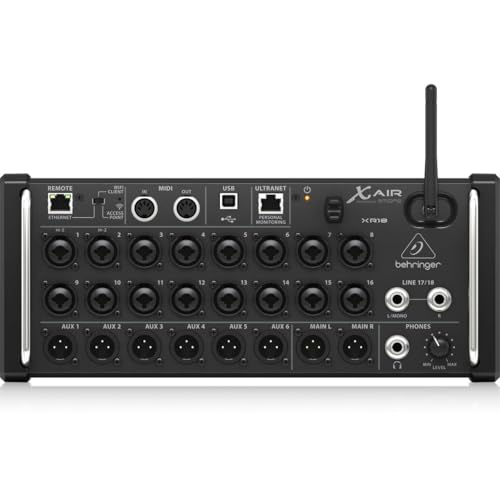
The best digital mixer for most small live and studio setups is the Yamaha DM3, while the Allen & Heath CQ-18T is the easier choice for quick gigs, the Allen & Heath SQ-5 suits larger productions, and the Behringer X32 Compact remains a strong value option when you need many buses and established live-sound workflows.
The right purchase depends less on the headline channel count than on how many microphone preamps, monitor mixes, physical controls, recording channels, and operators your setup actually requires. A compact mixer with excellent routing may be more useful than a larger console filled with inputs you never connect.
Our top picks


As an Amazon Associate we earn from qualifying purchases at no extra cost to you. Ratings are shown as listed on Amazon.
Quick Comparison of the Leading Choices
| Mixer | Input capacity | USB recording | Wireless control | Weight | Best use |
|---|---|---|---|---|---|
| Yamaha DM3 | 16 mic/line inputs; 18 input channels | 18 in / 18 out | Tablet and computer control via network | Approx. 4.5 kg | Portable live work and compact studios |
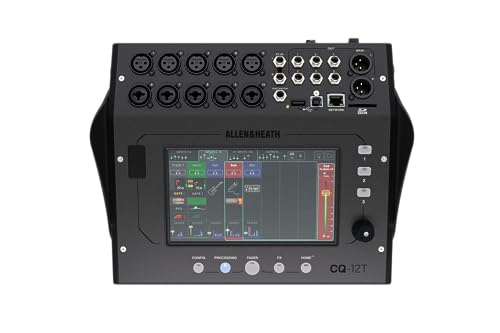
| Allen & Heath CQ-18T | 18 input channels; 16 mic/line inputs plus stereo inputs | 24 in / 22 out via USB | Built-in Wi-Fi and app control | Approx. 5.8 kg | Fast setup, rehearsals, small bands |
| Behringer X32 Compact | 40 input channels; 16 local mic preamps | 32 in / 32 out with expansion card | Tablet control through network connection | Approx. 10.5 kg | Venues needing buses, scenes, and physical faders |
| Allen & Heath SQ-5 | 48 input channels; 16 local mic preamps | 32 in / 32 out with USB connection | Networked tablet control | Approx. 10.5 kg | Professional live systems and larger productions |
| Soundcraft Ui24R | 24 input channels; up to 20 mic preamps | 32 in / 32 out via USB | Integrated Wi-Fi control from browsers and apps | Approx. 5.1 kg | Rack-mounted rigs and remote mixing |
Specifications can vary by firmware, expansion card, and regional package. The table is intended as a buying guide rather than a substitute for the manufacturer’s current technical sheet.
Best Digital Mixer Overall: Yamaha DM3
The Yamaha DM3 balances sound quality, size, routing, and recording better than most compact digital consoles. Its 16 mic/line inputs are enough for a typical band, podcast production, worship setup, or small studio. The 18-by-18 USB interface allows multitrack recording and computer playback without immediately requiring a separate audio interface.
Its preamps are quiet and clean, with enough gain range for common dynamic and condenser microphones. Yamaha’s interface is also comparatively easy to understand for engineers moving from analogue desks. The touchscreen and physical controls handle everyday adjustments, while the network connection supports remote operation from a tablet or computer.
The main limitation is physical control. With a limited number of faders, you will use layers and touchscreen pages on a busy show. The DM3 is also less suitable when you need many separate monitor mixes, a large festival input list, or extensive analogue patching. Choose the Dante-equipped version if your installation depends on Dante networking; otherwise, the standard version is usually the more economical buy.
Best for Fast Setup: Allen & Heath CQ-18T
The CQ-18T is aimed at musicians and operators who want useful results without building a complex show file. Its workflow includes automatic gain assistance, quick channel processing, and simplified presets that can shorten soundcheck. That makes it particularly attractive for small touring groups, rehearsal rooms, schools, and venues where different people operate the mixer each week.
The built-in Wi-Fi and touchscreen are practical for walking around a room while setting monitor levels. Its USB interface also makes it capable of multitrack recording and virtual soundcheck work. Allen & Heath’s processing is flexible enough for live vocals, drums, guitars, and playback, while the compact chassis is easy to carry with a microphone case.
The trade-off is that the CQ-18T gives you less deep show-control capacity than an SQ-series console. If you regularly need elaborate matrices, many custom bus structures, or a large number of physical faders, it is better viewed as a fast compact mixer than as a miniature touring console.
Best Value for Established Live Workflows: Behringer X32 Compact
The X32 Compact remains compelling when channel count, buses, and familiar live-sound functions matter more than minimum weight. It provides 16 local microphone preamps, 40 input channels, 25 buses, motorized faders, scenes, DCAs, and expansion options for digital stageboxes or multichannel computer recording.
That routing capacity is useful for bands with several monitor mixes, subgroups, effects returns, playback sources, and recording feeds. The large user community also means many engineers already understand its terminology and show-file structure. Used or discounted examples can provide substantial capability for a general market price below many newer professional consoles.
Its disadvantages are age, size, and fan noise compared with newer compact designs. It is not the best choice if you carry equipment by air or need a silent control room. Check the condition of faders, buttons, screens, power supplies, and expansion cards carefully when buying an older unit.
Best for Larger Productions: Allen & Heath SQ-5
The SQ-5 is the strongest choice here for a growing production that needs headroom. It supports up to 48 input channels and operates at 96 kHz, with 16 local mic preamps, extensive bus architecture, motorized faders, and expansion options for stageboxes and audio networking.
Its preamps provide clean gain and remote-control compatibility with Allen & Heath stageboxes. The console is appropriate for touring bands, theatres, corporate events, and installations where the input list may expand over time. Multitrack USB recording makes it viable in a studio, although its physical footprint and price are harder to justify for a basic project room.
Do not buy an SQ-5 simply because “more channels” sounds safer. The additional capability is valuable only if you need more monitor mixes, input layers, routing destinations, or networked I/O. For a four-piece band with a handful of microphones, a smaller mixer will be faster to transport and operate.
Best Rack-Mount Choice: Soundcraft Ui24R
The Ui24R is designed to sit beside the stage, in a rack, or near a recording computer while all mixing is performed from connected devices. Its combination of 24 inputs, many microphone preamps, multitrack USB recording, and browser-based control makes it useful for bands that do not want a traditional console at front of house.
This design saves space and shortens cable runs, but it changes the risk profile. A tablet or laptop becomes part of the control system, and wireless interference can make an unreliable network frustrating during a performance. Use a dedicated external access point when possible, keep a wired control option available, and save a local scene before every show.
Decision Matrix: Which Mixer Fits Your Situation?
| Your situation | Best fit | Why |
|---|---|---|
| Under about $1,000, occasional small gigs | CQ-18T or Ui24R | Good portability, remote operation, and enough inputs for compact bands |
| Small studio needing regular multitrack recording | Yamaha DM3 | 18-channel USB interface, clean workflow, compact footprint |
| Several monitor mixes and an operator at front of house | X32 Compact | Many buses, motorized faders, scenes, and a familiar live workflow |
| Large input lists or future expansion | Allen & Heath SQ-5 | 48 input channels, 96 kHz operation, and networked I/O options |
| Small vehicle, frequent load-ins, minimal rack space | Yamaha DM3 | Approx. 4.5 kg and substantially smaller than full-size consoles |
How Many Channels Do You Actually Need?
Count microphone and line sources, then add playback, talkback, effects returns, and at least 20 percent spare capacity. For example, a five-piece band might require 10 drum inputs, two guitars, bass, keyboards in stereo, three vocals, playback in stereo, and talkback. That is 21 sources before allowing for effects or future additions. A mixer with only 16 local preamps may therefore need a stagebox or a different console.
Also count outputs separately. A main stereo mix, two wedge mixes, two in-ear mixes, a subwoofer feed, a lobby feed, and a recording feed can quickly consume seven or more output destinations. A mixer can have enough input channels but still be unsuitable because it lacks the buses or physical outputs your system requires.
Wireless Control and Recording: Important Ownership Details
Wireless control is convenient for checking vocal levels from the audience, but it is not a replacement for a reliable network plan. Place the access point away from crowded wireless equipment, use a dedicated network rather than public venue Wi-Fi, protect the mixer with a password, and keep a wired Ethernet connection or local controls available.
For studio use, compare USB channel counts rather than simply looking for the word “USB.” A stereo USB connection is adequate for mix capture but not for editing every microphone afterward. An 18-by-18 or 32-by-32 interface can support individual tracks, virtual soundcheck, and separate playback routing, provided your computer, software, and storage are fast enough.
Durability, Maintenance, and Common Mistakes
Faders, rotary encoders, touchscreen surfaces, network connectors, and cooling fans are the parts most likely to show wear. Keep drinks away from the console, transport it in a padded case, leave ventilation openings clear, and avoid repeatedly forcing XLR connectors at an angle. Dust around faders can cause intermittent movement; use the manufacturer-approved cleaning method rather than spraying liquid into the surface.
Save dated show files to two separate locations. Before a performance, verify input patching, phantom power, output assignments, tablet access, and recording disk space. A common mistake is turning on phantom power globally when ribbon or other sensitive equipment is connected; use channel-specific phantom power where available and confirm the signal path first.
For most buyers, choose the Yamaha DM3 for the best balance, the CQ-18T for simplicity, the X32 Compact for mature live routing, the SQ-5 for expansion, and the Ui24R when rack-based remote mixing is the priority. The best digital mixer is the one whose preamps, buses, outputs, control method, and recording channels match your real source list—not the one with the largest number printed on its front panel.



Write Your Review
No reviews yet. Be the first to share your experience!