

Key takeaways
- Budget: Lincoln Electric Traditional and Revco gloves are described as value picks for occasional DIY welding. Expect a break-in period and some stiffness.
- Mid-range: Tillman 1350 and the Lincoln Roll Cage offer heavier construction and Kevlar stitching for regular home-shop or fabrication use.
- Premium: Caiman and Tillman TIG goatskin gloves, the Lincoln Premium Leather and the Miller pigskin glove cost more and focus on durability, comfort or specialization.
The best welding glove depends on the process: heavier cowhide gloves such as the Revco Black Stallion GM1611, Tillman 1350 or Lincoln Electric Traditional suit MIG and stick work, while thin goatskin gloves such as the Caiman Premium Goat Grain or Tillman 1338 suit TIG, where finger control matters more than raw heat shielding. This guide compares the models reviewers mention most, explains what the leather type and length mean in practice, and ends with a decision table and answers to common questions.
Our top picks
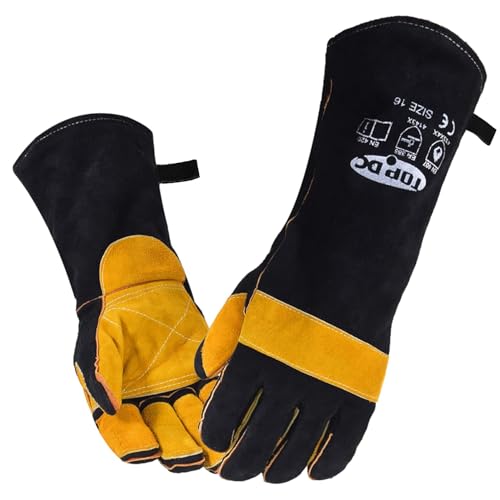
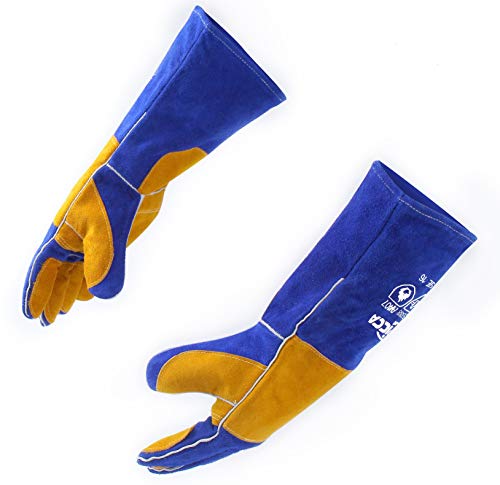

As an Amazon Associate we earn from qualifying purchases at no extra cost to you.
Match the glove to the welding process
Welding produces radiant heat, spatter, sparks and hot metal, and the amount of each changes with the process. Stick welding throws heat and slag and tends to call for thick, long-cuff gloves. MIG and flux-core produce spatter and moderate heat, so a medium-weight cowhide glove is common. TIG gives off less spatter but demands fine control of the torch and filler rod, so welders usually choose thin, supple goatskin or deerskin.
Reviewers at several roundup sites reach the same split. Weld Guru and Weldzone both pick the Revco GM1611 for MIG. The Lincoln Electric Traditional and Roll Cage gloves get credit for stick work. For TIG, Progressive Radio Network names the Caiman Premium Goat Grain as its top pick, and another list favors the Tillman 1338 goatskin glove. Several of these pages are a few years old despite 2026 titles, and many are affiliate-style roundups, so the rankings are a starting point, not the final word.
Welding gloves at a glance
| Glove | Best process | Stated construction | Limits reported |
|---|---|---|---|
| Revco Black Stallion GM1611 | MIG, flux core | Grain cowhide palm, split cowhide back, cotton lining, 12 inches, patches at heel and wrist (per Weld Guru) | Short cuff and thinner build limit heat protection |
| Lincoln Electric Traditional | MIG and stick | Split cowhide front and back, cotton sock lining, 13 inches, about 14.5 ounces (per Weld Guru) | Needs break-in; liner may detach |
| Lincoln Electric Premium Leather MIG Stick | MIG and stick | Smooth leather with split cowhide, cotton twill with fire-retardant foam, Nomex stitching, 12 inches (per Weld Guru) | Higher cost; short cuff |
| Lincoln Electric Roll Cage | Stick, heavy work | Described by Fypower as maximum heat and impact protection | Heavier, less nimble |
| Tillman 1350 | MIG, stick | Cowhide, Kevlar thread, 12 inches, made in USA (per one roundup) | Cowhide stiffness for precise work |
| Tillman 1338 | TIG | Goatskin, named by one roundup for precision work | Less heat shielding than cowhide |
| Caiman Premium Goat Grain | TIG | Goatskin with boarhide palm patch and reinforced thumb saddle (per one reviewer) | Thin, so not for stick |
| Miller Electric MIG/Stick | MIG, stick | Pigskin palm, cowhide patches, cotton fleece and foam, 23.5 inches (per Weld Guru) | Long, can restrict arm movement; fleece traps heat |
| Revco 850L | Stick | Named as an elkskin stick glove in one list | Limited coverage in reviews |
Leather types explained
Cowhide is the standard material for MIG and stick gloves. It is thick, durable and relatively affordable. Grain cowhide is the smoother outer layer and feels more supple, while split cowhide is the fibrous underlayer and is generally rougher and more heat-resistant at a given thickness. Many gloves combine both, with grain on the palm and split on the back.
Goatskin is thinner and softer. It gives the dexterity needed to hold a filler rod and feel the pedal or torch trigger, and it is the usual TIG choice. The trade-off is less insulation, so it is a poor choice for long stick runs or overhead work where sparks fall onto the hands.
Pigskin and elkskin appear in a few gloves. Weld Guru says thick pigskin protects better than cowhide on the Miller glove, and elkskin is described as soft and heat-tolerant, though reviews of the Revco 850L are thin.
Linings matter too. Cotton is common and comfortable, foam and fleece add insulation but may trap heat, and aluminum or Kevlar layers appear in some cheaper long-cuff gloves marketed for high heat. Kevlar thread is often chosen for the stitching because ordinary cotton thread burns through before the leather does.
Best for MIG and flux core: Revco GM1611 and Tillman 1350
Weld Guru and Weldzone both put the Revco GM1611 at or near the top of their MIG lists. Weld Guru lists grain cowhide palms, split cowhide backs, a cotton lining and a 12-inch length, with extra patches at the heel and wrist where wear is highest. Weldzone describes thick cowhide that protects the hand from spatter. The shorter cuff is the main downside, because it leaves less forearm covered.
The Tillman 1350 is another cowhide option frequently named for MIG and stick. One roundup lists Kevlar thread, a 12-inch length and US manufacture. If you weld mainly flat or horizontal beads and want a balance between feel and protection, either glove is a reasonable place to start.
Best for stick: Lincoln Electric Traditional, Roll Cage and Revco 850L
Stick welding generates more radiant heat and more slag, so thicker gloves and longer cuffs are popular. Weldzone credits the Lincoln Traditional glove with good durability and says its leather and Kevlar threading suit stick welding. Fypower selects the Roll Cage as its pick for maximum heat and impact protection. The Traditional is light at about 14.5 ounces according to Weld Guru, but the same review mentions that it needs a break-in period and that the inner liner may detach over time.
Best for TIG: Caiman Premium Goat Grain and Tillman 1338
For TIG, welders want to feel a filler rod and move the torch smoothly. Progressive Radio Network names the Caiman Premium Goat Grain as the top TIG choice because the goatskin palm preserves control. Another reviewer praises its flexibility, reinforced thumb saddle and boarhide palm patch. The Tillman 1338 goatskin is another name that appears often. Because TIG gloves are thin, they should not be used for processes that throw heavy spatter.
Long-cuff options and when length helps
Cuff length changes how much of the forearm is covered. A 12-inch glove like the Revco GM1611 leaves the lower forearm to your sleeve, so fire-resistant clothing becomes important. At the other extreme, the Miller Electric glove runs 23.5 inches according to Weld Guru, which gives a lot of coverage but can restrict movement. Weld Guru also notes that 16-inch gloves from brands such as YESWELDER and RAPICCA protect more of the arm, but may be too long for smaller users, and some of those designs are too thick for fine MIG work.
Budget tiers
- Budget: Lincoln Electric Traditional and Revco gloves are described as value picks for occasional DIY welding. Expect a break-in period and some stiffness.
- Mid-range: Tillman 1350 and the Lincoln Roll Cage offer heavier construction and Kevlar stitching for regular home-shop or fabrication use.
- Premium: Caiman and Tillman TIG goatskin gloves, the Lincoln Premium Leather and the Miller pigskin glove cost more and focus on durability, comfort or specialization.
Pick this if… decision table
| If you mostly… | Pick | Reason |
|---|---|---|
| MIG weld at home | Revco GM1611 | Named by two reviewers for MIG |
| Stick weld thicker steel | Lincoln Electric Traditional or Roll Cage | Heavier leather and Kevlar thread |
| TIG weld aluminum or stainless | Caiman Premium Goat Grain | Goatskin control with reinforced thumb |
| Weld occasionally and want one glove | Tillman 1350 | Middle-weight cowhide |
| Weld overhead or in tight spots | Long-cuff cowhide or pigskin | More forearm coverage |
| Need to feel a rod or torch trigger | Tillman 1338 | Thin goatskin |
Fit, care and safety notes
Choose a glove where your fingertips reach the end of the fingers with a little room to flex. Too loose and the glove bunches and slips, too tight and the leather stretches thin and traps heat. Break in new gloves by wearing them for light work before a long weld.
Keep gloves dry. Wet leather conducts heat quickly and can scald. Do not wash leather welding gloves in a machine, and store them away from oil and solvents, which can make leather flammable or stiff. Replace gloves when seams open, stitching burns away, the palm hardens and cracks, or you can feel heat through the leather.
Gloves are one part of the system. Pair them with a proper helmet, fire-resistant jacket, closed boots and good ventilation. Welding in confined spaces, near flammable materials, or on electrical equipment calls for training and the guidance of a qualified professional. Follow the glove maker’s instructions and any workplace safety rules.
Alternatives
- Heat-resistant oven or forge gloves: Not designed for spatter and arc radiation, so they are no replacement for welding gloves.
- Welding sleeves and cape sleeves: Cover the arm above the glove cuff when you use a short-cuff glove.
- Hybrid mechanic-style gloves: Fine for tack-up and layout, but not for active welding.
Frequently Asked Questions
Can one pair of gloves handle MIG, stick and TIG?
You can use a medium-weight cowhide glove for MIG and light stick work, but it will feel clumsy for TIG. Many welders keep a thin goatskin pair for TIG and a heavier pair for the rest. Choose based on the process you use most.
Are longer gloves always better?
No. A long cuff protects more of the forearm but can restrict movement, particularly for smaller users. Weld Guru notes that 16-inch gloves can be a problem for smaller hands. Balance coverage with mobility and pair with a fire-resistant sleeve.
How do I know when to replace welding gloves?
Replace them when stitching burns away, leather stiffens or cracks, holes appear, or you feel heat through the palm. Damaged gloves can fail without warning.
Is cowhide or goatskin more heat resistant?
Thick cowhide generally insulates better than thin goatskin, while goatskin offers more dexterity. That is why cowhide is chosen for stick and MIG and goatskin for TIG.
Can I wash my welding gloves?
Usually not in a machine. Spot clean and air dry away from direct heat as the maker advises, since water and heat can harden leather.
Do I still need protective clothing with good gloves?
Yes. Gloves protect hands only. Wear a welding helmet, flame-resistant clothing and suitable footwear, and follow your workplace’s safety requirements.










Write Your Review
No reviews yet. Be the first to share your experience!