

Key takeaways
- Fit snugly, not tight. Excess fabric at the fingertips reduces feel and can catch on moving parts. Bulky padding feels worse in a glove that is a size too small.
- Check knuckle alignment. The guards should sit over your knuckles when your fist is closed. If they ride up or slide to the sides, try another size or model.
- Allow for break-in. Reviewers report the M-Pact needing a few days of use to loosen up.
- Keep away from rotating machinery. No impact glove is designed to be worn near lathes, drill presses or other equipment that can pull a hand in. Follow the maker’s warnings and your workplace rules.
- Care. Follow the label. Many synthetic work gloves are machine washable on a cool cycle and should be air dried, since heat can warp TPR. Retire a glove when guards crack, detach or the palm wears thin.
For most mechanics, tradespeople and DIY users, the Mechanix Wear M-Pact is the safest starting point among impact resistant gloves, while the Ironclad General Utility line suits people who want lighter knuckle protection, and cut-plus-impact gloves such as the MCR Safety Predator A9 suit anyone who also handles blades or sharp edges. The right choice depends on which hazard actually injures your hands: crushing and pinching on the back of the hand, vibration through the palm, sharp edges, or cold and wet conditions.
Our top picks



As an Amazon Associate we earn from qualifying purchases at no extra cost to you.
Impact Resistant Gloves at a Glance
| Glove | Best for | Key stated features | Limits |
|---|---|---|---|
| Mechanix Wear M-Pact | Mechanics, general trades, oil and gas support work | TPR guards across knuckles, fingers and back of hand; padded palm; reviewers cite D3O or D30-type foam in the palm | Not cut rated; bulky for fine work; break-in period reported |
| Ironclad General Utility | Light-duty knuckle protection with a slimmer feel | Reviewers describe a light knuckle pad and a mechanic-style fit | Less impact coverage than the M-Pact according to reviewers |
| MCR Safety PD6901 Predator A9 | Handling blades, glass, sheet metal and sharp debris | ANSI A9 cut rating, the top of the ANSI/ISEA 105 scale, with TPR guards over it | Stiffer and heavier; designed for hazard first, comfort second |
| HexArmor Rig Lizard 2095 | Drilling floors and oily, wet industrial sites | Designed around rig hazards with a polyurethane-coated palm for wet grip, according to WC Safety | Specialised; more glove than most home users need |
| Ironclad Tundra | Cold, wet outdoor work | Outdoor Life lists waterproof construction, Cryoflex insulation and touchscreen fingertips | Insulated, so less suited to hot shops |
How Impact Protection Works
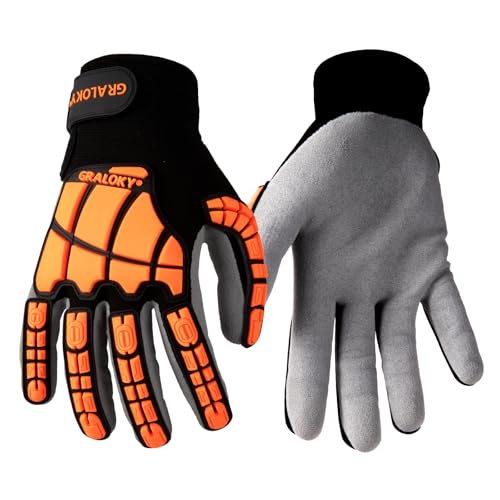
Most impact resistant gloves rely on thermoplastic rubber, usually shortened to TPR. WC Safety explains that TPR flexes enough to let the fingers move but stiffens on impact, spreading force away from the bone. Molded guards are placed over the knuckles, the finger segments and the back of the hand, because those are the surfaces that take the hits when a wrench slips or a hand gets pinched against a frame.
Some gloves add palm padding as well. Reviewers describe D3O or D30 foam in the M-Pact palm, a material that stays soft in normal use and firms up under shock. Palm padding mainly reduces vibration and pressure from tool handles, which matters more for long sessions with impact drivers or pry bars than for single dramatic hits.
Understanding ANSI/ISEA 138
The North American standard for impact gloves is ANSI/ISEA 138. WC Safety explains that gloves are rated Level 1 to Level 3 according to how much force reaches the knuckles and fingers. Level 1 lets the most force through, Level 2 sits in the middle, and Level 3 transmits the least force. A higher level generally means thicker or more rigid protection, so the trade-off is dexterity.
Note that impact rating and cut rating are separate. WC Safety reports that the M-Pact meets the impact standard but carries no ANSI/ISEA 105 cut level. If a knife, razor wire or sheet metal is part of the job, look for a glove that states both ratings on its packaging, and read the label rather than assuming the knuckle armor also stops blades.
Mechanix Wear M-Pact: The Common Benchmark
Several 2026 outlets name the M-Pact as their pick for impact resistance. WC Safety calls it the proven standard for the trades, and Outdoor Life also selects it, noting that it feels comfortable despite its protective hardware but that it wears down relatively quickly. Reviewers generally say it keeps enough finger feel for threading fasteners, though one review describes the finger padding as bulky enough to limit very fine work.
Reported drawbacks are consistent: a break-in period of a few days, thumb-crotch stitching as a common failure point, and more glove than needed for light finish carpentry. Reviews disagree on touchscreen use, with some saying the fingertips work and one saying the standard version does not support it. Check the specific version on the packaging, because Mechanix sells several M-Pact variants, including insulated and different color options.
Lighter Alternatives: Ironclad
Ironclad is the other widely cited brand. One mechanic-glove roundup describes the General Utility glove as the best choice for knuckle protection, while Workwear Ranked rates it slightly lower than the M-Pact overall and says it carries only a light knuckle pad. For someone who wants to nudge protection up from an ordinary mechanic glove without moving to full armor, that lighter approach may be enough. For heavy demolition, drilling or tire work, the heavier guards of the M-Pact are the more cautious choice.
Cut-Plus-Impact Gloves
Where blades are involved, a plain impact glove is not enough. WC Safety points to the MCR Safety PD6901 Predator A9, which stacks an A9 cut-resistant liner beneath TPR guards. A9 is the highest level on the ANSI/ISEA 105 scale. These gloves are common in glass handling, metal fabrication and salvage work. Expect a stiffer feel and a longer fitting process than with a mechanic glove.
WC Safety also lists a budget-oriented cut-and-impact option, the CutPro 36136, for crews who need both ratings without premium-tier spending. Treat any such pairing as a work-site tool: confirm the marked cut and impact levels match your risk assessment.
Cold, Wet and Oily Conditions
Impact gloves are not always warm or waterproof. Outdoor Life names the Ironclad Tundra for winter work, describing waterproof construction, Cryoflex insulation, reflective stripes and touchscreen fingertips, and quoting a tester who reported dry hands after extended water exposure. For oil and gas work, WC Safety highlights the HexArmor Rig Lizard 2095, built around drilling-floor hazards with a polyurethane-coated palm.
If you work in hot environments, an insulated glove can make hands sweat, which reduces grip and comfort. A ventilated back with a separate TPR layer is usually the better compromise for summer outdoor work.
Fit, Size and Care
- Fit snugly, not tight. Excess fabric at the fingertips reduces feel and can catch on moving parts. Bulky padding feels worse in a glove that is a size too small.
- Check knuckle alignment. The guards should sit over your knuckles when your fist is closed. If they ride up or slide to the sides, try another size or model.
- Allow for break-in. Reviewers report the M-Pact needing a few days of use to loosen up.
- Keep away from rotating machinery. No impact glove is designed to be worn near lathes, drill presses or other equipment that can pull a hand in. Follow the maker’s warnings and your workplace rules.
- Care. Follow the label. Many synthetic work gloves are machine washable on a cool cycle and should be air dried, since heat can warp TPR. Retire a glove when guards crack, detach or the palm wears thin.
Pick X If… Decision Table
| If you… | Pick | Why |
|---|---|---|
| Work on vehicles or machinery and bang your knuckles often | Mechanix Wear M-Pact | Full TPR coverage and a padded palm, widely named as the benchmark |
| Want modest knuckle protection with less bulk | Ironclad General Utility | Lighter knuckle pad and mechanic-style dexterity, per reviewers |
| Handle glass, sheet metal or blades | MCR Safety PD6901 Predator A9 | Top cut rating combined with TPR impact guards |
| Work on wet, oily rigs | HexArmor Rig Lizard 2095 | Built for drilling-floor hazards with a coated palm |
| Work outdoors in winter | Ironclad Tundra | Waterproof, insulated, touchscreen-friendly fingertips |
| Need to cover several risks on a modest budget | CutPro 36136 | Cut and impact protection aimed at working crews |
Budget Tiers
Budget: Basic mechanic-style gloves with printed or molded knuckle patches give light protection and good feel, but their guards are thinner and often unrated. They suit occasional garage work.
Mid-range: This is where the M-Pact and Ironclad sit. You get proper TPR guards, reinforced palms and decent durability for regular use.
Premium: Cut-plus-impact gloves with A-level liners and specialised rig gloves cost more because of their materials and testing, and they make sense when your job brings a documented hazard.
Other Alternatives Worth Considering
- Standard mechanic gloves without armor for light tasks where impact is rare and feel matters most.
- Leather work gloves. Outdoor Life notes that quality leather can last many years with minimal maintenance, although it lacks molded impact guards.
- Cut-resistant liners worn under a mechanic glove for occasional blade work, though stacking layers reduces dexterity.
Frequently Asked Questions
Are impact resistant gloves also cut resistant?
Not automatically. Impact and cut protection are measured under different standards, ANSI/ISEA 138 and ANSI/ISEA 105. WC Safety notes that the M-Pact has an impact rating but no cut level, so choose a glove marked with both if blades are involved.
What does the ANSI/ISEA 138 level mean?
It describes how much force passes through the glove to the knuckles and fingers. Level 1 transmits the most force, Level 3 the least. Higher levels offer more protection but usually reduce flexibility.
Do impact gloves protect against vibration?
Some include palm padding that reduces vibration and pressure from tool handles, and reviewers credit the M-Pact palm foam with this. Padded gloves are not a substitute for tool maintenance, breaks and any guidance from an occupational health professional if you have numbness or tingling.
How should impact gloves fit?
Snug across the palm with no loose material at the fingertips, and with the knuckle guards sitting directly over your knuckles when you make a fist. Check the maker’s size chart, since sizing varies between brands.
How long do impact resistant gloves last?
It depends on use. Outdoor Life says the M-Pact wears down relatively quickly, and WC Safety flags thumb stitching as a common failure point. Replace gloves when guards crack or the palm thins out.
Can I wear these gloves around rotating machinery?
Generally no. Gloves can catch on spinning parts and pull a hand in. Follow the equipment manual and your workplace safety policy, and ask a safety officer if you are unsure.










Write Your Review
No reviews yet. Be the first to share your experience!