

The best Muay Thai shin guards for most students are a mid-weight pair with dense foam, a wrap-around design and a strap system that keeps the guard from sliding, such as the Fairtex SP3 or Twins SGL-10 class. Light, thin guards suit drilling and kids, while thick, heavy guards suit hard sparring where you check and absorb kicks. Pick by sparring level, leg size and training frequency, then size carefully, because a guard that rotates mid-round does not protect you. This guide covers real models and explains how to size them.
Our top picks

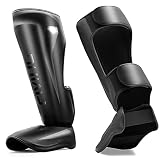
 Fairtex SP3 Lightweight Shin Guards
- Articulated Instep Padding: Fairtex kickboxing shin guards ergonomically…
- Elastic Straps & Hook and Loop Closures: The…
- Improve speed & agility - Fairtex SP3 shin…

As an Amazon Associate we earn from qualifying purchases at no extra cost to you.
Quick Comparison of the Picks
| Pick | Best for | Key specs | Price range |
|---|---|---|---|
| Fairtex SP3 shin pads | Best overall for sparring | Leather-style cover, dense foam, wide hook-and-loop straps, Thai-made | Mid to upper-mid |
| Twins Special SGL-10 | Best for a classic fit | Leather shell, firm padding, elastic and strap closure | Mid |
| Yokkao Matrix shin guards | Best premium pick | Padded, flexible, secure instep strap, Thai brand | Upper-mid to premium |
| Venum Elite shin guards | Best for MMA and mixed training | Lighter foam, wrap-around, moderate protection | Mid |
| Hayabusa T3 shin guards | Best for comfort and mobility | Hook-and-loop closure, flexible foam, shaped to the shin | Upper-mid |
| Slip-on neoprene shin pads | Best for light drilling and cardio | Thin foam, elastic sleeve, no straps | Budget |
Product details come from maker pages and spec sheets, not from personal use. Always confirm the listed size chart for the model you choose.
Best Overall for Sparring: Fairtex SP3
Fairtex is one of the best-known Thai brands, and the SP3 is designed for training and sparring with a leather-style cover and a dense foam core. Wide hook-and-loop straps hold the guard along the shin and over the foot. This is the kind of guard a coach will recommend when you start sparring with kicks at medium contact.
The trade-off is weight and break-in. Dense foam guards feel stiff at first and can feel hot in warm gyms, so wear them for a few sessions to soften them up.
Best for a Classic Fit: Twins Special SGL-10
Twins Special is a legacy Thai brand, and the SGL-10 has a traditional shape with firm padding, a leather exterior and an elastic and strap closure. The shape contours around the shin and holds well in clinch exchanges.
The trade-off is that the fit can be a bit narrow for larger calves, and the elastic may stretch over time. If you have thicker lower legs, consider sizing up.
Best Premium Pick: Yokkao Matrix
Yokkao is known for its bold designs and strong construction. The Matrix guards have a padded shell and a secure instep strap that stops rotation. They are popular with students who want a pair that looks good and holds up through years of training.
The trade-off is cost. They sit at the high end, so make sure the model fits before committing.
Best for MMA and Mixed Training: Venum Elite
Venum’s Elite shin guards are lighter and more flexible than classic Thai guards, which helps when you switch between striking, takedowns and ground work. The wrap-around design stays close to the leg, and the foam is thinner.
The trade-off is protection. A thinner guard absorbs less impact on hard kicks, so it suits technical sparring rather than heavy contact.
Best for Comfort and Mobility: Hayabusa T3
Hayabusa builds shin guards with flexible foam and a shaped profile that follows the shin. The hook-and-loop closure lets you adjust tension, and many users find them comfortable for long sessions.
The trade-off is that a more flexible guard gives less rigid protection than a firm Thai-style pad. Check what level of sparring your gym expects before you buy.
Best for Light Drilling: Slip-On Neoprene Pads
Neoprene slip-on pads have thin foam and no straps, so they fit easily under pants. They suit cardio kickboxing classes and light drills. They do not provide the protection needed for hard sparring, and they can slide down the shin.
Sizing Guide by Height and Calf
Shin guard sizing varies by brand, and many are labeled by body height or leg length rather than shoe size. Use the brand’s chart, but this table shows common mappings.
| Height | Typical size | Notes |
|---|---|---|
| Under 5 ft 0 in | XS or Kids | Check kids’ sizes for children |
| 5 ft 0 in to 5 ft 5 in | S | Make sure the guard stops below the knee |
| 5 ft 6 in to 5 ft 11 in | M | The most common adult size |
| 6 ft 0 in to 6 ft 3 in | L | Check calf width |
| Over 6 ft 3 in | XL | Some brands run short on length |
A well-fitted guard should end just below the knee and just above the ankle bone, with the instep strap holding the foot section firmly.
Choosing by Sparring Level
| Your level | Guard type | Why |
|---|---|---|
| Beginner, light technical drills | Light wrap-around or slip-on | Comfort and freedom of movement |
| Intermediate, medium contact sparring | Mid-weight Thai-style guard | Balanced absorption and mobility |
| Advanced, hard sparring and clinch work | Dense leather-style guard | Maximum shock absorption |
| MMA and mixed arts | Light, flexible guard | Easier for takedowns and ground work |
Worked Example: Reading Kick Force and Padding
Studies of strikes in combat sports have found that a roundhouse kick can generate impact forces in the thousands of newtons, depending on skill and body size. That is why a bruised shin is common without padding. Foam cannot remove that force, but a dense pad spreads it across a larger area and extends the period over which it is absorbed, which reduces peak pressure on the bone. When you pick between a thin guard and a dense guard, remember that you are paying for greater force spreading, not for invulnerability.
Materials and Closure Systems Explained
Most shin guards use one of three covers. Genuine leather is durable and molds to the leg over time, but it is heavy and costs more. Synthetic leather is lighter and cheaper, and it handles sweat well, though it can peel after a year or two of hard use. Canvas or neoprene sleeves are the lightest and breathe best, but they offer the least protection.
The closure matters as much as the cover. A single elastic sleeve is fast but stretches. A two-strap hook-and-loop system, with one strap at the calf and one at the instep, holds better and lets you tune the tension. A full wrap-around guard with a foot loop is the most secure and is common in Muay Thai gyms because it stays in place during kicks, checks and clinch work.
Check how much of the foot section the guard covers. A guard with an instep pad protects the top of your foot when your partner checks your kick, which is a common injury point. Without it, the bones on the top of the foot are exposed. Beginners who spar lightly may not need it, but if you plan to spar regularly, consider a model with instep protection built in.
Breaking In a New Pair
- Wear them for pad work first. Light use softens the foam without risking your partner’s shins.
- Adjust straps after the first round. Foam compresses a little and straps loosen, so retighten.
- Check for chafing behind the knee. If the top edge digs in, roll the guard down a little or try the next size.
- Dry them fully between sessions. Damp foam breaks down faster and smells worse.
Care and Common Mistakes
- Air dry guards after every session and keep them out of a closed bag.
- Wipe leather-style covers with a damp cloth. Avoid soaking them.
- Replace guards when the foam is flattened or cracks appear in the shell.
- Do not buy a guard that is too large. It rotates and shifts on contact.
- Use proper technique, since guards do not replace conditioning of the shin through gradual training.
- If you have pain or swelling in your shins that does not go away, see a medical professional.
Frequently Asked Questions
Are shin guards required for Muay Thai?
Not for bag work, but most gyms require them for sparring and partner drills. Protecting the shins helps prevent bruises and cuts for you and your partner.
What size shin guard do I need?
Choose by your height and the brand’s size chart. The guard should cover the shin from just below the knee to above the ankle without sliding.
Are Thai-made shin guards better?
Thai-made guards from brands like Fairtex and Twins have a long reputation among Muay Thai students, and many gyms recommend them. Fit and padding matter more than origin alone.
Can I use MMA shin guards for Muay Thai?
Yes for light sparring and technique work. For hard Muay Thai sparring, a denser guard gives more protection against kicks and checks.
How do I stop shin guards from slipping?
Choose the correct size, tighten the instep strap before the calf strap, and replace worn elastic. A guard that rotates is usually too large or has stretched straps.
How long do shin guards last?
With regular training, a quality pair often lasts a couple of years. Replace them when the foam compresses or the closure no longer holds.





Write Your Review
No reviews yet. Be the first to share your experience!