

Key takeaways
- Use a smaller flag or remove the flag when severe weather is forecast.
- Prefer a larger-diameter, thicker-wall pole for open fields, rooftops, and coastal exposure.
- Choose a rotating truck or swivel system if you want to reduce wrapping around the pole.
- Use a nylon or polyester flag with reinforced heading and multiple rows of stitching.
- Inspect joints, cleats, halyards, and mounting bolts at least twice a year.
The best flagpoles for most homes are 20–25-foot residential aluminum poles, while fiberglass is the better choice for exposed, windy locations and sectional poles suit buyers who prioritize easier installation over maximum rigidity.
Our top picks
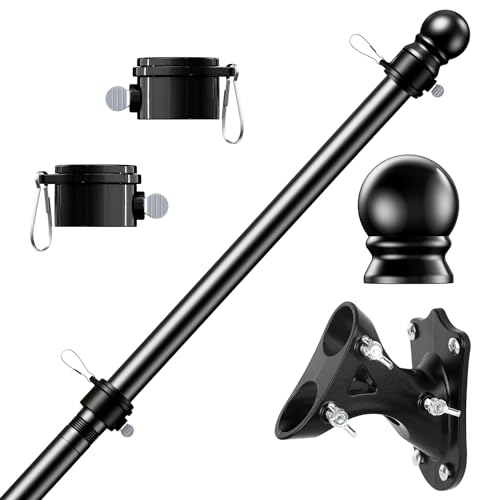


As an Amazon Associate we earn from qualifying purchases at no extra cost to you. Ratings are shown as listed on Amazon.
Best Flagpoles by Situation
| Situation | Best choice | Recommended size | Why it fits | Typical market range |
|---|---|---|---|---|
| Small front yard or suburban home | Sectional aluminum | 20–25 feet | Affordable, light, and adequately visible without overwhelming the property | $120–$300 |
| Large yard or two-story home | One-piece or heavy-duty aluminum | 25–30 feet | Provides better proportion and visibility from the road | $250–$700 |
| Coastal, prairie, or storm-prone site | Commercial-grade fiberglass or reinforced aluminum | 20–30 feet | Handles repeated flexing and gusts better when correctly installed | $350–$1,000+ |
| Business, school, or sports facility | Commercial in-ground aluminum | 30–40 feet | Designed for larger flags, frequent display, and stronger visual presence | $600–$2,000+ |
| Renter or temporary display | Portable sectional or telescoping pole | 10–20 feet | Can be removed or relocated without a permanent concrete foundation | $80–$300 |
How Tall Should a Flagpole Be?
Height is a property-and-flag-size decision, not simply a matter of buying the tallest pole available. A 20-foot pole is usually sufficient for a one-story house, especially if it is installed near the front walk or driveway. A 25-foot pole is often the most balanced choice for a typical suburban lot. Homes with two stories, tall trees, or a long setback may benefit from 30 feet.
Allow room below the flag for movement and visibility. A flag mounted too close to the ground becomes dirty and may strike shrubs, fencing, or vehicles. As a practical proportion, a standard residential flag measuring 3 by 5 feet suits a 20–25-foot pole. A 4 by 6-foot flag is more appropriate on a 25–30-foot pole, provided the pole and halyard system are rated for the additional fabric.
Check local rules before choosing a 30-foot or taller installation. Some municipalities, homeowners’ associations, and commercial properties regulate height, setback, lighting, or the number of flags. Underground utility lines must also be located before digging.
Aluminum vs. Fiberglass Flagpoles
Aluminum
Aluminum is the default choice because it combines low weight, corrosion resistance, and a polished or powder-coated finish. It is rigid enough for most residential settings and is widely available in sectional and one-piece designs. A properly finished aluminum pole can remain attractive for many years with only occasional cleaning.
The weakness is metal fatigue and bending after repeated high-wind loading or impact. Thin, inexpensive aluminum sections are more vulnerable than thick-wall commercial poles. Connections between sections are another potential failure point: loose joints can allow movement, noise, and progressive wear.
Fiberglass
Fiberglass poles flex rather than behaving like a rigid metal lever. That makes them attractive in locations with frequent gusts, although flexibility does not make any pole indestructible. Quality matters: a thick, UV-resistant finish and a properly sized ground sleeve are more important than the word “fiberglass” alone.
Fiberglass usually costs more and may show fading, surface chalking, or cracking if the exterior coating deteriorates. Inspect it for splintering, impact damage, and water entering fittings. Do not drill extra holes into a fiberglass shaft unless the manufacturer specifically allows it.
In-Ground vs. Sectional Installation
“In-ground” describes how the pole is supported, while “sectional” describes how the pole is assembled. A sectional pole can still be installed permanently in a buried sleeve or concrete foundation. Understanding that distinction prevents a common buying mistake.
Permanent in-ground installation
A permanent system uses a ground sleeve or hinged base set in a concrete foundation. The pole slides into the sleeve, allowing removal for repairs or severe weather. It provides the best stability and appearance for a home, business, or athletic facility, but it requires careful digging, leveling, and curing time.
For a 25-foot residential pole, the foundation is commonly around 2–3 feet deep, but the manufacturer’s engineering instructions take priority. Soil type, frost depth, pole diameter, and wind exposure can change the requirement. A tall pole in soft or poorly drained soil should not be installed by guessing at the concrete volume.
Sectional or portable installation
Sectional poles are easier to transport and assemble. They are useful for renters, events, temporary business displays, and homeowners who cannot pour a foundation. The trade-off is more joints, more assembly hardware, and typically less resistance to severe wind than a properly engineered permanent pole.
Portable bases must be weighted for the actual pole height and flag area. A small patio stand that is stable with a 6-foot decorative flag may be unsafe with a 20-foot pole and a 3-by-5-foot flag. Never improvise with loose bricks or an unsecured bucket of concrete.
Wind Durability: What the Specifications Really Mean
Wind ratings are useful only when the conditions are comparable. A rating may assume the flag is removed, may apply to a smaller flag, or may depend on the pole being installed in a specified foundation. A “maximum wind speed” is not a guarantee that the pole will remain safe during every storm.
- Use a smaller flag or remove the flag when severe weather is forecast.
- Prefer a larger-diameter, thicker-wall pole for open fields, rooftops, and coastal exposure.
- Choose a rotating truck or swivel system if you want to reduce wrapping around the pole.
- Use a nylon or polyester flag with reinforced heading and multiple rows of stitching.
- Inspect joints, cleats, halyards, and mounting bolts at least twice a year.
For a rough sizing illustration, wind force rises approximately with the square of wind speed. A 40-mph gust has about four times the wind-pressure effect of a 20-mph breeze, all else being equal. That is why a pole that feels perfectly stable on an ordinary day can experience a dramatic load during a storm. Flag area, pole height, exposure, and foundation depth all matter together.
Setup Steps That Prevent Early Failure
- Confirm the location. Check property boundaries, local restrictions, overhead clearance, and underground utilities.
- Match the flag to the pole. Stay within the manufacturer’s recommended flag dimensions and weight.
- Prepare drainage. Water trapped around a sleeve can accelerate corrosion and frost movement. Follow the supplied gravel and concrete instructions.
- Set the foundation plumb. A slight lean magnifies visual imbalance and increases uneven loading on the base.
- Let concrete cure fully. Do not load the pole while the foundation is still developing strength.
- Install the hardware without over-tightening. Crushed tubing, stripped threads, and distorted fittings create avoidable weak points.
- Raise the pole in calm weather. Keep people, vehicles, and power lines clear during assembly.
Maintenance and Ownership Costs
The fabric usually wears out before the pole. Sunlight makes colors fade, while wind causes fraying at the fly end and along the heading. In regular outdoor use, a flag may need replacement every several months to a few years, depending on fabric quality, climate, and whether it is lowered during storms. A second flag is useful when one is being washed or repaired.
Wash aluminum with mild soap, water, and a soft brush; avoid abrasive pads that damage the finish. Fiberglass should also be cleaned gently, with close attention to cracks and chalking. Lubricate pulleys only with a product recommended for the hardware, since some oils attract grit or damage plastic components.
Typical recurring expenses include replacement flags at roughly $20–$100 each, halyards at about $10–$40, and pulley or swivel hardware at approximately $20–$100. A cheaper pole can therefore become expensive if its rope, truck, or joints need frequent replacement. Spending more on corrosion-resistant fittings and a replaceable halyard often improves ownership value more than choosing a decorative finish.
Bottom Line
Choose a 20–25-foot sectional aluminum flagpole for the best value on an ordinary residential property. Move to a 25–30-foot heavy-duty aluminum pole when the home is large or set far back from the road. Pick fiberglass for persistent wind exposure when its construction and foundation specifications are credible, and choose a permanent in-ground system for the greatest stability and cleanest appearance. Whatever the material, correct sizing, a sound foundation, storm precautions, and regular hardware inspections matter more than a polished product description.



Write Your Review
No reviews yet. Be the first to share your experience!