

For most backyard cooks who handle hot grates, charcoal chimneys and cast iron, a long-cuff aramid glove such as Grill Armor is the safer starting point, while a silicone-coated glove such as the Weber Premium suits lighter tasks where finger control matters more than raw heat limits, and a knit oven mitt-style glove such as the Ove Glove works for quick, low-risk handling. The right choice depends on how long your hands stay near the heat, whether the glove will get wet, and how much dexterity you need for tongs, skewers and grates.
Heat-resistant grill gloves are not all built for the same job. Reviewers who cover them split the category into aramid-fiber gauntlets, silicone-coated fabric gloves and lightweight knit gloves. Each protects differently, wears differently and fails differently, so it helps to know the trade-offs before buying.
Our top picks

As an Amazon Associate we earn from qualifying purchases at no extra cost to you.
At a Glance: Current Grill Glove Options Compared
| Glove | Best for | Stated or reported heat figure | Main limits |
|---|---|---|---|
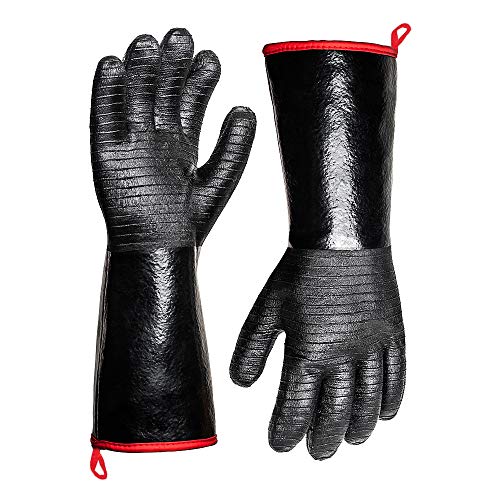
| Grill Armor (standard) | Hot grates, charcoal, cast iron | Reviewers cite a rating up to 932°F, with EN407 certification | Aramid loses protection when wet; not waterproof |
| Grill Armor Extreme Heat | Open-fire cooking, brief direct contact with very hot items | One outlet reports EN407 certification up to 1472°F for brief direct dry-heat contact | Bulkier; same wet-fabric caution |
| Weber Premium flexible grilling gloves | Tong work, adjusting food, light grate handling | One outlet lists 482°F | Not fireproof; not meant for prolonged contact |
| Ove Glove | Quick pulls from oven or grill edge | Reviewers cite 540°F | Short cuff; reviewers report only brief safe contact; knit can trap ash |
| Heat Aid | Buyers who want the highest stated rating | Listed at 1472°F by one outlet | Less widely reviewed; fit varies by size |
Figures above come from maker listings as relayed by reviewers such as BBQ Report, Thomas Acres, Barbecuemen and Gloves360. A temperature rating is not a promise that skin stays comfortable for as long as you like. Standards such as EN407 describe limited, specific contact conditions, and a glove that survives a high temperature on paper can still let heat through to the hand after a few seconds.
How Heat-Resistant Grill Gloves Actually Work
Heat reaches the hand through contact and radiation. Thick insulating layers slow that transfer; they do not stop it. That is why nearly every maker and reviewer frames the number on the label as a window of protection rather than a permanent shield.
Aramid and fiber-based gauntlets
Aramid is the same fiber family used in firefighting and industrial gear. Gloves in this group, such as Grill Armor, typically pair an aramid outer with a cotton lining and add silicone grip patterns on the palm and fingers. Thomas Acres describes the standard Grill Armor as machine washable and rated to roughly 932°F, with EN407 certification. These gloves tend to have long cuffs, which matters when you reach across a hot grate or into a kettle.
The caution that appears repeatedly in reviews is moisture. Barbecuemen notes that aramid fiber loses much of its protective value once it gets wet, because water conducts heat to the skin and can turn to steam. If you wash a glove, let it dry fully before using it again, and never grab hot metal with a damp glove.
Silicone-coated fabric gloves
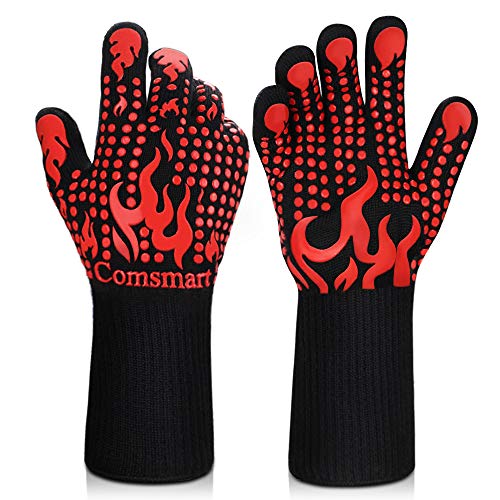
The Weber Premium flexible glove sits in this group. Gloves360 ranks it last in a field of seven on heat rating, listing it at around 482°F and noting that it is not fireproof and not intended for prolonged contact. The same review credits it with best-in-class dexterity for handling grill tools. In other words, the trade is clear: you give up insulation margin and gain finger feel. Silicone also sheds liquids, so spills of marinade or grease wipe off more easily than they do from a knit.
Knit oven-style gloves
The Ove Glove is a stretch knit with a silicone-textured surface. Reviewers cite a 540°F figure and report that most users get about 15 seconds of safe contact before heat reaches the inner cotton layer. The knit can also hold ash and charcoal dust, so it may need washing more often. Its cuff is shorter than a dedicated grill gauntlet, which leaves more forearm exposed. It is a reasonable pick for brief pulls from a hot surface, but it is not what reviewers point to for long sessions at an open fire.
What to Look For Before You Buy
- Cuff length. Burns often happen on the wrist and forearm, not the palm. A long cuff gives margin when reaching over grates, into pits or around a hot lid.
- Certification. EN407 is the European standard for protection against heat and flame. A maker that lists it is giving you a testable claim rather than only a marketing number. Treat unlabeled gloves with more caution.
- Grip surface. Silicone patterns help you hold wet or greasy items, but a slick palm can mean dropped racks. Look for textured coverage across fingers and thumb.
- Fit and thickness. Thick gloves protect better and handle worse. A glove that is too large slips; one that is too tight compresses the insulating layer and reduces its effect.
- Washability. Check the maker’s care label. Some can go through a machine wash; others should be spot-cleaned. Grease-soaked fabric can burn more easily and is a reason to retire a glove.
- Waterproofing. If you will touch wet foods or work in rain, a coated glove makes more sense than raw aramid.
Budget Tiers and What They Buy You
Budget tier. Knit and basic silicone gloves live here. They handle warm surfaces, hot pans pulled from a grill’s edge and short tasks. Expect a short cuff and a lower margin for error. These are fine as a spare pair but are not the gloves reviewers point to for hot grates.
Mid-range tier. This is where aramid options such as the standard Grill Armor sit, according to outlets that label it a value pick. BBQ Report names it its best-value choice at a 932°F rating. For most households that grill a few times a week, this tier covers hot grates, charcoal and cast iron without paying for specialist extras.
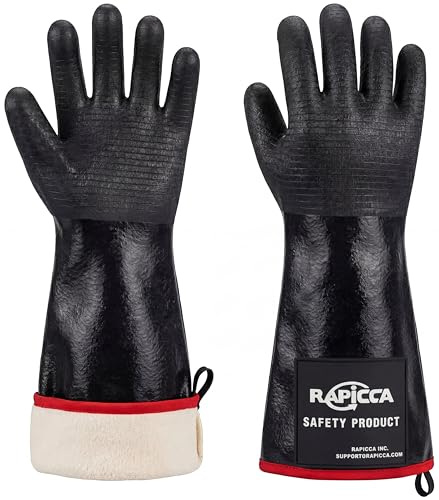
Premium tier. Extreme-heat aramid designs and Heat Aid sit up here, with listed ratings of 1472°F. They suit pitmasters who work directly over open flame or move hot logs and coals. The cost is bulk, and fit can be less forgiving if you do fine work like flipping delicate fish.
Pick X If: Decision Table
| Pick this… | If you… | Watch out for |
|---|---|---|
| Grill Armor standard | Move hot grates, tend charcoal, lift cast iron | Keep it dry; do not grab hot items with a wet glove |
| Grill Armor Extreme Heat | Cook over open fire or handle hot coals | Bulk reduces fine control |
| Weber Premium | Mostly use tongs, flip food, adjust skewers | Short contact only; not fireproof |
| Ove Glove | Want a cheap, stretchy glove for quick pulls | Short cuff; knit holds ash |
| Heat Aid | Want the highest listed rating | Fewer independent reviews than the big names |
Safety and Care Notes
No glove makes a fire safe. Follow the maker’s manual for every product, and treat the numbers on packaging as limits to stay well under. If a glove feels hot, put the item down immediately rather than hoping for a few more seconds. Retire gloves that show thin spots, holes, melted silicone or grease saturation. A glove that has been dropped in a flame or has scorch marks should be replaced.
If you grill with children nearby, a glove does not replace distance. Keep hot tools and surfaces out of reach, and keep a first-aid plan ready. For any burn that blisters, covers a large area or involves the face or hands, seek medical attention rather than treating it at home.
Cleaning without ruining the glove
Follow the washing directions from the maker. Where a machine wash is allowed, use a gentle cycle and air dry completely. Avoid fabric softener on fiber-based gloves, since residue can reduce performance and add flammable film. Silicone-coated styles usually wipe clean with warm soapy water.
Alternatives Worth Considering
- Welding-style leather gloves. Thick split-leather gauntlets are a common choice for open-fire cooks. They are stiffer than grill-specific gloves, can darken with grease and should be kept dry, but they resist embers well.
- Long silicone mitts. Waterproof, easy to wipe down and good for handling wet or greasy items like roasting pans and smoker racks. Reviewers generally view them as less dexterous than fabric gloves.
- Insulated tools instead of gloves. Long-handled grate lifters and tongs keep hands away from heat in the first place. Many experienced cooks use them alongside gloves rather than in place of them.
Sizing Tips
Most makers offer a one-size-fits-most or small to extra-large range. Measure around the widest part of the palm and follow the size chart rather than guessing from glove brand habits. A snug glove with a little finger room gives the best mix of control and insulation. If you cook with a smoker or kettle that has a deep chamber, favor a long cuff so your sleeve does not rest on hot metal.
Frequently Asked Questions
Are higher temperature ratings always better?
Not necessarily. A high rating tells you what the material can survive under standard test conditions, not how long your hand stays comfortable. Thickness, cuff length, fit and moisture all change real-world protection, so a lower-rated glove that fits well can be easier to use safely than a bulky one that slips.
Can I use oven mitts for grilling?
Short, dry contact with a warm item is possible, but many cloth mitts are not built for open flame or very hot grates. Some fabrics can scorch or melt. A glove made for grilling, with a stated heat rating and a long cuff, gives you a clearer margin.
What does EN407 mean on a grill glove?
EN407 is a European standard covering protective gloves for heat and flame. It grades performance across several conditions, such as contact heat and flame behavior. When a maker lists it, you get a more specific claim than a general temperature figure, though you should still follow the maker’s instructions for use.
Can I wash heat-resistant gloves?
It depends on the model. Thomas Acres describes the standard Grill Armor as machine washable, while other designs call for wiping with a damp cloth. Follow the care label, let the glove dry completely, and retire it if grease has soaked in or the fabric looks thin.
Why do some reviewers warn about wet aramid gloves?
Water in the fabric conducts heat more readily to the skin and can turn to steam on contact with hot metal. Barbecuemen notes that aramid loses its protective value when wet. Keep the gloves dry, and swap to a waterproof silicone style if you will handle wet items.
How often should I replace grill gloves?
There is no fixed schedule. Replace them when you see holes, scorch marks, melted silicone, thin spots or grease saturation. Frequent heavy use will wear them faster than occasional weekend grilling.





Write Your Review
No reviews yet. Be the first to share your experience!