

Key takeaways
- One lightweight throw per rung for five visible blankets.
- One heavy blanket shared across two adjacent rungs for better support.
- Four thick blankets if each folded bundle is more than 4 inches deep.
- Two oversized quilts if the useful rung width is under 20 inches.
The best blanket ladders for stylish storage are usually 5.5–6 feet tall, hold three to five folded throws, and use a wide, stable base or wall anchor rather than relying on decorative rungs alone.
A blanket ladder is a useful choice for a living room, bedroom, home office, or viewing area where blankets need to stay accessible without taking up the floor space of a basket. The right design depends less on appearance than on ladder height, rung spacing, weight capacity, wall stability, and how many blankets you actually use.
Our top picks
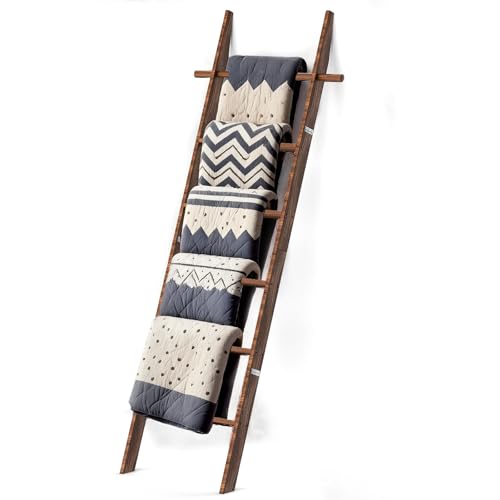


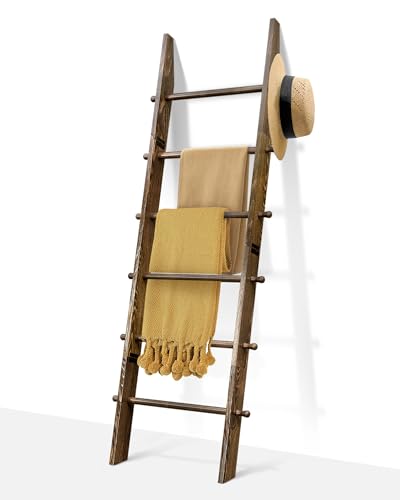
As an Amazon Associate we earn from qualifying purchases at no extra cost to you. Ratings are shown as listed on Amazon.
Best blanket ladder types by situation
| Situation | Best choice | Recommended specification | Why it fits |
|---|---|---|---|
| Small apartment or narrow room | Compact leaning ladder | 48–60 inches high; 12–16 inch width; 2–3 blankets | Uses little wall and floor space while keeping everyday throws visible |
| Family room with frequent use | Wide five-rung ladder | 60–72 inches high; 18–24 inch width; 4–6 blankets | More hanging capacity and easier access for several people |
| Heavy wool or oversized blankets | Reinforced solid-wood ladder | At least 40 pounds capacity; 12–15 inch rung spacing | Reduces flexing and leaves room for bulky folds |
| Rental property or no-drill room | Freestanding ladder with rubber feet | Angled base; feet at least 18 inches apart; 25–35 pounds capacity | Can be positioned without permanent wall hardware |
| Children, pets, or high-traffic area | Wall-secured ladder | Anti-tip strap or brackets; 30–50 pounds capacity | Minimizes movement when blankets are pulled from the rungs |
Head-to-head comparison of blanket ladder designs
Leaning wood blanket ladders
Leaning ladders are the most recognizable option and generally offer the best balance of style, capacity, and price. A typical model is 60–72 inches tall, has four or five rungs, and holds three to six standard throws. Solid pine, rubberwood, bamboo, and hardwood are common materials.
The main limitation is stability. A ladder that merely touches the wall can slide if a thick blanket is pulled sideways. Look for non-slip rubber feet, a broad lower stance, and an anti-tip strap. If the ladder is placed near a sofa, door, or exercise area where it could be bumped, anchoring it is preferable.
Wall-mounted blanket ladders
Wall-mounted designs save floor space and are the strongest choice for narrow hallways or rooms with active foot traffic. They usually hold three to five blankets, depending on the number of rungs and the wall structure. Installation is more involved: the hardware must be fixed into a stud or suitable masonry anchor, not just drywall.
A mounted ladder is also less forgiving of uneven folds. Because it cannot be pulled away from the wall, blankets may press against painted surfaces. Leave at least 2 inches of clearance where possible, or choose rungs with extended brackets.
Freestanding ladder racks
Freestanding racks have a deeper base and sometimes include side supports or a shelf. They are more stable than a simple decorative ladder, but they occupy more floor area. A 24-inch-wide rack with a 12–16 inch footprint can hold five to eight lighter blankets, making it suitable for a large family room or hospitality space.
They are also easier to move for cleaning. The trade-off is visual weight: a wide rack can dominate a small room, especially when loaded with patterned throws.
Metal blanket ladders
Steel and powder-coated metal designs offer slim profiles and good resistance to scratches, but they can feel less warm than wood. Thin tubular metal is adequate for lightweight fleece blankets; heavier blankets need welded joints and a stated capacity of at least 30 pounds.
Check the contact points before buying. Uncapped metal ends can mark hardwood floors, and narrow rungs can create pressure lines in knitted or loosely woven blankets. Rubber or silicone caps are useful in rooms with wood, laminate, or tile flooring.
Key measurements that determine usable capacity
| Feature | Light-use design | General-purpose design | Heavy-use design |
|---|---|---|---|
| Overall height | 48–60 inches | 60–72 inches | 60–78 inches |
| Rung spacing | 10–12 inches | 12–15 inches | 14–18 inches |
| Useful rung width | 14–18 inches | 18–24 inches | 20–28 inches |
| Recommended total load | 15–25 pounds | 25–40 pounds | 40–60 pounds |
| Typical blanket volume | 2–3 throws | 4–5 throws | 5–8 throws |
| Typical market range | $35–$80 | $60–$140 | $110–$250 |
These are practical ranges rather than universal ratings. A thick queen-size wool blanket may weigh 8–12 pounds by itself, while a fleece throw may weigh less than 3 pounds. Capacity should therefore be calculated by weight and bulk, not by blanket count alone.
How many blankets will it really hold?
Use the ladder’s clear width and rung spacing to estimate usable volume. As a working example, consider a 68-inch ladder with five rungs spaced 13 inches apart. If each rung carries one folded throw measuring approximately 50 by 60 inches, the ladder can display five throws. However, five bulky blankets may overlap and hide the lower rungs.
A more realistic arrangement is:
- One lightweight throw per rung for five visible blankets.
- One heavy blanket shared across two adjacent rungs for better support.
- Four thick blankets if each folded bundle is more than 4 inches deep.
- Two oversized quilts if the useful rung width is under 20 inches.
For appearance as well as stability, leave one empty rung between especially thick blankets. This allows air circulation and prevents the ladder from looking like a crowded textile stack.
Materials, assembly, and wall stability
Wood
Solid wood gives the warmest appearance and usually handles heavier loads better than hollow composite construction. Pine is affordable but can dent; bamboo is light and resistant to everyday moisture; hardwood is more rigid but costs more. Inspect the finish for smooth sanding, sealed end grain, and joints that do not twist when lightly pushed.
Metal
Powder-coated steel is durable and easy to wipe clean. Welded joints are preferable to lightly crimped connections. Metal may transmit more noise when hangers or belt-like accessories contact the rungs, so rubber caps or sleeves are useful in quiet rooms.
Assembly
Many leaning ladders arrive with the side rails separate from the rungs. Tighten every fastener evenly rather than fully tightening one side first, which can pull the frame out of square. After assembly, place the ladder on a level surface and check that all feet touch the floor.
For a wall-mounted model, locate a stud or use an anchor rated for the wall material. The fixing method should support the ladder’s own weight plus the intended blanket load. An anti-tip strap is a sensible minimum for a leaning ladder in a home with children or pets; a rigid bracket is better where the ladder may be grabbed or bumped.
Durability and ownership realities
- What wears first: rubber feet flatten, screw joints loosen, and fabric or paint can wear at narrow contact points.
- Cleaning: dust wood and metal with a dry or slightly damp cloth. Do not saturate unfinished wood, and dry any damp surface promptly.
- Blanket care: wash or air blankets before storing them for long periods. Dirt and body oils can attract insects and create odors.
- Common mistake: hanging wet laundry or damp blankets on a decorative ladder. Moisture can stain wood, encourage mildew, and increase the load dramatically.
- Load checking: re-tighten hardware after the first week and then every few months if the ladder is frequently used.
- Placement: keep the base away from door swings, heating vents, and areas where a foot can catch the lower rail.
Which blanket ladder should you buy?
Choose a 48–60 inch compact ladder if you have one or two daily throws and limited floor space. Choose a 60–72 inch, five-rung solid-wood ladder for the best all-purpose balance of capacity and style. Select a wall-mounted model when floor space or

Write Your Review
No reviews yet. Be the first to share your experience!