

Key takeaways
- The best vlogging cameras for most creators are the Sony ZV-E10 II for interchangeable-lens flexibility, DJI Osmo Pocket 3 for the steadiest walk-and-talk footage, and Sony ZV-1 II for a compact all-in-one setup; action-focused creators should also consider the GoPro…
The best vlogging cameras for most creators are the Sony ZV-E10 II for interchangeable-lens flexibility, DJI Osmo Pocket 3 for the steadiest walk-and-talk footage, and Sony ZV-1 II for a compact all-in-one setup; action-focused creators should also consider the GoPro HERO13 Black.
Our top picks


As an Amazon Associate we earn from qualifying purchases at no extra cost to you. Ratings are shown as listed on Amazon.
Quick picks by filming situation
| Filming situation | Best fit | Why it stands out | Main compromise |
|---|---|---|---|
| Indoor training, interviews, and regular uploads | Sony ZV-E10 II | Strong autofocus, interchangeable lenses, 3.5mm microphone input, fully articulating screen | No built-in optical stabilization; lenses add cost and size |
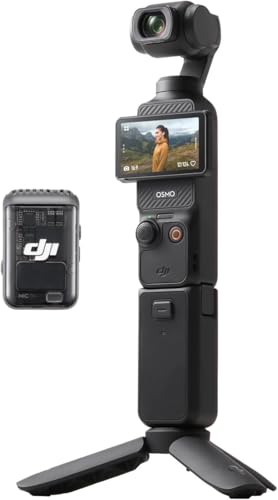
| Walking through a gym or filming travel-style pieces | DJI Osmo Pocket 3 | Three-axis mechanical gimbal, compact body, subject tracking, rotating screen | Small fixed sensor and limited lens flexibility |
| Simple one-camera vlogging with a built-in zoom | Sony ZV-1 II | Wide 18–50mm-equivalent lens, reliable face and eye autofocus, compact design | Shorter battery life and no interchangeable lenses |
| Rain, impact, sparring-side action, and first-person footage | GoPro HERO13 Black | Rugged, waterproof without a housing to 10 m, strong electronic stabilization | Less natural background blur and weaker low-light results than larger-sensor cameras |
| Canon users wanting an approachable hybrid camera | Canon EOS R50 | Good autofocus, fully articulating screen, interchangeable lenses, straightforward controls | Microphone input is available, but headphone monitoring is not built in |
What matters most in a vlogging camera?
Autofocus: the difference between usable and unusable footage
For solo creators, autofocus is more important than a slightly higher resolution. Face and eye detection should hold you while you demonstrate a kick, explain a training drill, or move toward the camera. Sony’s ZV-E10 II and ZV-1 II use dependable subject-recognition autofocus, while the Canon EOS R50 is also a strong choice for people and action subjects. The DJI Osmo Pocket 3 can track a face using its gimbal system, which is especially useful when walking.
Action cameras such as the GoPro HERO13 Black generally use a fixed-focus, very wide-angle approach rather than conventional eye autofocus. That is not a problem when the camera is mounted on a chest harness or pointed at a broad scene, but it is less flattering for a close-up seated explanation.
Stabilization: choose mechanical or electronic control for movement
The Osmo Pocket 3 has a three-axis mechanical gimbal, so it is the strongest choice for smooth walking footage without adding a separate stabilizer. A camera gimbal physically counters rotation, producing a more natural result than heavy digital cropping.
The GoPro HERO13 Black relies on electronic stabilization. It is excellent for running, mounting to equipment, or filming near a training area, but it works by cropping and processing the image. Sony’s ZV-E10 II has electronic stabilization modes, yet the most stable results usually require a stabilized lens, a tripod, or a handheld grip. The ZV-1 II combines optical and electronic stabilization, although its small body and modest grip make a short tripod or extension handle useful.
Audio inputs: the overlooked buying decision
A clear microphone often improves a video more than a sharper image. The Sony ZV-E10 II, Sony ZV-1 II, and Canon EOS R50 include a 3.5mm microphone input, allowing a wired lavalier or compact on-camera microphone. The ZV-E10 II also supports digital audio through its multi-interface shoe with compatible Sony accessories.
The DJI Osmo Pocket 3 can record with DJI wireless microphone systems and has built-in microphones, but its accessory ecosystem is more specialized. The GoPro HERO13 Black has built-in microphones and supports external audio through compatible accessories rather than offering the same simple 3.5mm workflow as the Sony and Canon cameras.
For a noisy boxing or kickboxing gym, use a close microphone on the speaker and record a short room-tone clip. A camera several metres away may produce impressive-looking footage but mostly capture bags, music, footwork, and ventilation noise.
Screen articulation: frame yourself without guessing
A fully articulating screen flips sideways and rotates, so it remains visible when the camera is mounted vertically, placed on a tripod, or used with a light positioned beside the lens. The Sony ZV-E10 II, Sony ZV-1 II, and Canon EOS R50 all provide this kind of screen.
The Osmo Pocket 3 uses a smaller rotating screen that switches between horizontal and vertical recording. It is quick and convenient, though less spacious for checking exposure and focus. The GoPro HERO13 Black has a rear touchscreen and can record vertical video, but its framing is less comfortable when the camera is mounted out of reach.
Key specifications compared
| Camera | Sensor / maximum video | Weight | Battery figure | Audio input approach | Stabilization |
|---|---|---|---|---|---|
| Sony ZV-E10 II | APS-C; 4K up to 60p | Approx. 377 g with battery and card | Approx. 610 still images per charge; video varies by mode | 3.5mm mic, headphone output, digital shoe audio | Electronic modes; lens or tripod helps |
| Sony ZV-1 II | 1-inch; 4K up to 30p | Approx. 292 g with battery and card | Approx. 290 still images per charge | 3.5mm mic input; digital shoe audio | Optical plus electronic modes |
| DJI Osmo Pocket 3 | 1-inch; 4K up to 120p in selected modes | Approx. 179 g | Up to about 166 minutes at 1080p/24p under specified conditions | Built-in microphones and DJI wireless systems | Three-axis mechanical gimbal |
| Canon EOS R50 | APS-C; 4K up to 30p, oversampled from 6K | Approx. 375 g with battery and card | Approx. 370 still images per charge | 3.5mm mic input | Digital movie stabilization; lens or tripod helps |
| GoPro HERO13 Black | 1/1.9-inch-class; 5.3K up to 60p | Approx. 154 g with battery | Up to about 2.5 hours at 1080p/30p under specified conditions | Built-in microphones; external accessories available | Electronic HyperSmooth stabilization |
Battery figures are manufacturer-style test results and are not a promise of recording time. Autofocus activity, screen brightness, stabilization, temperature, high frame rates, and wireless connections can reduce runtime considerably. Carrying one spare battery for a compact camera, or two for a full filming day, is usually more dependable than relying on a single published figure.
Head-to-head choices
Sony ZV-E10 II versus Canon EOS R50
These are the better long-term choices if you expect your videos to evolve. Both use interchangeable lenses and have flip-out screens, but the Sony is particularly appealing for creators who prioritize dedicated vlogging controls, USB streaming, and Sony’s extensive lens ecosystem. The Canon is approachable for stills and general-purpose shooting, with excellent people-focused autofocus and a comfortable entry point into the RF lens system.
Neither is an ideal bare-handed walking camera. Add a small tripod grip, choose a compact lens, and use electronic stabilization selectively. A wide lens is safer than a standard lens when you are holding the camera at arm’s length.
Sony ZV-1 II versus DJI Osmo Pocket 3
The ZV-1 II is better when you want conventional camera controls, a 3.5mm microphone, and a wide built-in zoom without carrying lenses. The Pocket 3 wins for walking, quick setup, and smooth movement. Its gimbal also makes it easier for a beginner to produce stable footage immediately.
For mostly seated commentary, technique demonstrations from a fixed position, or interviews with a wired lavalier, the Sony is more adaptable. For gym tours, event coverage, and moving introductions, the DJI is the more efficient tool.
GoPro HERO13 Black versus a larger-sensor camera
Choose the GoPro when durability, mounting options, and stabilization matter more than cinematic background separation. It can handle sweat, rain, and awkward mounting positions far better than a conventional mirrorless camera. Choose the Sony or Canon when you need cleaner indoor footage, controlled depth of field, natural skin tones, and a more flexible microphone setup.
Setup recommendations for fight and fitness creators
-
For seated analysis: place the camera at eye level, use a tripod, connect a lavalier or compact directional microphone, and leave space around the frame for captions.
-
For demonstrations: use a wide lens or the wide end of a compact zoom, keep the camera several steps away, and mark the floor so your movement stays inside the autofocus area.
-
For walking footage: use the Osmo Pocket 3 or a camera with a small stabilizing grip. Hold the device close to your body and bend your elbows rather than extending one arm fully.
-
For ringside or mat-side coverage: keep a GoPro protected from direct impact and position a conventional camera outside the likely movement path. Never place expensive gear where it can be struck or tripped over.
-
For vertical clips: confirm the camera’s vertical framing before recording. A sideways flip-out screen is easier to monitor than a camera mounted high above eye level.
Ownership costs and durability realities
Budget for more than the camera. A practical starter kit usually includes a memory card, spare battery, charger, tripod grip, microphone, wind protection, and a small camera bag. General market pricing in 2026 places compact premium vlog cameras roughly in the mid-hundreds, interchangeable-lens bodies commonly in the upper-hundreds before lenses, and action cameras around the mid-hundreds depending on bundles and accessories.
The parts most likely to wear first are battery capacity, USB ports, screen hinges, lens-barrel mechanisms, and action-camera door seals. Rechargeable batteries gradually lose runtime, so replace them when a normal filming session becomes unreliable. Keep sweat and dust away from contacts, use a soft dry cloth on screens and lenses, and inspect waterproof doors after drops or heavy use. Do not assume an action camera remains waterproof if its battery door is cracked or its seal is dirty.
For a simple runtime calculation, a two-hour event may require more than one battery even if the advertised continuous figure is longer: allow roughly 15 minutes for setup, 90 minutes of intermittent recording, and 15 minutes of retakes and file checks. Carrying a spare gives a practical margin for autofocus, screen use, and high-resolution recording. If you film several times each week, that small investment is usually more valuable than buying a camera with a marginally higher resolution.
Final recommendation
Buy the Sony ZV-E10 II if you want the most room to grow and can accept carrying a lens. Choose the DJI Osmo Pocket 3 if stable movement and fast setup are your priorities. Choose the Sony ZV-1 II for a pocketable all-in-one camera with a microphone jack, the Canon EOS R50 for an approachable interchangeable-lens system, and the GoPro HERO13 Black for rugged action coverage. The best choice is the one whose autofocus, stabilization, audio workflow, screen, and battery routine match how you will actually film—not merely the model with the longest specification list.



Write Your Review
No reviews yet. Be the first to share your experience!