

Our Short List of 3

All 3 Picks at a Glance
| Product | Specs | Action |
|---|---|---|
| Bushido Jiu-Jitsu Journal: Evidence-Based Training Log & Planner | Check price on Amazon | |
 Jiu-Jitsu Training Journal by Jacob Justice | Check price on Amazon | |
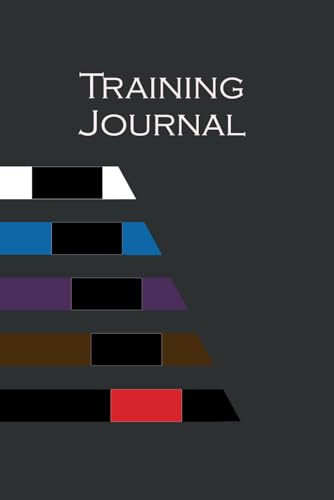 Brazilian Jiu-Jitsu Training Journal by Todd Richards | Check price on Amazon |
Key takeaways
- The best boxing training journals compared: guided session logs, sparring notes, and progress trackers that help fighters record rounds and improve faster.
Ask experienced coaches what separates fighters who plateau from those who keep climbing, and record keeping comes up again and again. A good training journal captures what actually happened in the gym: the combinations drilled, the rounds sparred, the coach’s corrections, and how your weight and conditioning trend across a camp. Memory fades within days; a written log does not.
The problem is that most products sold as boxing journals are ordinary lined notebooks with a glove printed on the cover: blank pages and nothing else. The five journals below are different. Each one is a physical paper book with a printed training-log structure: guided session pages, space for sparring notes, technique records, goal setting, and progress reviews. They were built for combat-sports athletes, mainly in the grappling and mixed martial arts world that most modern boxers cross-train in, and their session-log format maps cleanly onto boxing work: pad rounds, bag rounds, sparring, and conditioning.
As an Amazon Associate, we earn from qualifying purchases.
Quick Answer
The Practitioner’s Journal is the strongest overall pick, with guided session logs, a technique index, and a competition catalog in a durable hardcover. The Bushido Jiu-Jitsu Journal is the best roomy paperback planner at 200 pages. Jacob Justice’s journal suits sparring-heavy athletes, while Apollo MMA’s self-guided paperback and Todd Richards’ coach-led journal round out the list.
How to Choose
Start with the session log itself; that page is where the journal earns its place in your gym bag. Look for dated or numbered entries with prompts for session focus, techniques or combinations covered, conditioning work, and your coach’s feedback. A page that only asks what you did is weaker than one that also asks what worked, what failed, and what changes next time. For a boxer, the sparring fields matter most: partner, number of rounds, what landed, what you got caught with, and one fix to drill next session.
Next, check capacity against your training frequency. Session counts vary widely, from around seventy guided logs in a premium hardcover to several hundred shorter sparring entries in a volume paperback. If you train five or six days a week, a small log count runs out mid-camp, so budget for a second copy or pick a compact per-session format. Undated pages are worth preferring, because an injury break or a rest week should not waste a chunk of the book.
Then look at the tracking extras. Goal-setting pages at the front, periodic reflection or review sections, and an index that lets you find every entry where you worked a given technique all turn a diary into a training tool. Fighters who cut weight should confirm the journal leaves room to record daily weight and conditioning alongside sessions, even if that means using the notes column. Finally, weigh format: a lay-flat hardcover survives a gym bag longer and is easier to write in on a bench, while a lighter paperback is cheaper to replace each camp. Paper quality matters too, since thicker stock resists bleed-through.
The Practitioner’s Journal Jiu Jitsu Journal & Training Log
This is the most complete training-log system on the list. The Practitioner’s Journal is a leather-bound hardcover built around guided structure rather than blank space: 72 guided session logs, four reflection sections, a technique index, and a competition catalog. Each log walks you through documenting what was covered, diagnosing problems, and setting objectives, the same loop a boxer should run after sparring: record the rounds, name the defensive leak, set one drill to fix it.
The build suits gym life. The cover is brown PU leather with an elastic band, the binding lays flat for writing on a bench, and the paper is a heavy stock that takes pen well. At A5 size it disappears into a kit bag. The vocabulary leans toward grappling, so a pure boxer will adapt some prompts, but the session, index, and competition sections translate directly to combinations and bout records.
Specs
| Item | Detail |
|---|---|
| Format | Hardcover, PU leather |
| Size | A5, 5.8 x 8.3 inches |
| Pages | 200 |
| Session logs | 72 guided logs |
| Extra sections | 4 reflections, technique index, competition catalog |
| Paper | 120 GSM white paper |
Bushido Jiu-Jitsu Journal: Evidence-Based Training Log & Planner
The Bushido journal pairs a training log with a planner, a strong fit for fighters who map out a full camp rather than only recording sessions afterward. Across 200 pages it gives room to plan training blocks, log each session, and review progression over time, and since it is written for jiu-jitsu, MMA, and martial arts athletes alike, boxing sessions sit comfortably inside its structure.
As a paperback measuring 5.5 by 8.5 inches and weighing under three quarters of a pound, it is easy to throw in a bag and treat as a per-camp consumable: fill it, shelve it, and start the next one fresh. The emphasis is on mindful, consistent recording rather than motivational filler.
Jiu-Jitsu Training Journal by Jacob Justice
Jacob Justice’s journal is the volume pick, with an unusually flexible structure. The listing describes three ways to use the book: full session entries covering several techniques each with rolling notes, a technique-only mode holding hundreds of individual technique records, and a rolling mode holding well over a hundred sparring sessions, each with goals, performance notes, and future improvements.
That third mode is what a boxer should care about. A sparring log that forces you to write the goal before the session, assess performance after it, and name the improvement for next time is precisely the habit that turns sparring from exercise into education. Swap the word rolling for rounds and the format works unchanged: partner, rounds, what you tried, what it cost you, what changes. The trade-off is guidance: you get structured space and capacity rather than a coached system, so self-directed fighters will get more from it than beginners who need prompts.
Ultimate Jiu Jitsu Journal & Training Log by Apollo MMA
Apollo MMA’s Ultimate Jiu Jitsu Journal follows the self-guided school of journaling: document every training session, catalog significant events, set objectives, and review the patterns that emerge over time. The book acts as both map and compass, showing long-term goals while keeping daily training pointed at them. For a boxer, that means session entries for technical work and sparring, plus periodic stock-taking on where your game is improving.
It is a light, bag-friendly paperback whose scope covers grappling, wrestling, and MMA training as well as jiu-jitsu, so striking sessions fit its session-and-review rhythm. One caution: the listing’s published details are thinner than the other picks here, so check the interior preview carefully and confirm the log format matches how you record rounds and drills. Fighters who respond well to goal-led, self-guided journaling are the natural audience.
Specs
| Item | Detail |
|---|---|
| Format | Paperback |
| Author | Apollo MMA |
| Structure | Self-guided session logs and goal setting |
| Designed for | BJJ, grappling, wrestling, and MMA training |
| Focus | Session documentation and pattern review |
Brazilian Jiu-Jitsu Training Journal by Todd Richards
Todd Richards is a Brazilian jiu-jitsu black belt and head instructor, and his journal reflects a coach’s priorities: reflect on each session, track what you are learning, and stay focused on systematic progress rather than simply accumulating mat time. It is a companion for the whole journey, from beginners building the habit to experienced athletes keeping their history in one place.
For boxing readers, the appeal is the method rather than the vocabulary. A reflection-first log, where every session ends with what was covered and what it means for the next one, is the same discipline good boxing coaches demand in a training diary. The listing is light on interior specifics, so treat this as the straightforward, coach-minded option: a paperback training journal from a working instructor, without the elaborate index and catalog systems of the premium hardcover above.
Who Should Skip It
Skip this category if you actually want a blank diary. Every journal here imposes a structure, and if you prefer free-form writing, a plain notebook will serve you better and cost less. Also skip these picks if you need boxing-only content with no grappling vocabulary at all: the guided systems in print are built mainly for jiu-jitsu and mixed martial arts, and while the session, sparring, and progress formats transfer to boxing, the headings and prompts sometimes use mat terminology to adapt.
Coaches who must log many athletes at once should look elsewhere, since these are single-athlete books. And if you will not write within a day of training, no journal will help; the honest fix is a phone notes app rather than a premium hardcover gathering dust.
FAQ
What should a boxing training journal include?
At minimum: the date, the session focus, the techniques or combinations drilled, sparring notes covering partner and rounds, your coach’s main correction, and one thing to fix next time. Goal pages, periodic reviews, and a technique index are the extras that separate a training system from a diary.
How many sessions does each journal cover?
Guided hardcovers hold fewer, richer entries, around seventy full session logs for The Practitioner’s Journal, while volume paperbacks can hold well over a hundred shorter sparring logs or hundreds of technique records. Match the count to your weekly training days.
Are these journals only useful for grapplers?
No. The log formats were designed around combat sports: a session is a session whether it is rounds on the pads or rounds of rolling. Boxers may need to reinterpret a few prompts, but sparring assessment, goal setting, and progress review work the same in any gym.
Is a paper journal better than a training app?
Paper wins on speed and focus: no unlocking, no notifications, and it survives being tossed in a kit bag. Apps win on search and backup. Many fighters keep paper as the primary gym record because the act of writing one fix per session is what drives the improvement.
Final Verdict
For most fighters, The Practitioner’s Journal is the one to buy: its guided logs, technique index, and competition catalog form the most complete paper system here, and the hardcover build suits daily gym use. The Bushido journal is the better choice for a lightweight 200-page paperback combining planning with logging. Sparring-heavy athletes should look at Jacob Justice’s journal for its sheer logging capacity, while the Apollo MMA and Todd Richards journals suit fighters who prefer reflection and goal setting over elaborate structure. Whichever you choose: log the session the same day, name one fix, and review it before the next session.
Product and ASIN Reference
| Product | ASIN |
|---|---|
| The Practitioner’s Journal Jiu Jitsu Journal & Training Log | 0578275708 |
| Bushido Jiu-Jitsu Journal | B0DR73BN9G |
| Jiu-Jitsu Training Journal by Jacob Justice | B0BKS5SZXT |
| Ultimate Jiu Jitsu Journal & Training Log by Apollo MMA | B0GGS2YHTV |
| Brazilian Jiu-Jitsu Training Journal by Todd Richards | B0DSBXB82J |
More from Amazon
Programs that pair well with the guide above. Offers and eligibility are set by Amazon and may change.
Free shipping on eligible items, Prime Video and more. Eligible new members can start with a free trial.
Start a Prime free trialAudiobooks and podcasts to listen to on the go. Eligible new members can start with a free trial.
Try Audible freeAd-free music streaming. Eligible new subscribers can start with a free trial.
Try Music Unlimited freeA free business account with business pricing and bulk-buying tools for work, shop or home office.
Create a business accountAs an Amazon Associate we earn from qualifying purchases.






Write Your Review
No reviews yet. Be the first to share your experience!