

Our Short List of 3
All 3 Picks at a Glance
| Product | Specs | Action |
|---|---|---|
 Bas Rutten O2Trainer | Check price on Amazon | |
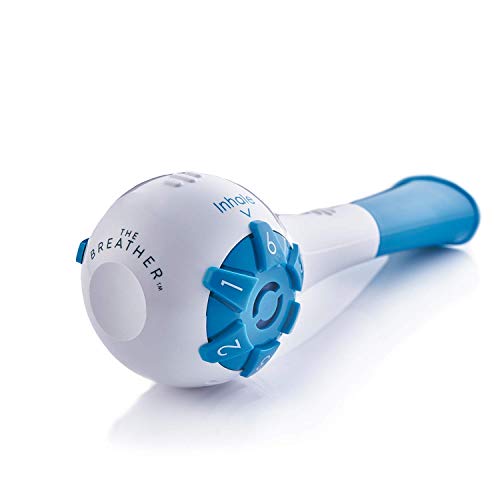 The Breather | Check price on Amazon | |
 Tilcare Breathing Trainer | Check price on Amazon |
Key takeaways
- Compare five handheld breathing trainers for fighters: POWERbreathe Plus, Bas Rutten O2Trainer, The Breather, Tilcare and AOVALO, with loads and specs.
Late in a hard round, the fighter who settles fastest between exchanges is usually not the one with the biggest engine overall. Breathing under pressure is a skill of its own, and the muscles that drive it, the diaphragm and the muscles between the ribs, can be loaded and trained like any other muscle group. Handheld breathing trainers do exactly that: you breathe in, out, or both through a mouthpiece that resists the airflow, in short sets away from the mats. This guide compares five current models sold on Amazon, covering a spring-valve inspiratory trainer, an airflow-restriction trainer designed by a former MMA champion, a dual-direction dial trainer with a coaching app, and two simpler adjustable options. Every pick is a handheld device with stated resistance settings, so progress can be tracked session to session.
As an Amazon Associate, we earn from qualifying purchases.
Quick Answer
For most fighters, the POWERbreathe Plus Medium Resistance is the most structured pick, with a calibrated spring valve, 11 load settings and a published load range. The Bas Rutten O2Trainer suits training on the move, while The Breather adds independent exhale resistance and app coaching. Tilcare and AOVALO cover simpler, dial-and-go training.
How to Choose
First, separate these devices from training masks. The training-mask coverage on this site deals with elevation-style masks worn over the nose and mouth during workouts, which restrict overall airflow while you move. The products in this guide are a different class: handheld inspiratory and expiratory resistance devices used in short, deliberate sets, usually seated or standing still, with a set load you can write down. They train the breathing muscles directly and are never worn during rounds or live sparring.
Next, decide which direction you want to load. Inspiratory trainers resist the breath in and target the diaphragm and intercostals. Combined trainers add resistance on the breath out as well, which suits fighters who want to practise long, controlled exhales. Of the five picks here, only The Breather loads both directions with separate controls; the other four are inspiratory devices.
Then look at how resistance is set and measured. A pressure-threshold spring valve, as on the POWERbreathe, stays shut until your inhale reaches the set load, published in cmH2O, so progression is exact and repeatable. Airflow-restriction designs, like the O2Trainer, narrow the intake with interchangeable screens; the steps are real but judged by feel rather than a pressure figure. Dial trainers sit in between, with numbered settings but no published pressure range. For a trained fighter, the top end matters as much as the starting point: a light device you max out in a month is a poor buy, which is why the POWERbreathe pick below is the Medium tier rather than the Light.
Finally, think about fit and hygiene. A trainer only works if it lives where you train, so pocket size, a carry case and a mouthpiece that comes apart for washing all count. These are single-user devices; do not share one. Treat every model here as a training aid, not a medical product: none of them is a treatment for asthma, COPD, sleep apnea or any other condition, and anyone with a diagnosed respiratory or heart condition should clear breathing-resistance training with a doctor first. If a session makes you dizzy, stop.
POWERbreathe Plus Medium Resistance
The POWERbreathe Plus is the reference design in this category: a handheld inspiratory trainer whose calibrated spring valve stays closed until your in-breath reaches the load you have set, so every repetition in a set is loaded the same way. The Medium Resistance model, part number PB2002, adjusts across 11 settings with a published load range of 23 to 186 cmH2O, and the maker protocol is simple: 30 breaths, twice a day, stepping the load up as the sets get easier. POWERbreathe positions the Medium tier for users with moderate to high fitness, which makes it the honest starting point for trained fighters; the Light tier is aimed at beginners and the Heavy tier at people who have already topped out a Medium. There are no batteries to charge, and the resistance level shows on the device, so logging a session takes seconds. The limits are clear, too: in-breath only, and no app guidance in this mechanical model.
Specs
| Item | Detail |
|---|---|
| Type | Inspiratory only |
| Resistance system | Calibrated spring valve |
| Load settings | 11 |
| Load range | 23–186 cmH2O |
| Maker protocol | 30 breaths, twice daily |
| Part number | PB2002 |
Bas Rutten O2Trainer
The O2Trainer was designed by former UFC heavyweight champion Bas Rutten, and it takes the opposite approach to the POWERbreathe: instead of a spring valve, it restricts the air intake through interchangeable screens, and the listing includes 16 resistance caps. You start with a larger screen, the listing suggests the 13 mm screen first, and move to smaller screens as your breathing adapts, making each in-breath harder. Its real distinction is where you can use it. The listing describes a lightweight device built to be worn while performing nearly any exercise, naming running, weight training and martial arts, so it fits roadwork, shadowboxing and conditioning circuits rather than seated sets. It packs into a small pouch that disappears into a gym bag. The trade-offs: resistance is graded by screen size rather than calibrated pressure, progression is tracked by which screen you are on, and it loads the in-breath only.
The Breather
The Breather, from PN Medical, is the only pick here that trains both directions of the breath with independent controls: one dial sets inspiratory resistance across 6 settings and a second dial sets expiratory resistance across 5 settings. That matters for fighters who want to rehearse the long, controlled exhale used to settle breathing between rounds, rather than only pulling harder on the way in. The listing includes access to a guided coaching app, which gives beginners a structured routine to follow instead of guesswork. The device itself is small and light, at 129 x 43 x 46 mm and 1.6 oz, and it is a single-user device with a removable mouthpiece for cleaning. One honest framing note: the maker positions this model for everyday breathing training, with a separate athlete-focused line above it, so expect a moderate resistance ceiling; this is the dual-direction and coaching pick, not the heaviest loader.
Tilcare Breathing Trainer
The Tilcare is the straightforward dial option. Its listing describes an inspiratory muscle trainer with a 6-level dial control, and the dial can be adjusted mid-session without interrupting the exercise, which makes short sets between other work easy to keep consistent. The body is pocket-sized and built from food-grade materials, and the listing frames it around deep-breathing exercises for sports and daily training. What you do not get is measurement: Tilcare publishes no pressure range, so progression is a dial number judged by feel. For a fighter who wants the lowest-friction version of the habit, that simplicity is the point. Fighters who want published loads and a higher ceiling should look at the POWERbreathe instead.
AOVALO Breathing Muscle Trainer
The AOVALO is a newer, kit-style entry in this category: an adjustable-resistance breathing trainer sold with the accessories that gym use actually demands, namely a cleaning brush, a lanyard and a storage box. That bundle matters, because a trainer that gets washed properly and stored in its own box stays in a kit bag for months. The listing keeps its technical claims modest: adjustable breath resistance for respiratory muscle training, and a design intended to be easy to clean. It publishes no load range and no setting count comparable to the POWERbreathe figures, so treat it as an entry point for building the daily breathing-drill habit rather than a precision instrument. Fighters who take to the routine and later want measured progression can step up to a calibrated device.
Specs
| Item | Detail |
|---|---|
| Type | Breathing muscle trainer |
| Resistance | Adjustable |
| Cleaning | Brush included |
| Carry | Lanyard and storage box |
| Brand | AOVALO |
| Published load range | Not stated |
Who Should Skip It
Skip this whole category if you have asthma, COPD, sleep apnea, a heart condition or any other diagnosed respiratory issue and have not cleared resistance breathing training with a doctor; these are training aids, not treatments, and this guide makes no medical claims for them. Skip them if what you actually want is a mask to wear through full workouts, since that is the separate training-mask category covered elsewhere on this site. Skip them if you will not do short sets most days, because breathing trainers only progress through consistent, gradual loading. And keep every one of them out of sparring, clinch work and any live contact: a hard mouthpiece and a partner’s elbow do not mix.
FAQ
Are breathing trainers the same as elevation training masks?
No. Elevation-style masks are worn over the face during exercise and restrict airflow overall. The devices here are handheld, used in short sets while seated or standing still, and load a specific direction of the breath at a set resistance you can record and progress over time.
How often should a fighter use a breathing trainer?
Follow the protocol for the model you buy. POWERbreathe publishes 30 breaths twice a day for the Plus, and the other makers describe short daily sets. Start at a low setting, increase gradually, and stop any session that makes you dizzy or uncomfortable.
Can I use one during sparring or pad work?
No. None of these devices should be used in live contact. The O2Trainer is the only pick designed to be worn during exercise, and even that means solo work such as running or shadowboxing, never rounds with a partner.
Do these devices treat asthma or other breathing conditions?
No. They are sold as training and wellness tools for strengthening the breathing muscles, and nothing in this guide presents them as a treatment for asthma, COPD, sleep apnea or any other condition. Talk to a doctor about any medical concern.
Final Verdict
Match the device to the job. The POWERbreathe Plus Medium Resistance is the pick for fighters who want measured, progressive inspiratory training with published loads and a clear protocol. The Bas Rutten O2Trainer is the one built to move with you through conditioning work. The Breather is the dual-direction option, with independent exhale control and app coaching. The Tilcare keeps things to a simple six-level dial, and the AOVALO bundles the cleaning and storage accessories that make a daily habit stick. Whichever you choose, start light, log your settings, and keep the device out of live rounds.
Product and ASIN Reference
| Product | ASIN |
|---|---|
| POWERbreathe Plus Medium Resistance | B000NJMLPA |
| Bas Rutten O2Trainer | B00CXS7D5M |
| The Breather | B00FE8N7Y4 |
| Tilcare Breathing Trainer | B08RC56BZD |
| AOVALO Breathing Muscle Trainer | B0DK5T55Q7 |
More from Amazon
Programs that pair well with the guide above. Offers and eligibility are set by Amazon and may change.
Free shipping on eligible items, Prime Video and more. Eligible new members can start with a free trial.
Start a Prime free trialAudiobooks and podcasts to listen to on the go. Eligible new members can start with a free trial.
Try Audible freeAd-free music streaming. Eligible new subscribers can start with a free trial.
Try Music Unlimited freeA free business account with business pricing and bulk-buying tools for work, shop or home office.
Create a business accountAs an Amazon Associate we earn from qualifying purchases.





Write Your Review
No reviews yet. Be the first to share your experience!