

Key takeaways
- Usable capacity: A container advertised as 2 gallons may hold less once the spigot outlet and headspace are accounted for. Plan on about 1.75 gallons of practical serving capacity.
- Stand height: Leave at least 4 inches beneath the spout for a cup. A short stand forces guests to tilt the cup or remove the container.
- Spigot clearance: The tap should sit above the bottom seam rather than directly against it, where pulp and lemon seeds can obstruct flow.
- Cleaning access: A wide opening is more important than a decorative lid. You should be able to reach the gasket and wash around the spigot fitting.
Best Lemonade Dispensers for Parties
The best lemonade dispensers for parties are a 2-gallon glass dispenser for attractive indoor service, a 3- to 5-gallon plastic dispenser for larger groups, and an insulated Cambro-style container when dependable temperature control matters more than presentation.
Your choice should depend less on appearance than on five practical details: usable capacity, whether the spigot stays reliable, how the container handles ice, resistance to leaks, and how easily you can refill it without lifting a heavy full vessel.
Our top picks

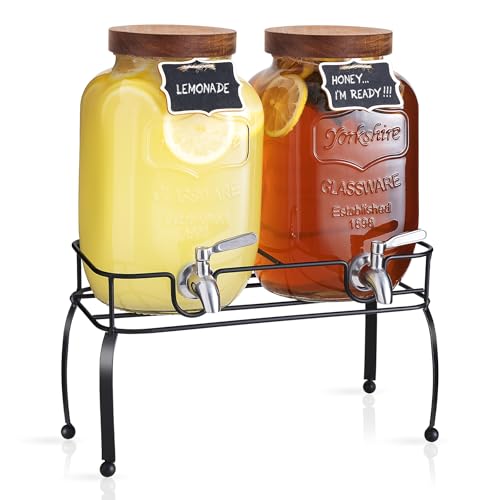

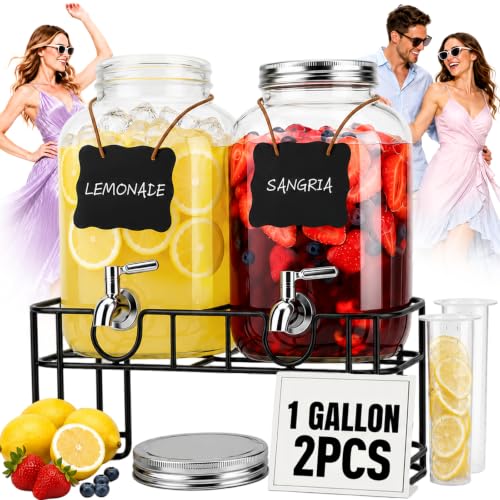
As an Amazon Associate we earn from qualifying purchases at no extra cost to you. Ratings are shown as listed on Amazon.
Quick comparison: which lemonade dispenser fits your party?
| Dispenser type | Typical capacity | Best party size | Typical material | Ice compatibility | General price range in 2026 |
|---|---|---|---|---|---|
| Glass jar with stand | 1–2 gallons | Up to 20 guests | Glass, metal or plastic spigot | Ice cubes; limited room | $25–$70 |
| Large plastic party dispenser | 3–5 gallons | 20–50 guests | Food-safe plastic | Ice cubes; some models use an ice chamber | $25–$90 |
| Commercial beverage dispenser | 2–5 gallons | 15–50 guests | Polycarbonate or heavy-duty plastic | Usually suitable for cubes | $60–$180 |
| Insulated beverage carrier | 2.5–5 gallons | 25–50 guests | Insulated polyethylene | Use chilled lemonade rather than loose ice | $100–$250 |
Best for most indoor parties: a 2-gallon glass dispenser
A glass dispenser with a raised stand is the best all-round choice for a birthday party, brunch, shower, or family gathering of roughly 10 to 20 people. It looks presentable on a drinks table, lets guests see the lemonade level, and is large enough to avoid constant refilling without becoming too heavy to move.
Tablecraft and similar commercial-style glass beverage dispensers are worth considering when the spigot and replacement parts matter more than decorative styling. Many consumer glass jars use a lightweight plastic tap that begins to drip after repeated tightening, while a better dispenser uses a threaded fitting, silicone gasket, and a locknut inside the container.
What to check before buying
- Usable capacity: A container advertised as 2 gallons may hold less once the spigot outlet and headspace are accounted for. Plan on about 1.75 gallons of practical serving capacity.
- Stand height: Leave at least 4 inches beneath the spout for a cup. A short stand forces guests to tilt the cup or remove the container.
- Spigot clearance: The tap should sit above the bottom seam rather than directly against it, where pulp and lemon seeds can obstruct flow.
- Cleaning access: A wide opening is more important than a decorative lid. You should be able to reach the gasket and wash around the spigot fitting.
Glass is attractive but unforgiving. A full 2-gallon vessel weighs approximately 18 pounds before the stand is included, so fill it in position and do not place it on a narrow or unstable table.
Best for large parties: a 3- to 5-gallon plastic dispenser
For 20 to 50 guests, a large food-safe plastic dispenser is usually more practical than glass. It weighs less, tolerates outdoor use, and is less likely to become a safety problem if someone bumps the drinks table. Look for a thick-walled container made from BPA-free polyethylene or polycarbonate with a broad base.
Commercial suppliers such as Carlisle and Tablecraft make beverage-service equipment in this general category. Exact designs vary, so focus on construction rather than the logo: a sturdy tap, a replaceable gasket, a lid that sits securely, and a base that does not flex when the container is full.
Capacity calculation for a 30-person event
Assume each guest drinks two 10-ounce servings. That is:
30 guests × 20 ounces = 600 ounces, or 4.69 gallons.
Allow another 15 percent for refills, spills, and larger cups:
4.69 gallons × 1.15 = approximately 5.4 gallons.
In this example, one 5-gallon dispenser is close to the minimum, while two 3-gallon dispensers provide better insurance and let you offer regular and mint or berry lemonade separately. If the party lasts several hours or includes children, prepare extra lemonade in sealed pitchers rather than repeatedly lifting a full dispenser.
Best for dependable temperature: an insulated beverage carrier
An insulated beverage carrier is the strongest choice for outdoor parties, sports events, and gatherings where the lemonade must remain cool without diluting. Cambro Camtainer-style containers are designed for beverage service and commonly come in approximately 2.5- and 5-gallon formats. They are less visually impressive than glass, but the insulation, robust handles, and commercial-style faucet are better suited to repeated use.
These containers generally work best with lemonade chilled in advance. Do not assume that adding a large amount of loose ice is harmless: ice reduces the amount of lemonade you can carry, can block the outlet, and may put extra stress on the lid or spigot. If you need ice at the serving table, use a separate ice bucket or choose a model with a purpose-built ice compartment.
An insulated carrier is also easier to refill in stages. Keep a second sealed container of chilled lemonade nearby and top up the dispenser after the first batch drops below one-third full. This avoids moving a heavy, partially filled carrier.
Best budget option: a simple plastic beverage dispenser
A basic 1- to 2-gallon plastic dispenser is the sensible budget pick for occasional family use. General market prices are often about $15 to $35, depending on the lid, stand, and tap. It will not usually have the polish of a glass jar or the longevity of commercial equipment, but it can work well when you check the fitting before the event.
Budget models most often fail at the spigot, not the container. The common problems are a flattened silicone washer, a loose retaining nut, or a tap that was cross-threaded during assembly. Fill the dispenser with water at least one day before the party, place it on a dry paper towel, and leave it for 30 minutes. A slow leak is much easier to find before lemonade, tablecloths, and guests are involved.
Decision matrix by party situation
| Your situation | Recommended choice | Why | What to avoid |
|---|---|---|---|
| Under 10 guests, occasional use | 1-gallon plastic or glass dispenser | Easy to lift and inexpensive to store | Oversized 5-gallon units |
| 10–20 guests, presentation matters | 2-gallon glass dispenser with stand | Visible contents and attractive serving setup | Thin decorative taps with no replacement gasket |
| 20–50 guests, children or outdoor use | 3–5-gallon plastic dispenser | Lighter and more impact-resistant than glass | Narrow bases and unbraced stands |
| Hot weather or long service period | Insulated 2.5–5-gallon carrier | Slows warming and reduces dilution | Relying on loose ice inside a small outlet |
| Frequent events or catering | Commercial Carlisle, Tablecraft, or Cambro-style equipment | More durable fittings and easier part replacement | Decorative jars with permanently attached taps |
How to set up a dispenser without leaks
- Inspect the fitting. Confirm that the rubber or silicone gasket is on the correct side of the wall. In most designs, the gasket belongs inside the container against the opening.
- Tighten by hand. Hold the spigot body steady and tighten the inside nut by hand. Excessive force can distort the gasket or crack a glass container.
- Test with water. Fill the dispenser above the spigot, open the tap, and check both the outlet and the joint around the hole.
- Filter pulp and seeds. Strain homemade lemonade before filling. Citrus debris can keep the valve from closing completely.
- Fill in place. Move the empty dispenser to the serving table first, then add lemonade. This reduces lifting injuries and protects the spigot from sideways pressure.
Cleaning and ownership realities
Wash the container, lid, spigot, gasket, and stand after every use. Lemonade acidity and sugar leave a sticky film that can make a tap appear functional while gradually encouraging leakage. Disassemble the spigot according to its instructions, wash the small parts separately, and allow everything to dry fully before storage.
The parts most likely to wear first are the silicone gasket, tap lever, and threaded retaining nut. Replacement gaskets are inexpensive when available, so a dispenser with standard removable fittings can cost less over several years than a cheaper model that must be discarded after one failed tap.
Never pour boiling water into a glass dispenser, and do not use abrasive pads on clear plastic or polycarbonate. Avoid filling a dispenser to the very top: leave roughly 5 percent headspace so the lid can close without forcing liquid into the fitting.
Final verdict
Choose a 2-gallon glass dispenser for attractive indoor parties, a 3- to 5-gallon plastic dispenser for busy or family-heavy events, and an insulated Cambro-style carrier for outdoor service and repeated use. Whichever format you select, prioritize a replaceable gasket, a wide opening, a stable base, and a spigot positioned clear of pulp and sediment. Those details matter more to a successful lemonade station than decorative lettering or an unusually large advertised capacity.

Write Your Review
No reviews yet. Be the first to share your experience!