

Key takeaways
- Temperature adjustment in approximately 1-degree increments.
- Session timers, commonly adjustable from 10 to 45 minutes.
- A delayed-start or warm-up function.
- Automatic shutoff and a visible operating indicator.
- Service alerts or diagnostic codes.
- Water-resistant buttons rather than a phone-dependent control as the only interface.
The best steam showers are sized to your shower volume, supplied by a correctly rated generator, controlled from inside and outside the enclosure, and paired with reliable ventilation—not simply the unit with the highest wattage.
Our top picks
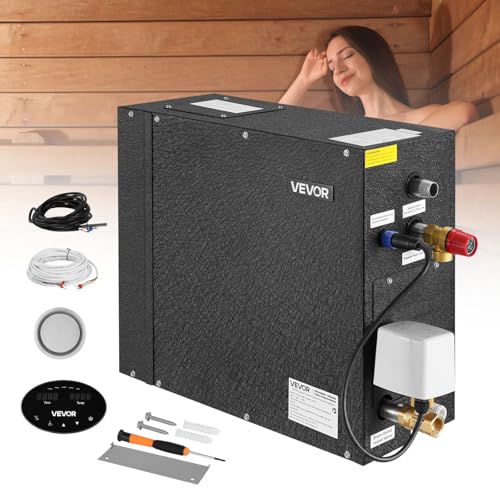
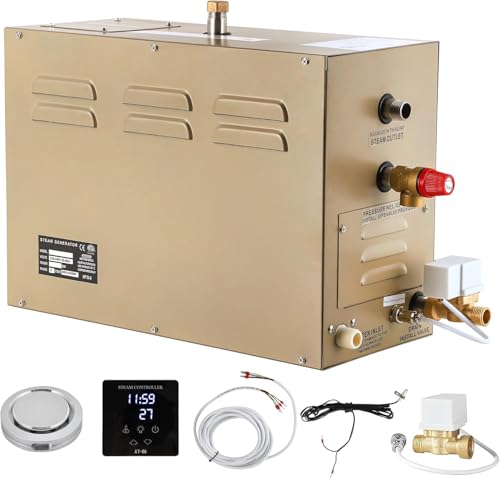


As an Amazon Associate we earn from qualifying purchases at no extra cost to you. Ratings are shown as listed on Amazon.
Quick picks by bathroom situation
| Bathroom situation | Best choice | Practical specification | Typical equipment cost |
|---|---|---|---|
| Small, enclosed shower used several times weekly | Compact residential steam generator | 4.5–6 kW; enclosure up to about 100 cubic feet | $1,500–$3,000 |
| Two-person shower or larger bathroom | Mid-size generator with digital controls | 7.5–9 kW; roughly 100–250 cubic feet | $2,000–$4,000 |
| Frequent use, large enclosure, or cold climate | High-output generator or professionally sized system | 10.5–15 kW; usually 200–450 cubic feet | $3,000–$6,000 |
| Existing bathroom with limited electrical capacity | Smaller generator after an electrical assessment | 4.5–6 kW; dedicated 240-volt circuit commonly required | $1,500–$3,500 before major electrical work |
These are broad residential ranges rather than exact model specifications. Brands such as MrSteam, Steamist, Amerec and Kohler offer established residential steam systems, but the correct model depends on the finished enclosure rather than brand name alone.
What separates the best steam showers from merely adequate ones?
1. Steam output matched to the enclosure
Generator capacity is usually expressed in kilowatts. A higher number does not automatically mean a better shower: an oversized unit can cost more, draw more electricity and provide little practical benefit in a small enclosure. An undersized unit may take too long to heat, struggle in winter and run continuously.
Start with the enclosure’s interior volume:
Length × width × height = cubic feet.
For example, a 4-by-5-foot shower with an 8-foot ceiling contains 160 cubic feet. That often points toward a mid-size generator, but glass area, stone surfaces, ceiling height and insulation can increase the required capacity. Large amounts of glass and uninsulated exterior walls lose heat quickly. Many manufacturer sizing charts apply adjustment factors for these conditions, so use the brand’s calculator or have the installer confirm the selection.
A useful rule is to prioritize fast recovery and stable temperature over maximum steam volume. For one or two users, a properly sized 7.5–9 kW system is often more sensible than installing a 12 kW unit in a modest enclosure.
2. An enclosure that actually holds steam
Steam showers work best when the enclosure is fully sealed from floor to ceiling. A standard shower curtain, open transom or large gap above the door allows steam to escape and makes the generator work harder.
Look for a door with continuous seals, a threshold that limits water leakage and a ceiling that slopes slightly toward the drain. A sloped ceiling reduces condensed water droplets falling directly onto the user. Use nonporous or properly sealed surfaces around the steam area; natural stone can absorb heat and moisture, increasing warm-up time and maintenance.
For compact bathrooms, a smaller enclosure is usually more efficient than trying to steam the entire room. Avoid installing the steam outlet where a user’s feet, back or hand will rest. The outlet should be accessible for service but positioned so it cannot cause an uncomfortable concentrated blast.
3. Controls that remain useful after installation
The best steam showers normally have a control inside the enclosure and a start control outside it. An interior control should adjust temperature and session duration without requiring the user to open the door. An exterior control is useful for starting preheat while changing clothes or for preventing unnecessary entry into a wet enclosure.
Useful features include:
- Temperature adjustment in approximately 1-degree increments.
- Session timers, commonly adjustable from 10 to 45 minutes.
- A delayed-start or warm-up function.
- Automatic shutoff and a visible operating indicator.
- Service alerts or diagnostic codes.
- Water-resistant buttons rather than a phone-dependent control as the only interface.
App control can be convenient, but it should not be the feature that determines the purchase. A steam shower still needs to work if the wireless network changes, the app is discontinued or a phone is outside the room.
Choosing the right system for common layouts
Small three-wall shower
A three-wall shower measuring about 36 by 48 inches is usually the easiest layout to steam efficiently. Its relatively small volume favors a compact 4.5–6 kW generator, assuming an 8-foot ceiling and ordinary tile or acrylic surfaces. Put the generator in a nearby dry location such as a vanity cabinet, closet or utility space, not inside the wet enclosure.
This layout is a good choice for occasional or single-user sessions. Confirm that the service area remains accessible; hiding the generator permanently behind finished tile can turn a minor repair into a demolition project.
Large glass shower or two-person enclosure
A wide enclosure with extensive glass may need more power than its cubic-foot calculation suggests. Glass loses heat faster than insulated walls, and a two-person shower often has a larger ceiling area and more door leakage. Consider a 7.5–10.5 kW system, subject to the manufacturer’s sizing chart.
Use a robust door seal and keep the ceiling height reasonable. An unusually tall ceiling increases the volume dramatically: raising an 8-foot ceiling to 10 feet in a 4-by-5-foot shower adds 40 cubic feet, or 25 percent more volume.
Open or curbless bathroom
An open wet room is usually a poor candidate for a conventional steam shower unless a dedicated sealed steam enclosure is built within it. Steam will migrate into the room, mirrors and cabinetry, while the generator struggles to reach the target temperature. A frameless door can work, but it still needs seals and a properly designed enclosure.
Low-ceiling or basement bathroom
Basement installations can be efficient if the generator is close to the shower, but pipe routing and drainage require careful planning. The steam line should slope as specified by the manufacturer so condensate does not collect in a low spot. Avoid placing electronics in areas vulnerable to flooding or condensation.
Installation requirements that affect the final cost
Most residential generators require a dedicated electrical circuit, commonly 240 volts, with amperage determined by the generator’s kilowatt rating. A 9 kW unit draws approximately 37.5 amps at 240 volts before considering local code requirements, so it may need a 40- or 50-amp circuit and appropriately sized wiring. An electrician must verify the panel, disconnect, grounding and local code.
You will also need a cold-water supply, a drain connection for flushing, a steam line and a suitable location with access for servicing. The generator should remain dry and ventilated according to its installation manual. It should not be installed in the shower, directly under a sink where leaks can reach it or in a sealed unventilated box.
Budget for professional installation. Equipment may cost roughly $1,500–$6,000, while electrical, plumbing, enclosure modifications, controls and labor can add several thousand dollars. A low equipment price is not a bargain if the bathroom requires a new electrical panel, opened walls or a rebuilt shower.
Ventilation: remove moisture after the session
Do not run the exhaust fan aggressively during steam generation unless the system design specifically calls for it. Extracting steam while the generator is operating wastes energy and can lengthen warm-up time. Instead, use a properly sized bathroom exhaust fan after the session, leave the enclosure door ajar and allow surfaces to dry.
A timer-controlled fan is particularly useful. For a typical bathroom, a fan rated around 80–110 cubic feet per minute may be adequate, but duct length, bends and room volume affect real performance. Vent the fan outdoors, never into an attic or wall cavity. If condensation repeatedly appears on adjacent walls or cabinetry, improve airflow and consult a qualified contractor before moisture causes hidden damage.
Maintenance and ownership realities
Mineral scale is the component most likely to shorten a generator’s useful life. Hard water can clog the water inlet, reduce heating efficiency and damage the heating element or probes. Follow the manufacturer’s descaling schedule; depending on water hardness and use, this may range from monthly to several times per year. Use only the approved cleaning method, because unsuitable acids can damage seals and sensors.
After each session, wipe standing water from the enclosure, leave the door open and run the exhaust fan. Clean the steam outlet and controls with a soft, nonabrasive cloth. Do not spray cleaner directly into electronic controls or block the drain used for automatic flushing.
At 20 minutes per session, five sessions per week equals about 87 hours of operation per year. A 9 kW generator would use approximately:
9 kW × 87 hours = 783 kWh annually.
At an electricity rate of $0.20 per kWh, that is about $157 per year before warm-up losses. The energy cost is therefore roughly $0.60 per session, although local rates, generator cycling and session length will change the result. This calculation is useful when comparing a high-output system with a correctly sized smaller unit.
Common ownership mistakes include sealing the generator behind inaccessible walls, ignoring a slow drain, using abrasive cleaners on glass, skipping descaling and treating a steam enclosure like an ordinary open shower. The heating system may last many years, but door seals, control panels, water valves and heating components are the parts most likely to need attention first.
Bottom line
Choose the best steam shower by measuring the finished enclosure, accounting for glass and cold exterior walls, confirming electrical capacity and planning ventilation before ordering equipment. A compact sealed shower with a 4.5–6 kW generator suits limited space and occasional use; a larger two-person enclosure generally needs 7.5–10.5 kW and stronger heat retention. Whatever the size, accessible service parts, dependable physical controls, automatic shutoff and a realistic descaling routine matter more than decorative lighting or app features.

Write Your Review
No reviews yet. Be the first to share your experience!