

Key takeaways
- A true three-finger wetsuit glove groups your fingers together for warmth in cold water. See the one mitt that meets the brief, how to choose thickness and fit, and the mistakes to avoid.
As an Amazon Associate, we earn from qualifying purchases.
Key Takeaways
- A true three-finger wetsuit glove has three compartments: one for the thumb, one for the index finger, and one shared compartment for the middle, ring, and little fingers. That grouping is the whole point of the design, because fingers kept together share warmth in cold water.
- Thickness decides how much warmth you get and how much hand feel you give up. A 7mm mitt is built for the coldest water, while a 3mm glove suits milder conditions and keeps more dexterity.
- Five-finger gloves, cut-finger fishing gloves, and snow mittens are not three-finger wetsuit gloves, even when a listing groups them together. Check the finger layout in the listing photos and description before you buy.
- Fit matters as much as thickness. A mitt that is too loose flushes cold water through the cuff with every movement, and a mitt that is too tight restricts blood flow and makes cold hands worse.
- Only one true three-finger neoprene wetsuit glove could be confirmed with a verifiable Amazon US listing in this roundup. That is the BARE 7mm Pro 3 Finger Mitt, and it is the single pick below.
Quick Picks
| Pick | Thickness | Design | Cuff |
|---|---|---|---|
| BARE 7mm Pro 3 Finger Mitt w/K-Palm | 7mm neoprene | Three-finger mitt | Gauntlet cuff with hook-and-loop strap |
How to Choose
Check the finger layout first
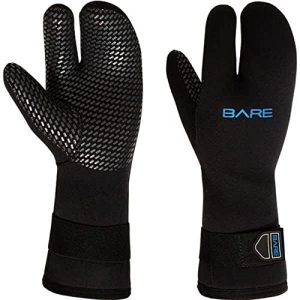
A three-finger mitt, sometimes called a lobster-claw glove, divides the hand into three parts. The thumb gets its own sleeve, the index finger gets its own sleeve, and the remaining three fingers share one sleeve. That layout keeps the index finger free for clips, zippers, camera controls, and hand signals, while the grouped fingers stay warmer than they would in a five-finger glove. If a listing shows five separate finger sleeves, it is a five-finger glove, not a three-finger mitt, no matter what the title says. If the fingers are cut short or the fingertips are open, it is a fishing or paddling glove, not a wetsuit mitt. And if the glove is filled with synthetic insulation and lined with fleece for snow, it is a ski mitt, not a wetsuit glove.
Match thickness to the water
Neoprene thickness is the main lever for warmth. A 3mm glove is a mild-water choice that keeps enough feel in the fingers for handling gear. A 5mm glove is a middle ground for cool water and longer sessions. A 7mm mitt is a cold-water choice that trades hand feel for maximum insulation. Pick the thinnest glove that keeps your hands comfortable for the length of your session, because a glove that is too thick for the conditions will feel clumsy and tire your hands faster. Cold-water divers, winter surfers, and anyone who spends long stretches in water below about 55 degrees Fahrenheit will usually want the thickest option. Snorkelers and warm-water divers can often go thinner.
Look at the seams
Seams are where cold water gets in. Glued and sewn seams, with the stitching kept blind so the thread never passes all the way through the neoprene, limit water exchange better than plain sewn seams. A glued seam also holds its shape longer under repeated stretching. When you read a listing, look for glued seams, blind stitching, and taped or sealed seam edges. A mitt with weak seam construction will feel cold no matter how thick the neoprene is.
Check the cuff and closure
The cuff is the second place cold water enters. A gauntlet cuff extends up the forearm and slides under or over the wetsuit sleeve, which lengthens the path water must travel to reach your hand. A hook-and-loop wrist strap lets you cinch the cuff down so it stays put when you move. A zipper closure makes the mitt easier to pull on and off, which matters more as thickness increases. A short cuff with no strap is the weakest setup for cold water, because every wrist flex pumps water in and out.
Check the palm
A coated or textured palm keeps your grip on boards, lines, ladders, and gear when everything is wet. Polyurethane leather, often called K-Palm, is a common palm coating on dive mitts because it resists abrasion and stays grippy when wet. A smooth neoprene palm can feel slippery on a board or a boat rail. Pre-curved fingers also help, because a mitt that is shaped like a relaxed hand takes less effort to hold closed, which reduces hand fatigue on a long session.
Get the size right
Measure your palm circumference and hand length, then match them to the size chart on the listing. Neoprene stretches a little, so a snug fit is normal, but the mitt should never pinch the fingertips or cut into the wrist. Try both mitts on, because your two hands are not identical, and the fit of the second hand often decides the size. If you are between sizes, think about what you will wear underneath: a thin liner layer needs a little more room, and a bare hand needs less. A mitt that is hard to pull on when dry will be harder still when wet, so don and doff the mitt a few times before you commit to a size.
Know what a wetsuit glove does
A wetsuit glove is a wet glove, not a dry glove. A small amount of water enters at the wrist, your body warms that thin layer, and the neoprene slows heat loss so the warmed layer stays against your skin. That is how every neoprene glove works, and it is why a good cuff and good seams matter so much: they keep the warmed layer in place instead of letting cold water flush through. Do not expect dry hands from a wetsuit mitt. Expect warm hands, as long as the fit is snug and the water exchange is slow.
The 1 Best Three Finger Wetsuit Gloves
1. BARE 7mm Pro 3 Finger Mitt w/K-Palm

The BARE 7mm Pro 3 Finger Mitt is the warmest three-finger design in this roundup, and the only true three-finger neoprene wetsuit glove with a verifiable Amazon US listing. It is built from 7mm nylon 2 neoprene, which puts it at the thick end of the range and makes it a cold-water mitt first and foremost. The three-finger layout keeps the thumb and index finger separate for gear handling and hand signals, while the middle, ring, and little fingers share one compartment for warmth.
The palm is coated with polyurethane leather, known as K-Palm, which gives grip on wet gear and adds abrasion resistance where the mitt takes the most wear. The seams are double glued and sewn, a construction that limits water exchange and holds up under repeated use. The fingers are pre-curved and anatomically cut, so the mitt follows the natural bend of the hand instead of fighting it, which keeps hand fatigue down on long dives and long surf sessions.
The cuff is a gauntlet style that extends up the forearm, and an adjustable hook-and-loop wrist strap cinches it down over the wetsuit sleeve. That combination is what keeps the warmed layer of water inside the mitt instead of flushing out with every movement. The mitt is listed in sizes from XXS to XXL, so most hand sizes are covered, though some sizes may be harder to find than others at any given time.
This mitt suits cold-water divers, winter surfers, and anyone whose hands go numb in a five-finger glove. It is less suited to warm water, where 7mm of neoprene will feel bulky and over-warm, and it is less suited to tasks that need fine finger control, because the grouped fingers cannot move independently. If your water is mild and your hands run warm, a thinner five-finger glove would be a better match, but that is a different type of glove for a different set of conditions, and it is not part of this roundup.
Which One Fits Your Situation
Cold-water diving. The BARE 7mm mitt is the pick. Its thickness, glued seams, gauntlet cuff, and coated palm are all aimed at long exposure in cold water. Pair it with a wetsuit whose wrist seals sit under the gauntlet cuff, and cinch the strap so the cuff stays in place when you reach and pull.
Winter surfing. The BARE 7mm mitt is the pick for frigid surf. The three-finger layout still leaves the index finger free for leash and board handling, while the grouped fingers hold warmth through long paddle-outs. The coated palm helps grip the board when the deck is wet and cold.
Snorkeling and mild-water diving. A 7mm mitt is more glove than mild water needs. It will keep your hands warm, but the bulk will slow your hands down. If your sessions are short and the water is mild, a thinner glove is the better fit for the conditions. The BARE mitt still works here, but it is not the most nimble choice.
Spearfishing and underwater photography. The index finger stays free in a three-finger mitt, which helps with triggers, buttons, and dials. The grouped fingers limit fine control, so tasks that need all five fingers to move on their own will feel awkward. For that kind of work, a five-finger glove is the other shape to consider.
Hands that always run cold. If your hands go numb in a five-finger glove at the same thickness, the three-finger layout is worth trying. Grouping the fingers together is a real warmth gain, not a small one, and it is the reason this design exists. Choose the thickest option your conditions justify, and make sure the cuff and strap are snug.
Common Mistakes
Buying a five-finger glove by mistake. The most common error with this keyword is buying a five-finger neoprene glove that a listing or a roundup calls a three-finger glove. Some listings use the term loosely, and some roundups describe a glove as three-finger in one place and five-finger in another. Always check the listing photos and count the finger sleeves before you buy.
Buying a snow mitt for the water. Three-finger ski and snowboard mitts look similar at a glance, but they are built from nylon shells and synthetic insulation, not neoprene, and they are not made to be submerged. A snow mitt will soak through and stay cold in the water. If the listing talks about snow, Thinsulate, or fleece lining, it is a winter sports mitt, not a wetsuit glove.
Buying cut-finger gloves. Fishing gloves with three cut fingers are a different product. They leave fingertips exposed for tying knots and handling line, which is the opposite of what a wetsuit mitt is for. They will not keep your hands warm in cold water.
Choosing thickness by guesswork. Going too thick makes the mitt clumsy and tiring, and going too thin leaves your hands cold halfway through the session. Match thickness to the water you actually use, not the coldest water you might ever visit. A 7mm mitt is a cold-water tool, and it feels like one.
Ignoring the cuff. A thick mitt with a short, loose cuff will feel colder than a thinner mitt with a good gauntlet cuff and a snug strap. Water exchange at the wrist is the main way warmth leaves a glove, so the cuff and closure deserve as much attention as the neoprene thickness.
Sizing by your usual glove size. Neoprene sizing varies between brands, and a mitt that is too tight restricts blood flow and makes cold hands worse. Measure your hand, read the size chart on the listing, and try both mitts on. If the mitt pinches the fingertips or cuts into the wrist, it is too small.
Expecting dry hands. A wetsuit glove lets a thin layer of water in and warms it. If you expect your hands to stay dry, you will be disappointed, and you may blame a mitt that is working as designed. The goal is warm hands, not dry hands.
FAQ
What is a three-finger wetsuit glove?
It is a neoprene mitt with three compartments: one for the thumb, one for the index finger, and one shared compartment for the middle, ring, and little fingers. The grouped fingers share warmth, which makes the design warmer than a five-finger glove of the same thickness, while the free index finger keeps enough dexterity for gear handling and hand signals.
Are three-finger wetsuit gloves warmer than five-finger gloves?
Yes, at the same thickness, because the grouped fingers share body heat and present less surface area to the cold water. The trade is dexterity: the grouped fingers cannot move independently, so fine tasks take more effort.
What thickness should I choose?
Match thickness to the water. A 3mm glove suits mild water and keeps the most hand feel. A 5mm glove suits cool water and longer sessions. A 7mm mitt suits cold water and the longest exposure. If your hands always run cold, lean toward the thicker option for the water you use most.
Can I use a three-finger wetsuit glove for surfing?
Yes. The design is used for surfing, diving, snorkeling, and other water sports. The coated palm helps with board grip, and the free index finger helps with leash and board handling. Winter surfers in frigid water are the main audience for the thickest mitts.
How do I keep a three-finger mitt from flushing with cold water?
Fit the cuff over or under the wetsuit sleeve so it overlaps, then cinch the hook-and-loop strap snug. A gauntlet cuff that extends up the forearm lengthens the path water must travel, and a snug strap keeps the cuff from shifting when you move.
How should I care for neoprene gloves?
Rinse the mitts in fresh water after each session, especially after salt water, and let them dry away from direct sunlight and heat. Do not fold them sharply or hang them by the cuff when wet, because creases and stretching wear the seams out faster. Store them flat or loosely rolled once dry.
Why are there so few three-finger wetsuit gloves on the market?
The design serves a narrow use case: cold water where warmth matters more than finger dexterity. Most water sports gloves are five-finger because most users want full finger movement. Three-finger mitts are made by dive and surf brands for cold-water users, and only a small number of those models are carried on Amazon US.
Final Thoughts
A three-finger wetsuit glove is a specialist tool. It gives up finger independence to gain warmth, and that trade only makes sense when the water is cold enough to demand it. For cold-water diving and winter surfing, the BARE 7mm Pro 3 Finger Mitt is the one model in this roundup that meets the brief: a true three-finger layout, 7mm neoprene, a coated palm for grip, glued and sewn seams, and a gauntlet cuff with a strap to keep cold water out. Check the size chart on the listing, measure your hand before you order, and confirm the listing is live at the time you buy, because sizes and stock change. If your water is mild, a thinner glove will serve you better, but if your hands go numb in a five-finger glove, the three-finger mitt is the design to try.
More from Amazon
Programs that pair well with the guide above. Offers and eligibility are set by Amazon and may change.
Free shipping on eligible items, Prime Video and more. Eligible new members can start with a free trial.
Start a Prime free trialAudiobooks and podcasts to listen to on the go. Eligible new members can start with a free trial.
Try Audible freeAd-free music streaming. Eligible new subscribers can start with a free trial.
Try Music Unlimited freeA free business account with business pricing and bulk-buying tools for work, shop or home office.
Create a business accountAs an Amazon Associate we earn from qualifying purchases.

Write Your Review
No reviews yet. Be the first to share your experience!