

Key takeaways
- The best smart garage door openers for most homes are the Meross MSG100 for affordable app and voice control, Tailwind iQ3 for dependable automatic access, and a built-in LiftMaster or Chamberlain myQ solution when you want the cleanest compatibility with…
The best smart garage door openers for most homes are the Meross MSG100 for affordable app and voice control, Tailwind iQ3 for dependable automatic access, and a built-in LiftMaster or Chamberlain myQ solution when you want the cleanest compatibility with a matching opener.
Our top picks


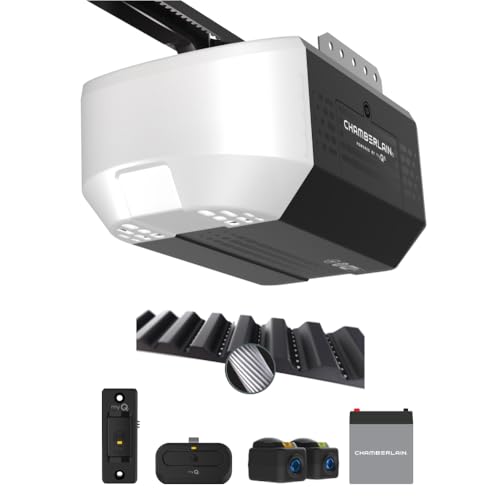
As an Amazon Associate we earn from qualifying purchases at no extra cost to you. Ratings are shown as listed on Amazon.
Best smart garage door openers by situation
| Situation | Best fit | Why it makes sense | Main compromise |
|---|---|---|---|
| Lowest-cost retrofit | Meross MSG100 | Compact controller, broad opener compatibility, and 2.4 GHz Wi-Fi | Usually requires checking whether an extra wired sensor is needed |
| Frequent arrivals and departures | Tailwind iQ3 | Strong automation features, vehicle-based access options, and detailed alerts | Installation is more involved than a basic Wi-Fi controller |
| Existing Chamberlain or LiftMaster system | myQ-compatible controller or built-in myQ opener | Native ecosystem support and clear door-status information | Some remote features or integrations can depend on the specific model |
| Genie opener owner | Genie Aladdin Connect | Designed around Genie systems and provides app-based monitoring | Compatibility is less universal than a retrofit controller |
| Apple Home user | Meross MSG100 or a compatible Meross variant | Useful choice when HomeKit support is a priority | HomeKit compatibility varies by exact model and region |
What to check before buying
1. Opener compatibility comes first
A smart controller does not replace the motor, rail, trolley, or lifting mechanism. It connects to the wall-button terminals or to a manufacturer-specific control system and tells the existing opener to operate. That means compatibility depends on the opener’s wiring, safety system, and communication method.
Most retrofit controllers work with conventional chain-drive, belt-drive, and screw-drive openers that have accessible wall-control terminals. Newer Chamberlain and LiftMaster units using Security+ systems may require a compatible myQ device rather than a generic dry-contact controller. Genie owners should check whether their opener supports Aladdin Connect or needs a model-specific adapter.
Before ordering, record the opener brand and model number, photograph the terminals behind the wall button, and confirm that the opener has functioning photoelectric safety sensors. A controller cannot safely compensate for a damaged sensor, a slipping cable, or a door that is difficult to lift manually.
2. Wi-Fi reliability matters more than peak speed
Garage controllers generally need a stable 2.4 GHz Wi-Fi connection rather than high bandwidth. Garages are often separated from the router by concrete, brick, metal doors, and parked vehicles, so a phone showing strong Wi-Fi in the house does not prove that the controller will remain connected.
Measure signal strength at the garage with the door closed. If the signal is weak, moving the router, adding a mesh node, or using a wired access point near the garage is usually more effective than buying a more expensive controller. Avoid placing the controller directly against the opener’s metal housing, which can reduce wireless performance.
A temporary Wi-Fi outage should not prevent the wired wall button or remote controls from operating. The limitation is remote access: an app cannot confirm status or send a command while the controller or home network is offline.
3. Alerts should be useful, not merely frequent
The essential alert is a warning when the door has remained open for a chosen period. Look for adjustable delay settings, door-open and door-closed notifications, activity history, and alerts that identify which user or automation initiated an action.
Some systems can notify you immediately when the door opens; others are better at scheduled reminders. A practical setting is often 10 to 15 minutes for a household garage, while a workshop or rarely used secondary door may justify a shorter threshold. Check whether notifications require a paid service before treating them as a security feature.
4. Voice control has important limits
Google Assistant, Alexa, and Siri can make status checks convenient, but voice commands to open a garage door may be restricted or require confirmation because opening the door can create a security risk. Support also varies between direct integrations, HomeKit automations, and third-party bridges.
For everyday use, voice status queries are often more useful than voice opening. You can ask whether the door is closed while carrying groceries, then use the app or a physical remote if it needs to open. Confirm the exact assistant and platform support for the controller version you are buying; similar product names do not always indicate identical features.
Head-to-head: Meross, Tailwind, and myQ
Meross MSG100: the value retrofit
Meross is a strong choice when the priority is low purchase cost and broad smart-home support. Its small wired controller connects to the opener and a separate door-position sensor, then uses 2.4 GHz Wi-Fi for app access. Depending on the model, it can work with platforms such as Apple Home, Alexa, and Google Home.
It suits a homeowner comfortable identifying two connection points: the opener’s control terminals and the door sensor mounting location. The main ownership issue is sensor alignment. If the sensor shifts, the app may report an incorrect state or refuse to operate the door. Keep the sensor wire away from moving hardware and use adhesive or screws that tolerate garage temperature changes.
Tailwind iQ3: the automation-focused option
Tailwind iQ3 is aimed at households that want more than a remote button. Its vehicle-aware features can help automate opening when an authorized vehicle arrives, while its app provides remote control and notifications. That makes it appealing for people who use the garage several times every day and want fewer manual steps.
The trade-off is setup complexity. Vehicle detection, user permissions, geofencing, and door sensors must all be configured correctly. Treat automatic opening as a convenience feature rather than a substitute for checking the door’s mechanical condition. Test the automation with the vehicle stationary first, then verify that every authorized phone and vehicle is recognized correctly.
myQ: the natural choice for a matching ecosystem
Chamberlain and LiftMaster owners often benefit from staying within the myQ ecosystem, especially when the opener was designed with connected features already included. The advantage is fewer compatibility surprises and a unified view of the opener, lighting, and access activity where supported.
The disadvantage is ecosystem dependence. Integration with third-party smart-home services can change by model, region, or service policy, and some advanced functions may require an additional charge. If broad interoperability is more important than manufacturer integration, compare myQ against a compatible third-party controller before buying.
Installation: a careful 30-minute check before mounting anything
- Test the door manually. Disengage the opener and lift the door halfway. It should remain roughly in place. If it drops, binds, or feels unusually heavy, arrange garage-door service before adding smart controls.
- Confirm the existing safety system. Test both photoelectric sensors and the automatic-reverse function. Smart access should never be used to mask a failed safety feature.
- Identify the control terminals. Use the opener manual rather than guessing from wire color. Some proprietary systems need a dedicated accessory.
- Mount the door-position sensor. Put the fixed portion on the wall or opener structure and the moving portion on the door as instructed. Keep the two parts aligned through the full travel.
- Pair the controller near the router. Complete Wi-Fi setup before permanently mounting it. If pairing fails in the house but succeeds in the garage, the problem is likely signal coverage rather than the controller.
- Test every control path. Check the wall button, existing remotes, app, notifications, and voice assistant separately. Open and close the door several times before relying on automation.
Backup access and power-cut planning
Most smart garage controllers do not contain a large battery capable of lifting the door. If the opener has a battery backup, the motor may continue operating during a power cut, but the Wi-Fi router and controller can still lose power. A small uninterruptible power supply for the router and network equipment can preserve remote connectivity, although it will not help during an internet-service outage.
Keep a conventional remote in a vehicle outside the garage only if it is protected from theft, and ensure at least one household member knows how to use the emergency release from inside. A keypad is another useful backup, but it should have a replaceable battery and a code that is not shared widely. Smart locks, garage controllers, and vehicle integrations should not leave you with only one method of entry.
Ownership costs and maintenance
Basic retrofit controllers commonly fall in the general market range of about $30 to $100, while feature-rich systems and integrated openers cost more. Suppose a $60 controller is used four times per day for five years: 4 × 365 × 5 equals 7,300 opening or closing events. The hardware cost is about $0.008 per event, before batteries, replacement sensors, subscription fees, or installation.
The parts most likely to cause trouble are not usually the Wi-Fi chip. Adhesive sensor mounts can loosen, thin sensor wires can be snagged, batteries in wireless accessories can expire, and garage-door springs, rollers, hinges, and cables wear under normal mechanical loads. Inspect the sensor position every few months, wipe dust from photoelectric sensor lenses, replace batteries when alerts appear, and lubricate only the components specified by the opener manufacturer.
For the lowest-friction purchase, choose a compatible myQ product for a matching Chamberlain or LiftMaster opener. For the best balance of cost and smart-home flexibility, choose the appropriate Meross MSG100 model. For frequent use and richer arrival automation, Tailwind iQ3 is the more capable choice—provided you are willing to spend extra time configuring it and have reliable Wi-Fi in the garage.


Write Your Review
No reviews yet. Be the first to share your experience!